 by
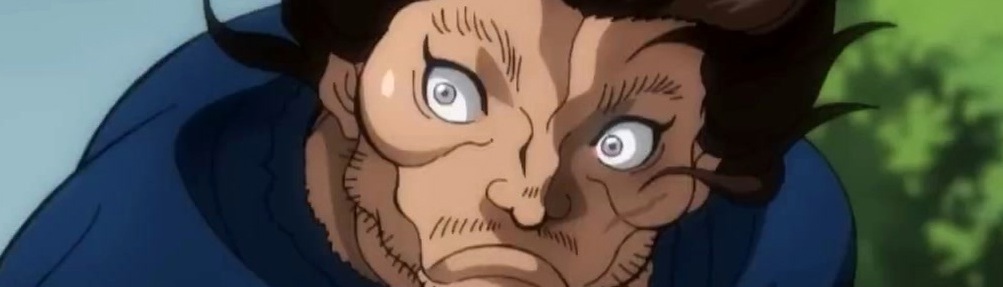
by Hanma Baki and Miyamoto Musashi have arrived at Musashi no Sato in Mimasaka City, Okayama, creating a unique meeting point between the world of Baki-Dou and the real history of Japan’s legendary swordsman.
Fans of Baki-Dou: The Invincible Samurai have a special reason to visit Mimasaka City in Okayama Prefecture this summer.
A collaboration between the anime Baki-Dou and Musashi no Sato, an area in Mimasaka associated with the life and legacy of legendary swordsman Miyamoto Musashi, is currently underway. The event runs from July 10 through October 31, 2026, bringing anime artwork, character panels, famous quotes, and collaboration food into a historical location connected with Musashi himself.
The collaboration was created to coincide with the TV broadcast of Baki-Dou, allowing visitors to experience the anime’s fictional version of Miyamoto Musashi while also exploring places connected with the historical figure.
The result is an unusual combination of anime, martial arts, Japanese history and local tourism.
At the heart of the collaboration are Baki and Musashi, two symbols of strength from very different eras. Their meeting at Musashi’s birthplace gives the project an especially appropriate setting.
Baki-Dou and the Real Miyamoto Musashi Meet in Mimasaka
The Baki franchise has always been fascinated by the idea of strength.
Created by Keisuke Itagaki, the Baki manga series has been running since 1991 and has developed into one of Japan’s most recognizable martial arts franchises. The series has followed Baki Hanma and an enormous cast of fighters through increasingly extreme battles.
In Baki-Dou, the story takes a dramatic turn by introducing one of Japan’s most famous historical swordsmen.
Miyamoto Musashi, widely remembered as a legendary samurai and the figure associated with the two-sword style known as Niten Ichi-ryu, is brought back to the modern era through a fictional scientific experiment.
The anime then asks an outrageous but simple question:
What happens when the strongest martial artists of the modern era face the legendary swordsman of the past?
That premise forms the foundation of Baki-Dou.
And because Musashi is historically connected to Mimasaka, the collaboration with Musashi no Sato feels particularly fitting.
What Is Musashi no Sato?
For viewers unfamiliar with the location, Musashi no Sato is an area in Mimasaka City, Okayama Prefecture, associated with Miyamoto Musashi.
The official Mimasaka tourism portal identifies the area as Musashi’s birthplace and highlights several locations connected with his life and legacy. These include the site believed to be his birthplace and childhood home, Sanomo Shrine, where he is said to have conceived the idea of his two-sword technique, and Musashi Shrine, where he is enshrined.
This historical background is what makes the Baki-Dou collaboration different from a typical anime promotion.
Fans are not simply visiting a temporary exhibition hall.
They can walk through an actual area associated with the historical figure who inspired one of the anime’s central characters.
Baki and Musashi Welcome Visitors
One of the first things visitors encounter is the collaboration’s character display featuring Hanma Baki and Miyamoto Musashi.
The two characters appear as standing panels at Musashi no Sato, creating an immediate connection between the anime and the historical setting.
Baki represents the modern generation of fighters.
Musashi represents an almost mythical warrior from Japan’s past.
Seeing the two together at Musashi no Sato creates a playful visual contrast.
One is a fictional underground martial arts champion who has fought some of the strongest people alive.
The other is a legendary historical swordsman who has been transformed by Baki-Dou into an almost supernatural symbol of strength.
For anime fans, the photo opportunity alone makes the location worth exploring.
A Historical Home Meets the World of Baki
One of the most interesting locations included in the collaboration is the Hirao family residence.
The old house is traditionally associated with Ogin, Miyamoto Musashi’s sister, and retains architectural features that evoke the historical atmosphere of the area, including its thatched roof and garden pond.
The Baki-Dou character panels placed around this traditional environment create an unusual contrast.
On one side, visitors see a historic Japanese building connected with Musashi’s family.
On the other, they see an exaggerated anime version of the legendary swordsman.
This mixture of historical atmosphere and modern anime design is one of the strongest features of the collaboration.
It also allows visitors to experience the setting at their own pace rather than moving through a conventional indoor exhibition.
Famous Baki Quotes Appear Around the Village
The collaboration does not stop with character panels.
Fans can also discover famous quotes from the Baki series displayed at various locations throughout Musashi no Sato.
The project presents these phrases as messages from the series’ powerful fighters.
Instead of placing all the artwork in one location, the collaboration encourages visitors to explore the village and discover the displays while walking between different points of interest.
This makes the experience feel more like a small-scale pilgrimage.
Visitors can look for their favorite quotes while simultaneously learning more about the real history of Miyamoto Musashi.
Visit the Mimasaka City Musashi Dojo
Another important stop is the Mimasaka City Musashi Dojo.
The dojo is used for training associated with Niten Ichi-ryu, the two-sword tradition strongly connected with Musashi’s legacy.
Beside the dojo stands a statue of young Musashi in a two-sword stance, creating one of the most striking locations in the area.
For Baki-Dou fans, this is particularly meaningful because the anime places enormous emphasis on Musashi’s swordsmanship.
The fictional Musashi may possess abilities far beyond those of a normal human, but the collaboration allows fans to connect the anime’s portrayal with the historical tradition that inspired it.
Sanomo Shrine and the Origin of the Two-Sword Style
The collaboration also highlights Sanomo Shrine, another location connected with Musashi.
According to the local tourism information, Musashi is said to have been inspired by the movements of two drumsticks used by the shrine’s priest, which helped him develop the idea of fighting with two swords.
This story makes the shrine an especially interesting destination for fans who want to understand why the two-sword style has become such an important part of Musashi’s identity.
In Baki-Dou, the two-sword stance is transformed into something dramatic and almost otherworldly.
At Sanomo Shrine, visitors can instead encounter the historical tradition and folklore surrounding Musashi.
The contrast between the two interpretations is part of the fun.
A Special Collaboration Menu at Takezou Chaya
After exploring the area, fans can take a break at Takezou Chaya, the only tea house in Musashi no Sato.
The tea house is offering a special collaboration menu connected to the anime.
The centerpiece is the “Takezou’s Awakening Set,” priced at ¥700.
The concept uses food and drink to represent Musashi’s journey from his childhood as Takezou toward becoming the legendary swordsman associated with his name.
The drink includes strong black coffee and chocolate, representing the contrasting experiences of bitterness and sweetness before ultimately reaching the idea of “awakening.” The official collaboration describes the concept as a playful progression toward “sugar-free,” or “swordless,” imagery.
The idea is deliberately humorous and very much in keeping with the exaggerated spirit of Baki.
It is not simply a character-themed drink.
The menu itself is designed around Musashi’s transformation.
The Famous Two-Sword Noodles
Takezou Chaya also serves a local specialty called “Musashi Niten Ichi-ryu Noodles.”
The dish combines udon and soba in the same bowl, creating a playful food interpretation of Musashi’s famous two-sword style.
The concept is simple but clever.
Instead of using two swords, the dish uses two different types of noodles.
The meal is another example of how the collaboration incorporates Musashi’s identity into everyday experiences rather than relying solely on printed anime merchandise.
The official tourism information notes that the menu has attracted fans from both Japan and overseas.
Original Baki-Dou Coaster Bonus
There is also a special bonus for visitors.
Customers who order a collaboration menu item—or spend ¥700 or more at Takezou Chaya—receive an original Baki-Dou anime coaster while supplies last.
The coaster is a non-commercial promotional item and is available only through the collaboration.
This gives fans another reason to stop at the tea house after visiting the surrounding sites.
As with other limited promotional items, availability may depend on stock.
Naoya Uchida Shares His Thoughts on the Collaboration
Voice actor Naoya Uchida, who plays Miyamoto Musashi in Baki-Dou, also commented on the collaboration.
Uchida noted the special connection between the anime character he portrays and Mimasaka, the area associated with Musashi’s birth and the origins of his two-sword tradition.
He described the collaboration as a meaningful connection and expressed his hope of helping introduce the attractions of Mimasaka to visitors.
Uchida also encouraged fans to experience the combination of history and anime in person.
His involvement makes the project feel even more connected to the anime itself.
A Statue of Young Miyamoto Musashi Is Another Must-See Spot
For visitors interested in the historical side of the trip, the Mimasaka Tourism Bureau recommends the Statue of Young Miyamoto Musashi.
The statue was created to commemorate the 350th anniversary of Musashi’s death and depicts him during his younger years.
Its location also includes a feature designed with the anime collaboration in mind, further connecting the real-world site with the fictional Baki-Dou universe.
This is a particularly good example of how the collaboration works on two levels.
Fans can appreciate the statue as a piece of local history while also viewing it through the lens of the anime.
Baki-Dou Is More Than Just a Martial Arts Anime
For newcomers, it may help to understand what makes Baki-Dou different from a conventional martial arts series.
The Baki franchise is famous for taking the concept of physical strength to extreme levels.
Its fighters regularly perform feats that would be impossible in real life.
The series combines martial arts, exaggerated physical abilities, psychological battles, and larger-than-life personalities.
In Baki-Dou, the introduction of Musashi adds another element: the clash between historical swordsmanship and modern combat sports.
Baki and the other underground fighters are accustomed to fighting with fists, kicks, and martial arts techniques.
Musashi approaches combat through the sword.
That creates a very different kind of tension.
Netflix describes the anime as a confrontation between Baki and the strongest Underground Arena fighters and the resurrected Musashi Miyamoto, Japan’s legendary samurai.
The Anime Has Already Moved Into Its Second Part
The collaboration is also arriving at an important point for the anime itself.
BAKI-DOU: The Invincible Samurai premiered worldwide on Netflix in February 2026.
The second part began streaming on June 18, 2026, with 12 additional episodes, bringing the story deeper into the confrontation between Musashi and the modern fighters.
Netflix’s official information specifically highlights the increasing importance of the battle between Baki and Musashi, while also emphasizing how the introduction of weapons changes the nature of the series’ traditional hand-to-hand combat.
This makes the Mimasaka collaboration particularly timely.
Fans watching the current anime can now visit the real-world location associated with its most important historical character.
Baki-Dou Is Now Airing on Japanese Television
Although Baki-Dou originally debuted as a Netflix-exclusive anime, its first cour began television broadcasting in Japan on July 5, 2026.
The first cour, consisting of 13 episodes, is being broadcast on stations including:
- TOKYO MX: Sundays at 11:30 PM
- BS Nippon Television: Sundays at 11:30 PM
- Sun TV: Sundays at 11:30 PM
- KBS Kyoto: Mondays at 1:00 AM
- TV Aichi: Mondays at 2:05 AM
- HTB Hokkaido TV: Mondays at 2:10 AM
- TVQ Kyushu Broadcasting: Mondays at 3:00 AM
The schedule is subject to change.
The television broadcast gives the series additional exposure in Japan while Netflix continues to make the anime available internationally.
Netflix Continues the Baki Anime Legacy
Baki-Dou is the latest animated chapter in the larger Baki franchise.
Netflix’s current catalog describes the series as the story of Baki and the strongest Underground Arena fighters facing the resurrected Musashi Miyamoto. The main Japanese cast includes Nobunaga Shimazaki as Baki Hanma, Naoya Uchida as Miyamoto Musashi, and Akio Otsuka as Yujiro Hanma.
For viewers who are new to the franchise, Netflix also provides earlier Baki anime installments, making it possible to follow Baki’s progression before reaching the Musashi storyline.
The new series continues the franchise’s tradition of turning martial arts battles into spectacular, highly exaggerated confrontations.
The Baki Franchise Is Approaching Another Major Milestone
The Mimasaka Tourism Bureau also points out that the broader Baki manga franchise will enter its 35th anniversary in September 2026.
The original manga began serialization in 1991, and the franchise has since expanded across several manga series and anime adaptations.
That makes 2026 an especially significant year for Baki fans.
The Baki-Dou anime, the Musashi no Sato collaboration and the upcoming franchise anniversary all arrive within the same period.
The collaboration therefore feels less like a standalone marketing campaign and more like part of a larger celebration of the franchise.
Why This Collaboration Works So Well
The strongest aspect of the project is its location.
Anime collaborations are often held inside shopping centers, cafés, or dedicated exhibition spaces.
The Baki-Dou collaboration takes a different approach.
It places the anime inside an area already connected with the real Miyamoto Musashi.
That means the fictional and historical versions of Musashi can be experienced side by side.
Visitors can see:
- Baki and Musashi character panels
- The Hirao family residence
- Sanomo Shrine
- The Mimasaka City Musashi Dojo
- The young Musashi statue
- Baki famous-quote displays
- Takezou Chaya
- Collaboration food
- Original Baki-Dou merchandise and promotional items
The result is closer to an anime pilgrimage combined with a historical sightseeing trip.
How to Visit Musashi no Sato
Musashi no Sato is located in Mimasaka City, Okayama Prefecture.
For visitors using public transportation, the official tourism information recommends Chizu Express Miyamoto Musashi Station, from which Musashi no Sato is approximately a 15-minute walk.
For visitors traveling by car, the area is approximately:
- 5 minutes from the Ohara Interchange on the Tottori Expressway
- 20 minutes from the Sayo Interchange on the Sanyo Expressway
These travel times are approximate and can vary depending on traffic and road conditions.
Collaboration Period and Location
Baki-Dou × Musashi no Sato Collaboration
Event Period: July 10–October 31, 2026
Location: Musashi no Sato
Address/Area: Mimasaka City, Okayama Prefecture
The official tourism portal currently lists the collaboration period as July 10 through October 31, 2026.
Fans planning a visit should check the official tourism information before traveling, especially for opening hours, temporary closures,s and the availability of collaboration food or bonus items.
Final Thoughts
The Baki-Dou × Musashi no Sato collaboration is an unusually well-matched anime tourism project.
At first glance, the worlds of Baki-Dou and traditional Japanese history might seem completely different.
One features impossible martial arts battles, underground fighters, rs and a resurrected samurai.
The other preserves historical locations associated with a real swordsman who lived centuries ago.
Yet Miyamoto Musashi connects both worlds.
In Baki-Dou, Musashi is transformed into a larger-than-life warrior who challenges the strongest fighters of the modern age.
At Musashi no Sato, visitors can explore the historical locations and traditions associated with the man who inspired that fictional character.
That contrast is what makes the collaboration so interesting.
The character panels of Baki and Musashi, the historical Hirao family residence, the Mimasaka City Musashi Dojo, Sanomo Shrine, the young Musashi statue, and the Baki quote displays all create different ways to experience the same theme: the enduring legend of Miyamoto Musashi.
The food at Takezou Chaya adds another playful layer, with Takezou’s Awakening Set and Musashi Niten Ichi-ryu Noodles turning Musashi’s story into a fun culinary experience. Visitors can also receive a limited original Baki-Dou coaster with qualifying purchases.
For anime fans, the timing could hardly be better.
BAKI-DOU: The Invincible Samurai is currently available worldwide on Netflix, while the first cour is also being broadcast on Japanese television. The second part of the anime began streaming in June, bringing the story further into its intense confrontation between Baki and Musashi.
Meanwhile, the Baki franchise is approaching its 35th anniversary in September 2026, giving fans another reason to celebrate the series this year.
For anyone who loves Baki, Miyamoto Musashi, Japanese history, samurai culture, or anime pilgrimage locations, Musashi no Sato offers something more memorable than a conventional collaboration event.
Here, the fictional legend and the historical legend meet in the same place.
And for Baki fans, there may be no better setting to stand face-to-face with the world’s most exaggerated version of Miyamoto Musashi than the place associated with his real-life origins.