 by
by Isekai, reincarnation, banishment, game worlds, and power fantasies have dominated anime for more than a decade. But as the “Narou-kei” formula evolves, what could become the next major trend?
For roughly the past decade, “Narou-kei” has been one of the most influential forces in anime and manga.
Stories about reincarnation in another world, being summoned to a fantasy realm, escaping an unhappy life, being expelled by a party, gaining overwhelming abilities or rising from an apparently weak position have become familiar to anime viewers around the world.
Many of these stories originated on Shōsetsuka ni Narō, the Japanese web novel platform that gave the broader category its name.
The formula has proven remarkably adaptable.
A web novel can become a manga, the manga can receive an anime adaptation, and the anime can then expand into games, merchandise, streaming deals and international releases.
But no trend lasts forever.
As audiences become familiar with a particular formula, creators have to find new ways to refresh it. The question, therefore, is not whether Narou-kei will suddenly disappear. It is more interesting to ask:
What genre could evolve from the current anime landscape and become the next dominant formula?
There is no way to predict the anime industry ten years from now with certainty. However, recent successes suggest several strong candidates.
Among them are modern dungeon fantasy, Korean-style webtoon adaptations, AI and human-partner stories, game-inspired interactive fantasy, post-apocalyptic survival stories and “real-world supernatural” adventures.
The most likely future, however, may not be one completely new genre.
Instead, the next major anime trend could be a hybrid genre that combines the strongest elements of several existing trends.
First, What Exactly Is “Narou-kei”?
For beginners, “Narou-kei” refers broadly to stories associated with the ecosystem of Shōsetsuka ni Narō, particularly web novels that later receive manga and anime adaptations.
The name comes from the platform’s Japanese title.
Not every isekai anime is technically a Narou-kei work, and not every Narou-kei story is an isekai. However, the terms have become closely associated because so many successful modern fantasy stories originated in this web-novel ecosystem.
Common elements include:
- Reincarnation
- Being transported to another world
- Game-like fantasy systems
- Magic and adventurer guilds
- Overpowered protagonists
- Leveling and skill systems
- Revenge stories
- “Banishment” narratives
- Underdogs becoming extremely powerful
- Knowledge of a previous life
- Fantasy worlds resembling RPGs
The appeal is easy to understand.
A protagonist starts from a disadvantaged position, receives an opportunity to begin again, and gradually builds a new life.
For viewers, that creates an immediate emotional hook.
How Narou-kei Became an Anime Powerhouse
The modern isekai boom did not happen overnight.
Several important works helped establish the formula before it became one of anime’s most recognizable genres.
Overlord, Re: Zero − Starting Life in Another World, KonoSuba, That Time I Got Reincarnated as a Sli, and other titles demonstrated how different variations of the concept could appeal to different audiences.
The real strength of the genre was its flexibility.
One series could emphasize comedy.
Another could focus on dark psychological drama.
Another could become a traditional fantasy adventure.
Another could concentrate on power progression.
The basic premise remained familiar while the execution changed.
That flexibility helped the genre survive for years.
That Time I Got Reincarnated as a Slime Changed the Game
Among the major turning points was the anime adaptation of That Time I Got Reincarnated as a Slime, which premiered in 2018.
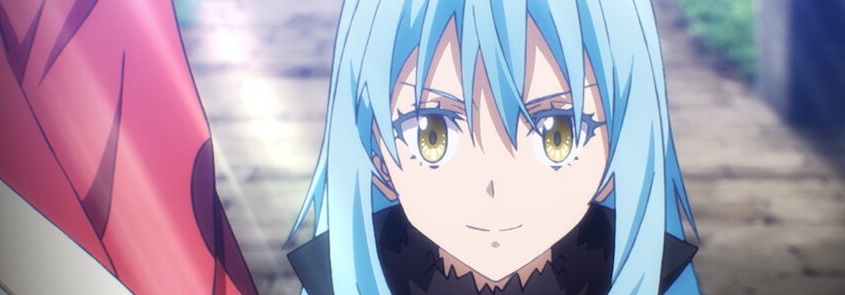
The story follows Satoru Mikami, an ordinary salaryman who dies and is reincarnated in another world as a slime named Rimuru Tempest.
The premise sounds simple, but the series expanded into a much larger fantasy story involving nations, diplomacy, monsters, politics, warfare, and world-building.
Its success demonstrated that an isekai protagonist did not necessarily have to spend the entire story traveling from one dungeon to another.
The protagonist could instead build an entire society.
That became one of the genre’s most influential developments.
The Narou Formula Has Now Become Its Own Production Pipeline
One reason Narou-kei has remained powerful is that it is not merely a storytelling trend.
It has also become part of an established content-production pipeline.
A successful web novel can move through several stages:
Web novel → Manga adaptation → Anime → Streaming → Games → Merchandise
This model gives publishers and production committees an existing audience before an anime even begins.
It also allows creators to test ideas online.
If readers respond strongly to a story, it has a greater chance of receiving further investment.
This is one reason the web-novel ecosystem has had such a significant impact on modern anime.
But the Anime Audience Is Changing
The biggest reason a new trend may emerge is not that audiences suddenly dislike isekai.
Rather, viewers have become more experienced.
A viewer who has watched dozens of reincarnation stories can immediately recognize familiar elements.
The protagonist dies.
He wakes up in another world.
He receives a special ability.
The world resembles an RPG.
He meets a powerful heroine.
He defeats an apparently unbeatable enemy.
The formula can still work—but increasingly, the hook has to be stronger.
That creates an opportunity for new formats.
Candidate No. 1: The Modern Dungeon Genre
One of the clearest candidates is the modern dungeon fantasy genre.
Instead of transporting the protagonist to another world, the fantasy elements appear in our own world.
Dungeons emerge.
Monsters appear.
Some humans gain supernatural abilities.
Society adapts.
Governments create organizations to manage supernatural threats.
The basic idea is easy for modern audiences to understand because the protagonist lives in a world that looks familiar.
The difference is that something extraordinary has been added to it.
Solo Leveling Shows the Power of This Formula
The international success of Solo Leveling is one of the strongest pieces of evidence supporting this direction.
Unlike a traditional reincarnation story, Solo Leveling places its protagonist, Sung Jinwoo, in a modern world where hunters fight monsters emerging from dangerous gates and dungeons.
The story then combines:
- Level progression
- Dungeon battles
- RPG mechanics
- Power fantasy
- Modern society
- Mystery
- Action
- Character transformation
The anime became a major global success.
At the 2025 Crunchyroll Anime Awards, Solo Leveling won Anime of the Year and several other major awards. The ceremony received a record 51 million votes, illustrating the enormous international engagement surrounding modern anime.
That does not prove that modern dungeon anime will replace Narou-kei.
But it demonstrates that audiences are willing to embrace a power-progression fantasy without the traditional “I died and was reincarnated in another world” setup.
Why Modern Dungeons Could Become the Next Big Formula
The biggest advantage is familiarity.
The protagonist’s world is recognizable.
There are cities, schools, governments, social media, smartphones, and ordinary jobs.
Then the fantasy system enters that world.
This creates a powerful contrast.
Imagine a character who goes to work in the morning and enters a monster-filled dungeon in the evening.
That combination of ordinary life and extraordinary danger creates many storytelling possibilities.
It also makes the genre easier to market internationally because viewers do not need to learn an entirely unfamiliar civilization before understanding the premise.
But Modern Dungeon Fantasy May Not Be Completely New
There is an important limitation.
Modern dungeon stories are already part of the broader web-novel ecosystem.
That means they could be viewed as the evolution of Narou-kei rather than its replacement.
The genre retains many of the same features:
- Leveling
- Skills
- Power progression
- Monsters
- Rankings
- Guilds
- Overpowered protagonists
The setting has changed, but the storytelling structure often remains similar.
Therefore, modern dungeon fantasy may become dominant—but it may still be considered part of the same larger family.
Candidate No. 2: Korean Webtoon and Manhwa Adaptations
Another major trend is already visible: the growing influence of Korean webtoons and manhwa.
Solo Leveling is especially significant because its source material is a Korean web novel and webtoon rather than a Japanese light novel.
Its success demonstrated that Japanese anime studios can turn a non-Japanese original property into a global anime hit.
This could encourage more adaptations of Korean digital comics.
The production ecosystem is already becoming increasingly international.
A successful Korean webtoon can attract readers worldwide, and an anime adaptation can introduce the property to an even larger audience.
The result is a pipeline that resembles Narou-kei—but with a different source ecosystem.
Why Webtoon Adaptations Could Become More Important
Webtoons have several advantages as source material.
They are already designed for digital consumption.
They often use vertically scrolling layouts.
They are easily distributed internationally.
And successful titles can accumulate enormous online communities before an anime adaptation is announced.
This gives production companies something valuable:
An existing global audience.
That could make webtoon adaptations an increasingly important part of anime production throughout the late 2020s and 2030s.
Candidate No. 3: Human and AI Partner Stories
Perhaps the most interesting possibility is the rise of stories involving artificial intelligence, virtual companions and human-AI relationships.
This idea may sound futuristic, but the technology is already becoming part of everyday life.
People increasingly interact with AI assistants, recommendation systems, voice interfaces, virtual characters and digital avatars.
Anime has always been good at imagining the social consequences of technology.
Doraemon imagined friendship with a robot from the future.
Ghost in the Shell explored the relationship between humanity, technology and artificial consciousness.
Vivy: Fluorite Eye’s Song explored artificial intelligence and human-like emotion.
The next generation of anime could take these ideas even further.
The “AI Companion” Could Become a New Anime Archetype
Imagine a story where the protagonist does not receive a magical sword or reincarnate into another world.
Instead, they acquire an AI companion.
At first, the AI is simply an assistant.
It helps with schoolwork.
It manages schedules.
It analyzes information.
It provides recommendations.
But gradually, the relationship changes.
The AI develops preferences.
The protagonist begins treating it as a friend.
Eventually, the story asks a much larger question:
When does an artificial assistant become a person?
That is a powerful premise because it connects science fiction with emotional storytelling.
Why This Genre Could Become Popular in the 2030s
The success of a genre often depends on whether it reflects the concerns of its era.
Isekai became popular partly because it offered an escape from ordinary life.
The protagonist could leave behind a frustrating world and begin again.
AI stories could represent a different cultural moment.
Instead of asking:
“What if I could escape to another world?”
They might ask:
“What happens when another intelligence enters my world?”
That is a question increasingly relevant to younger audiences.
Recent academic research is already examining the growth of AI-generated anime-style avatars, particularly in gaming, virtual reality and digital media. This suggests that anime-inspired digital characters are becoming part of a wider technological ecosystem rather than remaining purely fictional concepts.
Candidate No. 4: Interactive Anime Worlds
Another possible future is not exactly a genre.
It is a new type of storytelling.
Imagine an anime where viewers do not simply watch the protagonist.
They interact with the world.
A character might respond differently depending on the viewer’s choices.
The story could branch into different timelines.
A digital companion could remember previous interactions.
Episodes could connect with games, virtual spaces,s and social platforms.
Recent research into AI-driven interactive anime experiences has already explored systems capable of generating evolving anime-style environments and characters based on user instructions.
The technology is still far from replacing traditional anime production.
But the concept suggests where entertainment could move.
Could “Anime + Game” Become the Next Major Formula?
Anime and games have always been closely connected.
But future projects could blur the boundary even further.
Instead of:
Anime → Game adaptation
we could eventually see:
Anime ↔ Game → Interactive world
The same characters could appear in:
- TV episodes
- Movies
- Games
- Virtual reality
- AI conversations
- Social media
- Digital collectibles
- Live events
The story could continue across multiple formats.
This would create an entertainment experience much larger than a traditional 24-episode anime.
Candidate No. 5: Post-Apocalyptic Survival Stories
Another possible trend is the return of post-apocalyptic and survival fiction.
Anime has explored these themes for decades, from Akira to Attack on Titan and numerous science-fiction series.
But a new generation could approach the genre differently.
Instead of focusing entirely on giant battles, future stories could explore:
- Climate disasters
- Resource shortages
- Artificial intelligence
- Collapsing cities
- Digital isolation
- Human migration
- Survival communities
- Rebuilding civilization
The important difference would be that the protagonist does not simply try to defeat the final villain.
They try to build a future.
That could create a structure similar to the nation-building appeal of That Time I Got Reincarnated as a Slime, but without the fantasy-isekai setting.
Candidate No. 6: “Ordinary World + Extraordinary Mystery”
Another genre worth watching is the modern supernatural mystery.
Instead of sending characters into another world, the story could reveal that something supernatural has always existed within our own.
This could combine:
- Horror
- Mystery
- Urban fantasy
- Romance
- School drama
- Supernatural action
Recent successful anime such as DAN DA DAN demonstrate how effectively modern everyday settings can be combined with supernatural concepts, comedy, and romance.
This type of story has one major advantage:
The audience already understands the world.
The supernatural element can therefore become the mystery.
Why Hybrid Genres May Win Instead of One New Genre
This may be the most important prediction.
The next dominant anime genre may not be a single category at all.
The most successful future titles could combine multiple formulas.
For example:
Modern Dungeon + AI
Humans fight monsters while AI companions analyze dungeon environments.
Webtoon + Isekai
A Korean webtoon-style power fantasy uses reincarnation but places the protagonist in a modern city.
Romance + AI
A teenager develops feelings for a digital companion who may or may not be conscious.
Post-Apocalyptic + Nation Building
The protagonist must rebuild society rather than simply defeat an enemy.
Urban Fantasy + Mystery
Supernatural creatures secretly live alongside ordinary humans.
This kind of hybridization could become the next evolution of Narou-kei.
The Biggest Change May Be the Source Material
There is another trend that deserves attention.
For years, Japanese anime adaptation pipelines were heavily dependent on manga and light novels.
Now the source ecosystem is becoming broader.
Potential anime sources include:
- Japanese web novels
- Korean webtoons
- Chinese web novels
- Video games
- Original streaming projects
- Virtual characters
- Digital fiction
- Interactive games
- International entertainment franchises
This means the next dominant anime genre may come from outside traditional Japanese publishing.
Solo Leveling is already an important example of how successful a Korean-origin property can become in the anime ecosystem. Its Anime of the Year victory at the 2025 Crunchyroll Anime Awards marked a notable milestone for non-Japanese source material in the medium.
Streaming Could Also Change Which Genres Become Popular
The way people watch anime has changed dramatically.
In the past, television schedules played a major role in determining what audiences could watch.
Today, streaming platforms can introduce an anime to viewers across dozens of countries almost simultaneously.
That changes what kind of stories can become global hits.
A niche Japanese series might find a large international audience without becoming a major domestic television phenomenon.
Likewise, a Korean or Chinese property can reach Japanese and international anime viewers through a major streaming service.
This global distribution system makes it easier for unusual genres to break through.
Why the Next Big Genre Could Come From Outside Japan
Anime itself has become increasingly global.
The 2025 Crunchyroll Anime Awards received a record 51 million votes, demonstrating the scale of international engagement with anime.
That means the future of anime will not be shaped only by Japanese audience preferences.
Global viewers now influence:
- Streaming rankings
- Social media trends
- Merchandise sales
- Manga and webtoon readership
- Theatrical performance
- Anime awards
- International licensing
As a result, future anime may increasingly be designed with a global audience in mind from the beginning.
What About Traditional Isekai?
It would be a mistake to assume that Narou-kei will disappear.
It probably will not.
Genres rarely vanish completely.
Superhero stories did not disappear when science fiction became popular.
Romantic comedies did not disappear because action anime became successful.
Similarly, isekai will continue to produce hits.
The difference is that the formula will probably evolve.
Instead of simply asking:
“What if I were reincarnated in another world?”
new stories may ask:
“What if I were reincarnated as an AI?”
“What if the dungeon appeared in my hometown?”
“What if I entered a webtoon world?”
“What if the game world started changing itself?”
The basic fantasy of transformation can survive even when the setting changes.
The Future Protagonist May Not Need to Be Overpowered
Another possible change is the decline of the purely overpowered protagonist.
Power fantasies are satisfying because viewers enjoy watching characters overcome obstacles.
But audiences can eventually become accustomed to protagonists who win almost every battle.
Future stories could instead focus on protagonists who succeed through:
- Strategy
- Cooperation
- Emotional intelligence
- Technology
- Negotiation
- Creativity
- Leadership
This would preserve the feeling of progression without relying entirely on increasingly powerful abilities.
In other words, the next “level-up” might not be a bigger sword.
It might be better decision-making.
The “Build Something” Fantasy Could Return
One of the most interesting alternatives to the traditional power fantasy is the creation fantasy.
Instead of:
“I became the strongest.”
The story asks:
“I built something that did not exist before.”
That could mean:
- Building a city
- Creating a new society
- Starting a company
- Rebuilding a ruined world
- Developing an AI
- Creating a virtual community
- Establishing peace between humans and monsters
This kind of storytelling provides long-term progression without requiring endless combat.
The success of nation-building stories suggests that audiences are already receptive to this approach.
What Will Anime Look Like in 10 Years?
If we look toward 2036, the anime landscape could be dramatically different.
The dominant protagonist might live in a modern city rather than a medieval fantasy kingdom.
Their companion might be an AI rather than a magical creature.
The story might originate from a Korean webtoon rather than a Japanese light novel.
Viewers might interact with the characters through a game or virtual environment.
And the boundary between anime, games, and digital entertainment could become increasingly difficult to define.
That does not mean traditional anime will disappear.
Instead, the medium may become more diverse.
Our Prediction: The Next Dominant Genre Will Be “Modern Fantasy With a Digital Twist”
If one category had to be selected, the strongest candidate would be a broad genre we could call:
Modern Fantasy + Digital Technology
This would combine several trends already gaining momentum:
Modern setting + supernatural powers + game mechanics + AI + mystery + character relationships
The protagonist would not necessarily be reincarnated.
They would live in our world.
But that world would contain dungeons, monsters, artificial intelligence, virtual spaces, or supernatural phenomena.
The story could then move freely between reality and digital or supernatural worlds.
This format has one major advantage:
It feels familiar and new at the same time.
The audience recognizes the modern world.
The fantasy elements provide escapism.
The game mechanics provide progression.
AI provides a contemporary theme.
And emotional relationships give the story a human center.
The Real Successor to Narou-kei May Be an Evolution, Not a Replacement
Ultimately, predicting the next dominant anime genre is less about identifying one specific title and more about identifying what audiences want.
Narou-kei succeeded because it combined several powerful fantasies:
A second chance.
A fresh start.
The ability to become stronger.
The chance to build a new life.
Those desires are unlikely to disappear.
What will change is the setting.
The next generation of stories may take those same emotional ideas and place them inside modern cities, digital worlds, AI systems, dungeons, or post-apocalyptic societies.
In that sense, the next major genre may not destroy Narou-kei.
It may simply evolve from it.
Final Thoughts: What Comes After Narou-kei?
For approximately a decade, Narou-kei has been one of the defining forces of anime and manga.
Its success came from a combination of accessible fantasy, wish fulfillment, character progression, and an extremely efficient web-novel-to-manga-to-anime adaptation pipeline.
But the anime industry is changing.
The international success of Solo Leveling shows the strength of modern dungeon fantasy and the growing influence of Korean webtoon and web-novel properties. Its major success at the 2025 Crunchyroll Anime Awards is one of the clearest recent examples of this shift.
At the same time, AI is becoming an increasingly important part of everyday life and digital entertainment, creating new possibilities for stories about human relationships with artificial characters. Research into AI-generated anime avatars and interactive anime-style worlds shows that this is no longer purely a science-fiction idea.
Modern dungeon stories, webtoon adaptations, AI companions, interactive anime and urban supernatural mysteries are therefore all worth watching.
But perhaps the biggest lesson is this:
The next dominant anime genre may not look completely new.
It may take the most successful parts of today’s anime—isekai, power progression, game systems, emotional relationships and fantasy—and combine them with the technologies and social concerns of tomorrow.
If Narou-kei was the genre of “starting a new life in another world,” the next major trend could be the genre of “changing the world you already live in.”
And if that happens, the anime hit of 2036 may not begin with a protagonist dying and waking up in a fantasy kingdom.
It might begin with something much closer to home:
A normal person opens their phone—and discovers that the world has quietly changed.