 by
by The Summer 2026 anime season has been packed with sequels, ambitious adaptations and original productions, but several titles have attracted attention for a very different reason: their unusual and sometimes controversial presentation.
Among the most talked-about series are Yani Neko, The Banished Reincarnated Heavy Knight Unleashes His Unrivaled Power with Game Knowledge, and the new The Ghost in the Shell anime from Science SARU. All three have received praise for their production qualities, while simultaneously generating debate over their tone, visual style, or faithfulness to the source material.
In particular, Yani Neko has surprised viewers with how vividly its unpleasant and chaotic lifestyle is presented. Meanwhile, The Banished Reincarnated Heavy Knight has divided audiences with its highly dynamic camera work, and The Ghost in the Shell has prompted discussion because of its deliberately different interpretation of a franchise with a long anime history.
So, are these controversial choices actually signs of high-quality animation and strong artistic direction—or do they simply make some viewers uncomfortable?
This article looks at the three titles that have generated some of the most interesting discussions during Summer 2026.
‘Yani Neko’: Beautiful Animation Makes the Filth Even More Vivid
Among the season’s most unusual titles is Yani Neko, based on the manga by Nyannyan Factory.
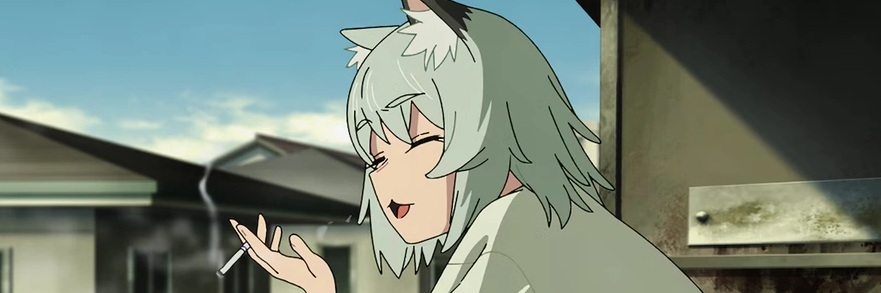
The series follows Yanineko, a beastman who lives an extremely lazy and unhealthy lifestyle centered around smoking. The character’s environment is deliberately unpleasant: her clothes are dirty, her room is covered in signs of nicotine exposure, and garbage is scattered around her living space.
The anime does not attempt to make this lifestyle look glamorous.
Instead, it presents the character’s habits in surprisingly detailed animation.
Viewers see behavior such as smoking in inappropriate places, disposing of cigarette ash carelessly,y and engaging in increasingly unpleasant situations. Some scenes deliberately push the limits of what viewers might consider comfortable to watch.
That contrast is one of the biggest talking points surrounding the adaptation.
Bibury Animation Studios gives the series polished character animation and detailed backgrounds, meaning that even the most unpleasant elements are presented with considerable visual clarity.
For some viewers, this makes the comedy even more effective.
For others, it has the opposite effect.
Comments from viewers have included reactions along the lines of:
“The animation is way too beautiful for something this disgusting.”
“It’s so unsanitary that I had to stop watching.”
“The manga didn’t feel this harsh.”
“I can’t believe they animated this in such detail.”
The series has nevertheless attracted substantial attention. In Niconico’s early Summer 2026 anime ranking, Yani Neko placed first, with its first episode surpassing 500,000 views during the early tracking period. The ranking was based on early engagement, including views, comments, and access numbers.
That suggests the controversy itself has become part of the show’s appeal.
‘Yani Neko’ Has Two Different Versions
One of the most notable aspects of the Yani Neko anime is that viewers can encounter two versions of the series.
The “On-Air Version” is designed for terrestrial television, while the “Evil Dragon Liberation Version” is described by the production team as respecting the director’s original creative intentions.
The latter is available through AT-X and selected streaming services.
This two-version approach has generated additional discussion because viewers can compare how the same material changes depending on the version.
It also demonstrates the difficulty of adapting a particularly provocative manga for television while retaining the tone that made the original work distinctive.
For newcomers, the important point is simple: the two versions are not necessarily identical, so reactions can vary depending on which version someone watched.
The series began broadcasting in Japan on July 2, 2026, with the regular version airing on TOKYO MX and BS11.
Is ‘Yani Neko’ Actually Dirtier Than the Manga?
This is one of the biggest questions surrounding the adaptation.
The manga’s deliberately unpleasant humor was already part of its identity, but animation adds movement, sound, and visual detail.
A cigarette burning in a static manga panel is one thing.
Watching smoke fill an animated room, seeing the dirty environment move around the characters,s and hearing the associated sound effects can create a much stronger sensory reaction.
That may explain why some viewers feel that the anime is “dirtier” or more intense than the original.
At the same time, that reaction does not necessarily mean the adaptation has failed.
For a comedy built around an intentionally unpleasant protagonist, making the audience uncomfortable may actually be part of the intended experience.
The real dividing line appears to be whether viewers find that discomfort funny and entertaining—or simply unpleasant.
‘The Banished Reincarnated Heavy Knight’ Divides Viewers With Its Camera Work
Another Summer 2026 title attracting attention for its unusual presentation is The Banished Reincarnated Heavy Knight Unleashes His Unrivaled Power with Game Knowledge.
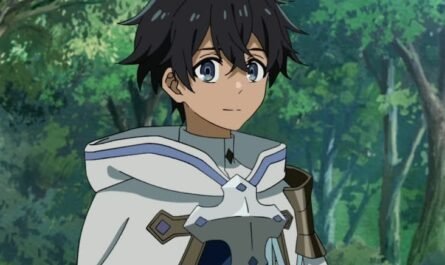
Based on the original story by Nekoko, with manga by Rie Takeguchi/Rokkou Rie and character designs by Gian, the series follows Elma Edvan, a reincarnated character who receives the seemingly disappointing Heavy Knight class.
Rather than accepting his supposed weakness, Elma uses knowledge from his previous life to exploit the world’s systems and become increasingly powerful.
The premise will be familiar to viewers who enjoy reincarnation and game-inspired fantasy anime.
However, the production style is what has generated much of the discussion.
GoHands Brings Its Signature Visual Style
The anime is produced by GoHands, a studio known for highly dynamic camera movement, stylized compositions, and extensive use of 3DCG.
Those characteristics are particularly noticeable in The Banished Reincarnated Heavy Knight.
The camera frequently moves around characters during battles, while the 3DCG environments help create the impression that viewers are moving through a game world.
When everything works, the result can be visually impressive.
The action feels energetic and different from more conventional fantasy anime.
However, not every viewer has responded positively.
Some have described the camera movement as:
“too intense,”
“difficult to follow,”
“tiring,”
or even “motion-sickness inducing.”
This is an interesting example of how a technically ambitious animation style can produce completely different reactions.
One viewer may see a sweeping camera movement as spectacular.
Another may simply wonder why the camera is moving so much.
Is Motion Sickness a Sign of High-Quality Animation?
Not necessarily.
A technically complicated shot is not automatically a better shot.
Animation quality is also about clarity, timing, composition,n and whether the visual choices serve the story.
GoHands’ approach is intentionally distinctive, and that means The Banished Reincarnated Heavy Knight may appeal strongly to viewers who enjoy aggressive camera movement while frustrating people who prefer stable compositions.
That does not make either audience “wrong.”
In fact, this kind of debate can be useful because it demonstrates how differently viewers experience animation.
A sequence can be technically impressive and still be physically uncomfortable for some people.
‘The Ghost in the Shell’: A New Look at a Legendary Franchise
The third major example is The Ghost in the Shell, the new 2026 TV anime produced by Science SARU.
Unlike Yani Neko, the controversy surrounding this series is not primarily about unpleasant content.
Instead, much of the discussion comes from its visual identity and interpretation of the original manga.
The new anime is based on Masamune Shirow’s original manga, which began serialization in 1989. The franchise has previously received several major anime adaptations, including Ghost in the Shell: Stand Alone Complex, Ari,se and other projects.
That history means viewers already have strong expectations about what a Ghost in the Shell production should look and feel like.
The new series takes a noticeably different direction.
Science SARU is handling animation production, with Mokochan directing and Toh EnJoe handling series composition and scripts. The official promotional material confirms the series is scheduled as a July 2026 anime.
Science SARU Embraces the Original Manga’s Energy
One of the most interesting aspects of the new Ghost in the Shell is how strongly it draws from Shirow’s original aesthetic.
Motoko Kusanagi is presented with an energetic personality and visual style that can feel quite different from the more restrained interpretations many viewers remember from earlier anime adaptations.
Longtime manga readers have welcomed this approach.
Some viewers have praised the series for feeling closer to the spirit of Shirow’s original work, while others have admitted that the change is difficult to adjust to because previous adaptations had become their definitive image of the franchise.
That creates a fascinating situation:
The same creative decision can be interpreted as either extremely faithful or completely unfamiliar, depending on what version of Ghost in the Shell a viewer grew up with.
Why Are These Anime Causing So Much Debate?
Although Yani Neko, The Banished Reincarnated Heavy Knight and The Ghost in the Shell are completely different kinds of anime, they share one important characteristic:
They are not trying to look completely conventional.
‘Yani Neko’ challenges viewers with unpleasant realism
Its detailed depiction of smoking, dirt, and chaotic living conditions makes the comedy more extreme than many viewers expected.
‘The Banished Reincarnated Heavy Knight’ prioritizes movement
Its dynamic camera work and 3DCG environments create an intentionally energetic visual experience.
‘The Ghost in the Shell’ challenges established expectations
Rather than simply repeating the style of previous adaptations, Science SARU is presenting its own interpretation while drawing heavily from the original manga.
In all three cases, the production teams are making noticeable creative choices.
And noticeable choices naturally produce stronger opinions.
Controversy Does Not Necessarily Mean Failure
It is easy to interpret online arguments as evidence that an anime is unpopular.
However, controversy and popularity can exist at the same time.
Yani Neko is a good example.
Despite its divisive content, it ranked first in Niconico’s early Summer 2026 anime ranking, while The Ghost in the Shell ranked third in the same list.
That means viewers are not simply ignoring these shows.
They are watching them, discussing them, and forming strong opinions.
Sometimes the most memorable anime of a season are not the titles everyone agrees on. They are the ones that make viewers stop and ask:
“Why did they make this scene like that?”
The Summer 2026 Anime Season Is Defined by Variety
The broader Summer 2026 lineup demonstrates how varied modern anime has become.
There are major sequels with enormous fanbases, new adaptations of popular manga, historical dramas, fantasy adventures, experimental original productions and revivals of long-running franchises.
Within that crowded lineup, titles such as Yani Neko, The Banished Reincarnated Heavy Knight and The Ghost in the Shell have managed to stand out because they offer something visually or tonally distinctive.
For beginners, that can actually be a good thing.
If you do not enjoy one of these shows, there are dozens of other Summer 2026 anime with completely different approaches.
But if you enjoy unusual animation, unconventional comedy,y or bold reinterpretations of established material, these three are worth keeping an eye on.
Final Thoughts
The Summer 2026 anime season is proving that “high quality” does not always mean “universally comfortable.”
Yani Neko uses polished animation to make its deliberately filthy world even more vivid. The Banished Reincarnated Heavy Knight uses aggressive camera movement and 3DCG to create a distinctive action style, even if some viewers find it difficult to watch. Meanwhile, The Ghost in the Shell is challenging decades of established expectations with a fresh interpretation rooted in Masamune Shirow’s manga.
Whether these creative decisions work for you ultimately comes down to personal taste.
But one thing is clear: these anime are being talked about because they are willing to take risks.
And in a season overflowing with new releases, being able to make viewers say “I’ve never seen an anime like this before” may be one of the strongest ways to stand out.