 by
by What makes the characters in To You Who Are in the Farthest Place feel so youthful and emotionally real? The upcoming animated film has revealed new details about its character designs, including the careful work of illustrator Hechima and a newly released corrected line drawing of protagonist Tsukigase Kazuki.
The animated film To You Who Are in the Farthest Place is scheduled to open in Japanese theaters on October 9, 2026. Based on the popular coming-of-age novel by Akiko Abe, the movie tells an emotional story about two young people whose lives become connected through a mysterious encounter on a remote island.
Hechima, who serves as both character designer and chief animation director, has explained how she approached the task of bringing the original novel’s characters to life. Her goal was to preserve the spirit of Abe’s writing while giving Kazuki, Nanao, and the supporting characters expressions and personalities that work naturally in animation.
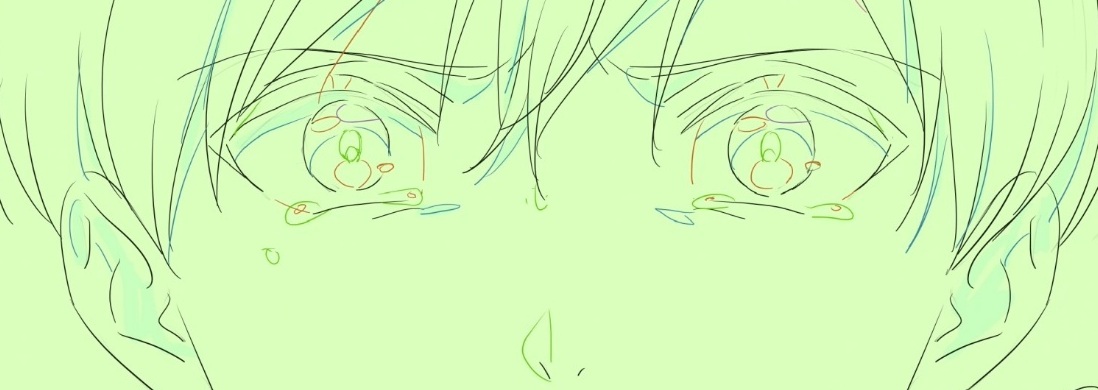
The newly revealed line drawing of Kazuki provides a closer look at this process. It highlights the attention paid to individual lines, subtle facial expressions, and the small visual details that help communicate a character’s inner feelings.
The announcement also offers a glimpse into the film’s broader artistic approach, which combines delicate character animation, beautiful island scenery, and a story filled with secrets, loneliness, and the emotional uncertainty of youth.
Hechima Reveals the Secrets Behind the Film’s Youthful Character Designs
One of the most interesting aspects of To You Who Are in the Farthest Place is the way its characters express emotions without always explaining what they feel.
Hechima, known for her work as an illustrator on games and light novels, was responsible for the film’s character designs and chief animation direction. Her approach focused on reproducing the image of the original characters as faithfully as possible while ensuring that their personalities came across clearly on screen.
This required more than simply drawing attractive anime characters. Each design needed to reflect the character’s personality, background, and emotional state.
Kazuki and Nanao received particularly careful attention because they occupy the center of the film’s story.
Kazuki is a high school student who tends to keep his feelings to himself. Nanao, meanwhile, is a mysterious girl who comes from 1974. Although the two characters meet during a summer on a remote island, their different experiences and hidden secrets shape how they understand the world around them.
Hechima’s designs reflect these differences through clothing, posture, expressions, and small visual details.
Rather than making every character look equally polished or expressive, the film uses their individual appearances to suggest who they are and how they relate to other people.
Why Kazuki’s Uniform Is an Important Design Detail
Kazuki’s character design demonstrates how even a seemingly ordinary detail can communicate personality.
According to Hechima, one important consideration was that Kazuki should be the only student who wears his school uniform properly, even as the other students gradually begin wearing their uniforms more casually.
At first glance, this may seem like a minor design choice. However, it helps establish Kazuki’s personality without requiring additional dialogue.
The way a character wears a uniform can suggest their attitude toward school, their relationship with classmates, and how comfortably they fit into their surroundings.
Kazuki’s neat appearance distinguishes him from the students around him. It becomes another small indication that he is somewhat separate from the social world he inhabits.
This approach also supports the film’s emotional storytelling. Instead of relying entirely on dramatic facial expressions, the animation uses ordinary details to communicate a character’s feelings and behavior.
For viewers, these details may become more noticeable after learning how carefully the designs were planned.
Nanao’s White Dress Reflects Her Connection to 1974
Nanao’s design presented a different challenge.
Because she comes from 1974, her clothing needed to reflect the period in which she lived. The production team requested that she wear a white dress, but choosing the right design required additional research.
Hechima studied clothing from that era and considered what kind of dress would best express Nanao’s personality.
The result needed to accomplish two things at once: it had to look appropriate for the historical period, and it had to feel natural for the character wearing it.
This distinction is important because costume design in animation is not simply about historical accuracy. Clothing also helps communicate personality, mood, and the way a character is perceived by others.
Nanao’s white dress contributes to her mysterious appearance while connecting her visually to the time from which she has come.
The contrast between her clothing and Kazuki’s modern school uniform also reinforces the unusual circumstances of their meeting.
Their differences are therefore reflected not only in the story but also in their designs.
Original Author Akiko Abe Praises the Animated Version of Kazuki
The film’s character designs have also received a positive reaction from original author Akiko Abe.
After watching the completed movie, Abe commented on how clearly Kazuki’s personality came across in the animated adaptation.
In the original novel, Kazuki was portrayed as someone who did not show much emotional fluctuation. The film, however, gave him a more immediately recognizable presence.
Abe reportedly described the experience as seeing a different version of a character she had written herself. She even joked that she found the animated Kazuki somewhat cute.
Her reaction highlights one of the most interesting challenges of adapting a novel into animation.
A written story allows readers to imagine a character’s appearance, expressions, and mannerisms for themselves. An animated film must make those qualities visible through design, movement, voice acting, and direction.
A successful adaptation does not necessarily reproduce every aspect of the original in the same way. Instead, it finds visual and dramatic techniques that communicate the character’s personality through a different medium.
In Kazuki’s case, Hechima’s design and the animation team’s work appear to have helped make his personality more immediately visible.
Newly Released Corrected Line Drawing Shows Attention to Detail
Alongside the comments about character design, the production team has unveiled a corrected line drawing of Kazuki, highlighting Hechima’s work as chief animation director.
In anime production, line drawings form an important part of the process through which characters are brought to life.
An animation scene may pass through several stages of drawing, correction, and refinement before reaching its final form. Animation directors review drawings to maintain consistency in character appearance and ensure that expressions match the intended performance.
A corrected drawing can therefore reveal details that viewers might not consciously notice when watching the completed film.
These include the shape of the eyes, the position of the mouth, the angle of the face, the posture of the character, and the relationship between different lines.
For a film built around delicate emotional changes, such details are particularly important.
A small adjustment to a character’s expression can change whether they appear confident, uncomfortable, lonely, or uncertain.
Hechima explained that she paid attention to the nuances of every single line while considering the complex inner lives of the characters.
She also suggested that viewers might enjoy watching the film and then identifying scenes where they can recognize the particular qualities of her drawings.
This invitation encourages audiences to look beyond the story itself and appreciate the craftsmanship involved in bringing the characters to the screen.
How the Film Expresses the Complex Emotions of Teenagers
At the heart of To You Who Are in the Farthest Place is the emotional relationship between Kazuki and Nanao.
Their summer encounter gradually brings them closer, but neither character is entirely free from secrets or uncertainty.
The film explores the kinds of feelings that can be difficult to explain during adolescence: loneliness, curiosity, hesitation, attraction, and the fear of being misunderstood.
Hechima’s comments suggest that the animation team deliberately considered these complex inner lives when designing the characters and refining their expressions.
Rather than exaggerating every emotion, the film pays attention to subtle differences in how the characters behave.
A glance away from another person, a change in posture, or a slight movement of the mouth can sometimes communicate more than an explicit statement.
This is particularly relevant to Kazuki, whose restrained personality makes him difficult to read at first.
Nanao’s mysterious background adds another layer of uncertainty to their interactions. As the two spend more time together, the audience gradually learns more about them and the circumstances surrounding their meeting.
The animation’s attention to small details helps make this gradual emotional development feel natural.
What Is To You Who Are in the Farthest Place About?
To You Who Are in the Farthest Place is based on the coming-of-age novel by Akiko Abe, published under Shueisha’s Orange Bunko imprint.
The story follows Tsukigase Kazuki, a high school student who leaves the city for personal reasons and begins attending school on Saiki Island, a remote location surrounded by beautiful natural scenery.
There, he encounters Nanao, a mysterious girl who has come from 1974.
Their meeting becomes the starting point of a story in which the past and present begin to intersect. Both characters carry secrets, and their encounter gradually changes the direction of their lives.
The premise combines familiar coming-of-age themes with elements of mystery, fantasy, and science fiction.
Rather than relying on constant action, the story places considerable emphasis on the characters’ emotional experiences and the gradual discovery of hidden truths.
The island setting also plays an important role. Its sea, wind, landscapes, and quiet surroundings create an atmosphere that contrasts with the complicated feelings carried by the characters.
As Kazuki and Nanao grow closer, the film explores how people can feel distant from one another even when they are physically close.
The Novel’s Popularity Helped Bring the Film to the Big Screen
The original novel attracted attention for its emotional storytelling and mysterious premise.
Akiko Abe also received wider recognition after winning the 22nd Japan Booksellers’ Award in 2025 for Cafuné, another work that helped raise her profile among Japanese readers.
To You Who Are in the Farthest Place gained popularity among younger readers, with its emotional story becoming a topic of discussion on TikTok.
The animated film brings that story to a new audience, using character performances, music, color, and cinematography to express aspects of the novel that readers might previously have imagined for themselves.
For existing fans of the book, the adaptation offers an opportunity to see Kazuki and Nanao interpreted through animation. For newcomers, it provides an entry point into Abe’s story without requiring them to have read the original novel first.
Director Junichi Wada Explains the Film’s Visual Style
The film is directed by Junichi Wada, known for his work on the HIGH CARD series.
In a recent interview, Wada explained that he wanted the film to adopt a relatively classic visual approach, focusing on straightforward emotional expression rather than relying constantly on elaborate compositions or flashy animation techniques.
The goal was to let the characters’ feelings remain at the center of the story.
Wada also described the challenge of adapting a novel that does not depend on large action sequences or spectacular set pieces. Instead, the film follows characters who have been hurt and must find ways to understand themselves and each other.
He aimed to portray their emotions carefully without forcing an obvious moral message onto them.
As the story progresses toward its climax, however, the visual style becomes more dramatic, allowing the animation to reflect the increasing intensity of events.
This balance between quiet character moments and more expressive dramatic sequences helps the film maintain both emotional subtlety and cinematic impact.
Saiki Island’s Scenery Adds Another Layer to the Story
The setting is another important part of the film’s visual identity.
The story takes place on Saiki Island, a remote island surrounded by the sea and rich natural scenery. Director Wada visited the Oki Islands in Shimane Prefecture, which served as a model for the island’s environment.
The production team worked to capture the atmosphere of the landscape, from the changing colors of the sky to the appearance of the sea and the way the surroundings shift with the passage of time.
Art director Minoru Onishi played an important role in translating these locations into the film’s backgrounds.
The team also used color to reflect the emotional flow of individual scenes. Sunset sequences, for example, received particular attention, with different color treatments prepared to suit the framing and mood.
Sound was another consideration. Members of the production team recorded environmental sounds such as wind and waves to help create a convincing sense of place.
These details make the island more than a simple backdrop. Its scenery and atmosphere help express the characters’ feelings, including Kazuki’s loneliness and the changing distance between him and Nanao.
Main Cast and Creative Staff
The film features a cast of established voice actors, supported by a production team experienced in animation, character design, music, and visual storytelling.
Main voice cast
- Tsukigase Kazuki — Hiyori Ishibashi
- Nanao Akika — Anna Nagase
- Supporting roles — Shinba Tsuchiya, Sumire Uesaka, Wataru Hatano, Nobuhiko Okamoto, Yoshitsugu Matsuoka, Naoto Fujiki, and Hiroshi Tamaki
Hiroshi Tamaki appears as a guest performer, and the film marks his first role voicing a character in a Japanese animated film, according to the cast announcement.
Why Anime Fans Should Watch the Character Details Closely
The newly revealed corrected drawing offers a useful reminder that character animation involves much more than movement.
For a story like To You Who Are in the Farthest Place, the smallest details can help determine how an audience understands a character.
Kazuki’s properly worn uniform reflects his personality and sets him apart from his classmates. Nanao’s white dress connects her to the era she comes from while contributing to her mysterious appearance.
Meanwhile, the line drawing shows how the animation team refines a character’s face and expression to preserve the intended feeling of a scene.
These details may not be immediately obvious during a first viewing, especially as audiences follow the mystery surrounding the characters.
However, knowing about Hechima’s approach could make a second viewing more rewarding. Viewers can pay closer attention to expressions, posture, clothing, and the way the characters are framed against the island’s scenery.
The latest details about To You Who Are in the Farthest Place highlight the care that has gone into adapting Akiko Abe’s novel for the big screen.
Hechima’s character designs, her attention to individual lines, and the newly revealed corrected drawing of Kazuki all demonstrate how visual details can help bring a character’s inner life into focus.
Kazuki’s neat uniform and Nanao’s historically inspired white dress are examples of how clothing can communicate personality and background without lengthy explanations. Meanwhile, the original author’s positive reaction to the animated Kazuki suggests that the film has found its own way to express the character’s appeal.
The film’s director, Junichi Wada, has also emphasized a restrained, emotionally focused visual style, supported by carefully designed scenery, changing colors, and natural environmental sounds.
Together, these elements create a coming-of-age story that combines romance, mystery, and fantasy with a close examination of teenage emotions.
With its Japanese theatrical release scheduled for October 9, 2026, To You Who Are in the Farthest Place is worth watching for viewers who enjoy character-driven anime and stories about the complicated feelings that can emerge when two people from different worlds meet.
Sometimes, the smallest line in an animation can reveal more about a character than words ever could.