 by
by Meta Description: Discover why Kocha Agasawa’s You and I Are Polar Opposites and The Ramparts of Ice are captivating anime fans in 2026 with realistic romance, relatable characters, and emotionally detailed storytelling.
2026 Is Becoming a Special Year for Kocha Agasawa’s Anime Adaptations
The year 2026 is shaping up to be a remarkable one for manga artist Kocha Agasawa. Two of her best-known works, You and I Are Polar Opposites and The Ramparts of Ice, have received anime adaptations that showcase different sides of her approach to high school life, romance, friendship, and emotional growth.
You and I Are Polar Opposites premiered in January 2026, followed by its second season in July. Meanwhile, The Ramparts of Ice began its second season on Netflix in October, bringing audiences back to its complicated relationships and emotionally guarded characters.
Although both series take place in familiar high school settings, they offer something different from conventional romantic comedies. Instead of depending on exaggerated misunderstandings, dramatic love triangles, or obvious villains, Agasawa’s stories find their strength in small emotional changes and everyday experiences.
A nervous conversation, an ordinary walk home, a moment of hesitation before a confession, or the memory of a shared experience can become just as important as a major plot development.
This attention to ordinary life is one of the defining qualities of Agasawa’s storytelling. Her characters feel like real teenagers who are still learning how to understand themselves, communicate their feelings, and build relationships with other people.
With both anime adaptations reaching audiences in the same year, now is an excellent opportunity to examine what makes Agasawa’s work so distinctive—and why her approach to youthful romance resonates with so many viewers.
- You and I Are Polar Opposites: A Romance Built on Understanding
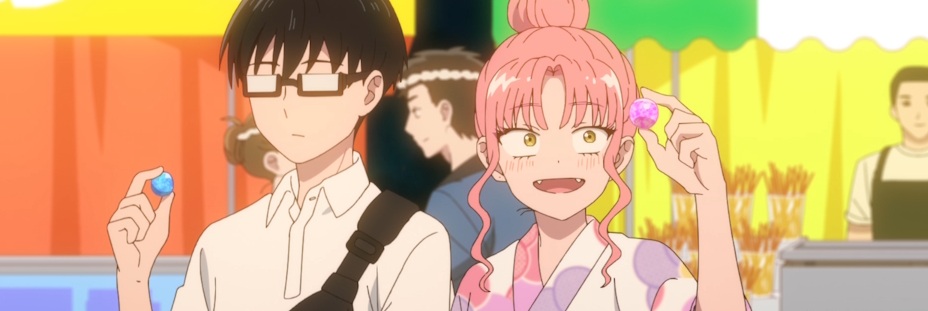
You and I Are Polar Opposites was serialized on Shueisha’s digital manga platform Shonen Jump+ from 2022 to 2024. The romantic comedy follows Miyu Suzuki, an energetic high school girl who worries about how other people perceive her, and Yusuke Tani, a quiet boy who is comfortable expressing his own opinions.
At first glance, the two appear to have completely different personalities.
Suzuki is cheerful, sociable, and expressive. She often pays attention to the atmosphere around her and worries about whether her behavior will be accepted by others. Even when she wants to express herself honestly, she sometimes hesitates because she is concerned about how people might react.
Tani, on the other hand, is reserved and straightforward. He does not feel the same need to adjust his behavior to match everyone else’s expectations, and his calm confidence gives him a distinctive presence.
Their differences create the foundation for the romance, but the series does not treat those differences as obstacles that must be eliminated. Instead, Suzuki and Tani gradually learn to understand and respect each other.
This is an important distinction. Many romantic comedies depend on characters repeatedly misunderstanding one another to keep the story moving. In Agasawa’s work, the characters’ growth often comes from learning to communicate more honestly and recognize that their partner may see the world differently.
The result is a relationship that feels warm, believable, and emotionally rewarding.
A Gentle World Without Obvious Villains
One of the most distinctive features of You and I Are Polar Opposites is its gentle atmosphere.
Romantic stories often introduce a manipulative rival, a cruel classmate, or a major betrayal to create tension. While these elements can be effective, they can also make relationships feel unnecessarily dramatic.
Agasawa takes a different approach.
Suzuki and Tani live in a world populated by ordinary high school students. Their friends have their own insecurities, personalities, preferences, and relationship problems. People occasionally make mistakes, misunderstand one another, or struggle to express their feelings, but they are not automatically presented as villains.
This creates a surprisingly refreshing atmosphere. The characters can experience awkwardness, jealousy, embarrassment, and uncertainty without the story turning every disagreement into a major confrontation.
The absence of clearly defined villains does not mean that the story lacks conflict. Instead, much of its tension comes from the difficulties of growing up.
Suzuki’s concern about other people’s opinions, for example, is a recognizable problem for many teenagers. Wanting to fit in can make it difficult to say what one really thinks, even when there is no immediate threat of rejection.
Tani’s straightforwardness offers a contrast, but the story does not suggest that one personality is automatically superior to the other. Both characters have their own ways of navigating social situations.
By allowing these differences to exist naturally, the series creates a more nuanced picture of teenage relationships.
Why Ordinary Moments Feel So Special
Perhaps the greatest achievement of You and I Are Polar Opposites is its ability to make small moments feel meaningful.
The series understands that romance is not always defined by dramatic confessions or grand gestures. Sometimes, the most important experiences are the ones that seem insignificant while they are happening.
A conversation after school, a shared meal, or a walk through familiar streets can become a cherished memory because of the person who was there.
Agasawa’s storytelling pays close attention to these experiences. The characters do not need to make life-changing decisions in every episode. Their emotional development can be expressed through a brief pause, a change in expression, or a sentence that reveals how much a relationship has come to mean to them.
This attention to detail gives the anime its sense of emotional realism. Viewers can recognize their own experiences in the characters’ interactions, making the romance feel personal rather than simply entertaining.
- The Memorable Home-Date Scene: Turning an Ordinary Day Into a Lasting Memory
One particularly memorable example appears in the episode following Suzuki and Tani’s first home date at Suzuki’s house.
As the two walk outside and enjoy the autumn air, Suzuki reflects on the feeling of the moment. The atmosphere reminds her of memories associated with her middle school cultural festival.
For Suzuki, the connection between the present and the past makes the experience feel especially meaningful. The air itself becomes linked to a particular period of her life and the emotions she experienced during it.
Tani responds by suggesting that he will probably remember that day whenever he breathes the same air in the future.
The exchange is simple, but its emotional effect is considerable.
Tani is not making an elaborate declaration of love. Instead, he is expressing the idea that an ordinary experience can become permanently associated with someone important.
For Suzuki, this means that the day they are sharing may remain part of her memories long after the walk has ended.
It is a beautiful illustration of how love can change the meaning of familiar experiences. A particular season, a familiar scent, or the feeling of the air on a certain day can become a reminder of someone who matters to us.
The scene also demonstrates how differently the two characters express themselves. Suzuki is more openly emotional and reflective, while Tani communicates his feelings through a quiet but sincere observation.
Neither approach is presented as the only correct way to express affection. Their differences help make the exchange feel natural.
The Emotional Power of Sensory Memories
The scene is effective because it connects romance with sensory memory.
People often associate particular smells, sounds, places, or weather conditions with important events in their lives. Years later, experiencing something similar can bring back a memory with surprising clarity.
The anime uses this familiar psychological experience to make the relationship feel more authentic.
Instead of telling viewers that Suzuki and Tani are falling in love, it shows how their shared experiences are beginning to influence the way they remember the world around them.
That is a subtle but powerful form of romantic storytelling.
It also reflects a broader strength of Agasawa’s writing: emotions are not always explained directly. Sometimes, a character’s choice of words or reaction to an ordinary situation reveals more than a lengthy conversation could.
- Small Details Make the Romance Feel Real
Another strength of You and I Are Polar Opposites is its attention to the practical details of dating.
For example, Suzuki worries about whether the way she eats a hamburger during a date might look unattractive. At another point, she is careful not to leave lipstick on Tani’s clothes when they hug.
These moments may seem insignificant, but they reveal a great deal about her personality.
When people care about someone romantically, they often become more conscious of their own behavior. They may worry about their appearance, wonder whether they are acting awkwardly, or pay attention to details they would normally ignore.
Suzuki’s concerns reflect this experience recognizably.
She is not simply worried about looking attractive. She wants to make a good impression on someone whose opinion matters to her, and that desire makes even ordinary activities feel unusually important.
The humor comes from the contrast between how small the problems appear to other people and how significant they feel to Suzuki.
Many viewers will recognize this feeling. A simple date can become a source of nervous excitement when every gesture seems capable of revealing something about who we are.
Why These Details Matter More Than Grand Gestures
Romantic anime frequently uses dramatic moments to communicate affection: a confession in the rain, a sudden embrace, or a declaration made in front of an entire school.
Such scenes can be memorable, but everyday gestures can be equally effective.
Suzuki’s concern about eating politely or avoiding lipstick on Tani’s clothing demonstrates how affection influences her ordinary decisions. These details show that romance is becoming part of the way she thinks and behaves.
They also help prevent the characters from feeling idealized. Suzuki is not always perfectly confident or effortlessly charming. She can be awkward, self-conscious, and uncertain.
Those imperfections make her easier to relate to.
By portraying these small concerns with warmth rather than ridicule, Agasawa creates a romantic comedy that feels affectionate toward its characters.
- The Supporting Cast Makes You and I Are Polar Opposites More Than a Love Story
Although Suzuki and Tani are at the center of the narrative, the people around them are equally important to the series’ atmosphere.
Their classmates have their own friendships, insecurities, romantic interests, and ways of understanding the world. These characters are not present simply to help the main couple get together. They also experience personal growth and develop relationships of their own.
This gives the series the qualities of an ensemble coming-of-age drama.
An ensemble story follows several characters whose experiences influence one another. Instead of focusing exclusively on one relationship, it explores how a community of people grows and changes together.
In You and I Are Polar Opposites, friendships create opportunities for the characters to compare their experiences, challenge their assumptions, and discover different ways of expressing themselves.
The supporting cast also broadens the story’s understanding of romance. Not everyone approaches relationships with the same confidence, expectations, or emotional readiness.
Some characters may be more direct, while others need more time to understand what they feel. Others might be uncertain about whether they want a romantic relationship at all.
These differences make the fictional school feel like a genuine social environment rather than a collection of characters designed around a single couple.
The result is a richer portrayal of youth, where romance is important but does not exist separately from friendship, self-discovery, and everyday life.
- The Ramparts of Ice: A Different Side of Kocha Agasawa’s Storytelling
While You and I Are Polar Opposites explores the relationship between two students with contrasting personalities, The Ramparts of Ice takes a more introspective approach to high school relationships.
The story centers on Koyuki Hikawa, a student who finds it difficult to connect with other people and often keeps an emotional distance from those around her.
Koyuki prefers to spend much of her time alone, with her childhood friend Miki Azumi serving as one of the few people with whom she feels comfortable.
Her carefully maintained distance begins to change when Minato Amamiya, a boy with little hesitation about approaching others, enters her life.
The story also follows Yota Hino, a gentle and considerate basketball player whose relationships add another layer to the group’s emotional dynamics.
Together, these four characters form the center of a coming-of-age story in which feelings do not always move in straightforward directions.
The title’s metaphorical wall reflects Koyuki’s difficulty in allowing others to get close to her. It is not simply a matter of being shy or quiet. Her distance from others is connected to her experiences, her insecurities, and the way she protects herself emotionally.
The series explores what happens when people who want to understand one another struggle to communicate their feelings.
The Difference Between Being Alone and Feeling Lonely
One of the most interesting themes in The Ramparts of Ice is the distinction between choosing to be alone and feeling isolated.
A person may enjoy spending time alone without necessarily feeling lonely. For someone else, keeping a distance from others may be a way to avoid the possibility of rejection or emotional discomfort.
Koyuki’s behavior encourages viewers to consider this difference.
Her emotional walls may help her feel protected, but they can also make it difficult for other people to understand her. Even when someone genuinely wants to get closer, she may find it challenging to respond openly.
This creates a different kind of romantic tension from the one found in You, and I Are Polar Opposites.
Suzuki often worries about how she appears to other people. Koyuki, by contrast, tends to keep people at a distance. Both characters have difficulties navigating relationships, but their emotional challenges take different forms.
Through Koyuki, Agasawa explores the complicated process of allowing oneself to become vulnerable.
Four Characters, Four Different Emotional Perspectives
The central group in The Ramparts of Ice allows the story to explore several different approaches to relationships.
- Koyuki Hikawa struggles with social connections and tends to protect herself by keeping others at a distance.
- Miki Azumi is a former school idol whose relationships and personal feelings are more complicated than her outward image might suggest.
- Minato Amamiya is outgoing and persistent, often approaching people without the hesitation that holds Koyuki back.
- Yota Hino is a gentle, easygoing basketball player whose quiet feelings play an important role in the group’s emotional story.
These characters are not simply opposites arranged to create romantic pairings. Their personalities influence how they interpret one another’s behavior, and their different emotional needs can lead to both closeness and misunderstanding.
The story’s appeal comes from watching them gradually discover what they want, what they fear, and what they are willing to reveal to other people.
- Why Both Anime Feel So Realistic
Despite their differences, You and I Are Polar Opposites and The Ramparts of Ice share several important qualities.
First, both series recognize that people rarely understand their own feelings immediately. Teenagers may know that something is bothering them without being able to explain why. They may want to become closer to someone while simultaneously fearing the consequences of doing so.
Second, both stories give importance to nonverbal communication. A pause, a glance, or a change in someone’s behavior can suggest that their feelings have shifted, even when they have not openly admitted it.
Third, neither series requires every character to be completely right or completely wrong. People can behave awkwardly without being malicious, and misunderstandings can develop even when everyone involved has good intentions.
These qualities create room for emotional complexity without making the stories unnecessarily dark.
Realistic Romance Does Not Need Constant Drama
A common assumption about romantic storytelling is that the plot must contain major conflicts to remain interesting.
Agasawa’s work challenges that idea.
A relationship can be engaging because viewers want to see how two people learn to understand each other. The uncertainty surrounding a first date, the nervousness of a conversation, or the realization that someone has become important can provide enough emotional momentum to sustain an entire story.
This does not mean that the characters never experience serious problems. Rather, the problems emerge naturally from their personalities and circumstances.
For example, a character who worries about social acceptance may struggle to express a genuine opinion. Someone who protects themselves emotionally may find it difficult to respond to affection. Another person may be direct without realizing that their words have made someone else uncomfortable.
These are ordinary problems, but they matter because relationships are built from ordinary interactions.
By giving these moments time and attention, Agasawa allows viewers to become invested in the characters’ gradual development.
- What Makes Kocha Agasawa’s Art and Writing Stand Out?
Agasawa’s storytelling is particularly effective at connecting visible behavior with internal emotion.
A character may appear calm on the outside while feeling nervous internally. Someone who jokes frequently may be using humor to manage discomfort. A person who seems distant may actually want to be understood but lack the confidence to explain themselves.
This contrast between outward behavior and inner experience gives the characters depth.
The dialogue also contributes to the sense of realism. Conversations do not always proceed smoothly, and characters do not necessarily express themselves in the most eloquent way possible.
Sometimes, they say something awkward and then think about it afterward. Sometimes, they misunderstand what another person meant. Sometimes, they only understand the importance of an interaction after it has ended.
These moments are familiar to anyone who has experienced the uncertainty of growing up.
Agasawa’s visual storytelling complements this approach by allowing expressions, gestures, and pauses to communicate emotional information. The meaning of a scene can come from what a character does not say as much as from the words they choose.
The anime adaptations have an opportunity to build on these qualities through voice acting, timing, facial expressions, music, and movement.
A brief silence can feel different when viewers hear the hesitation in a character’s voice. An ordinary walk can become emotionally significant when the animation emphasizes the atmosphere surrounding the characters.
These elements help translate the manga’s quiet emotional details into a different storytelling medium.
- Anime Updates: Release Dates, Studios, and Where to Watch
Both adaptations have already reached important milestones in 2026.
You and I Are Polar Opposites
The first season premiered in January 2026, with the second season beginning in July 2026.
The anime is produced by Lapintrack and directed by Takayoshi Nagatomo. The series composition and animation production are handled by Teruko Utsumi, while Miyakomako is responsible for character design.
The main cast includes Sayumi Suzushiro as Suzuki and Shogo Sakata as Tani.
The first season features the opening theme “Lose the frames” by noa and the ending theme “Pure feat. Eriko Hashimoto” by PAS TASTA. Season 2 features “nekojarashi” by 7co as its opening theme and “You are the one” by Mega Shinnosuke as its ending theme.
The official anime website provides additional information about the cast, production staff, music, and international broadcast arrangements.
The Ramparts of Ice
The Ramparts of Ice Season 2 premiered worldwide on Netflix on October 1 in Pacific Time, corresponding to October 2 in Japan, with new episodes released weekly.
The series is based on Agasawa’s manga published under Shueisha’s Jump Comics imprint. Its second season is directed by MANQ, with animation production by STUDIO KAI.
The principal voice cast includes Anna Nagase as Koyuki Hikawa, Fuka Izumi as Miki Azumi, Shoya Chiba as Minato Amamiya, and Satoshi Inomata as Yota Hino.
The second season continues to explore the changing relationships between the four leads, including Koyuki and Minato’s developing feelings and Yota’s long-held feelings for Miki.
- Which Anime Should Beginners Watch First?
The good news for newcomers is that both series can be approached without extensive background knowledge.
If you prefer a warm romantic comedy focused on an outgoing girl and a straightforward boy, You and I Are Polar Opposites is an excellent starting point.
If you are more interested in emotional introspection, social anxiety, complicated friendships, and characters who struggle to express themselves, The Ramparts of Ice may be more appealing.
The two shows do not need to be watched in a particular order. They are separate stories, and their shared creator is the main connection between them.
For viewers interested in exploring Agasawa’s original work, the manga versions offer another way to experience the stories and examine the details of the characters’ emotional development.
The English-language edition of You and I Are Polar Opposites is available through MANGA Plus by Shueisha and in print and digital formats from VIZ Media. Readers can also explore the original manga editions of The Ramparts of Ice through official publishing platforms.
The Beauty of Youth Lies in the Smallest Moments
Kocha Agasawa’s You and I Are Polar Opposites and The Ramparts of Ice demonstrate that high school romance does not need exaggerated drama to be compelling.
One series finds warmth in the relationship between two people with contrasting personalities. The other explores the emotional barriers that can prevent people from connecting, even when they genuinely want to understand one another.
Both stories recognize that growing up involves more than falling in love. It also means learning to communicate, accepting personal imperfections, understanding other people’s perspectives, and discovering how to build relationships without losing one’s sense of self.
Their most memorable moments often emerge from ordinary experiences: a date, a walk, an awkward conversation, or a feeling that is difficult to explain.
These moments may appear small, but they can become important memories because of the people who share them.
That is the lasting appeal of Agasawa’s storytelling. Her characters do not need to experience extraordinary events to make their lives meaningful. Their everyday experiences are enough to reveal the excitement, uncertainty, tenderness, and occasional frustration of being young.
With both anime adaptations reaching audiences in 2026, viewers have two different but complementary ways to experience this approach to romance and coming-of-age storytelling.
For fans of realistic relationships, emotionally detailed characters, and gentle slice-of-life anime, these two adaptations are well worth exploring.