
 by
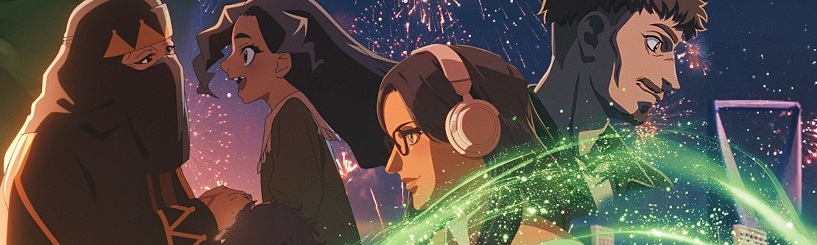
A short anime created through a collaboration between Saudi Arabia and Japan has become a remarkable international success. Titled Saudi National Day 96, the animated film has surpassed 111 million views, demonstrating the growing global interest in stories that combine local culture with Japanese animation.
The achievement was highlighted during TOKYO ANIME NEXT 2026, an event held in Tokyo from October 30 to November 2. On November 2, a special seminar titled “Two Cultures, One Story: Behind the Scenes of a Saudi-Japanese Co-Production” brought together creative professionals from both countries to discuss the film’s production and the future of international anime partnerships.
The seminar featured Noor Aljijakli, Production Manager at Saudi Arabia’s Manga Productions, and Makoto Kimura, Representative Director and Producer at the Japanese entertainment company BLUE RIGHTS. They discussed how the two companies developed the short film, how Japanese animation techniques were combined with Saudi cultural elements, and why understanding local traditions was essential to the production.
Beyond its impressive view count, Saudi National Day 96 represents a broader ambition: building stronger creative connections between Japan and Saudi Arabia while developing opportunities for Saudi artists and animators.
Saudi National Day 96 Surpasses 111 Million Views Worldwide
The biggest highlight of the collaboration is the success of Saudi National Day 96, which has reportedly surpassed 111 million views.
Manga Productions CEO Dr. Essam Bukhary shared the milestone following the company’s participation in TOKYO ANIME NEXT. The figure demonstrates the reach of the short film and the potential of culturally inspired animation to connect with audiences beyond its country of origin.
The film was released in September 2026 ahead of Saudi Arabia’s 96th National Day, celebrated on September 23. It was created through a partnership between Manga Productions and Japan’s BLUE RIGHTS.
The short animation uses a green pen as its central visual motif. Green is the principal colour of the Saudi national flag, making the object an important symbol throughout the story.
The film follows different people who use the pen as they pursue their personal dreams. Through these characters and their experiences, the animation presents a message about ambition, creativity, and the determination to turn ideas into reality.
Its visuals also incorporate elements associated with Saudi Arabia, including traditional culture, natural landscapes, and modern urban environments. Rather than presenting the country through a single image, the film brings together different aspects of its identity.
The view count is particularly significant because the project was designed as a short commemorative animation rather than a conventional television anime series or feature film.
According to additional reporting, the film had received approximately 23.8 million views on YouTube alone, while its combined reach across YouTube, TikTok, Instagram, and other social platforms exceeded 100 million. The later figure of more than 111 million was announced by Manga Productions’ CEO.
TOKYO ANIME NEXT 2026 Hosts a Japan-Saudi Arabia Co-Production Seminar
The production story behind Saudi National Day 96 became the focus of a special seminar held on November 2 at the Toshima Civic Center in Tokyo.
The session, titled “Two Cultures, One Story: Behind the Scenes of a Saudi-Japanese Co-Production,” explored the creative process behind the short animation, from the initial concept to the completed film.
The two main speakers were:
- Noor Aljijakli: Production Manager at Manga Productions, representing the Saudi production team.
- Makoto Kimura: Representative Director and Producer at BLUE RIGHTS, representing the Japanese production partner.
Both speakers explained how the project brought together creative professionals from different cultural backgrounds. They also discussed the importance of communication, cultural understanding, and shared production goals when working on an international animation project.
TOKYO ANIME NEXT provided an opportunity to present the collaboration to Japanese anime industry professionals and audiences. Manga Productions also participated as an event sponsor, reflecting its interest in strengthening relationships with Japan’s animation industry.
The event itself included screenings, exhibitions, workshops, educational programmes, and industry discussions. It marked a new chapter for the Tokyo Anime Award Festival, with its inaugural edition taking place in Ikebukuro ahead of a broader international launch planned for 2027.
What Is Manga Productions? The Saudi Company Connecting Arab Stories with Japanese Anime
Manga Productions is a Saudi Arabian entertainment company and a subsidiary of the Mohammed bin Salman Foundation, also known as MiSK.
The company focuses on developing creative content across several areas, including:
- Anime and animated films
- Manga and comics
- Video games
- Intellectual property management
- International distribution and licensing
Its mission includes developing creative talent in Saudi Arabia and the wider Arab world while bringing locally inspired stories to international audiences.
Manga Productions has placed particular importance on working with experienced Japanese animation companies. These partnerships allow Saudi creative teams to learn production techniques, develop professional skills, and participate in projects that can reach audiences around the world.
The company has also been involved in bringing Japanese entertainment properties to the Middle East and North Africa through licensing, distribution, and promotional activities.
One of its best-known collaborations is The Journey, an animated feature film produced with Japan’s Toei Animation. The project began development through cooperation between the two companies in November 2017 and tells a story inspired by ancient history and the Arabian Peninsula.
Another important project is Future’s Folktales, an animated series set in a futuristic version of Riyadh. The story follows a young girl named Maha and her brothers as they learn about life, values, and cultural heritage through stories shared by their grandmother.
These productions demonstrate that Manga Productions’ goals extend beyond creating individual anime projects. The company also aims to build a sustainable creative industry by developing local talent and sharing Saudi stories internationally.
How BLUE RIGHTS Became Manga Productions’ Japanese Partner
The Japanese company BLUE RIGHTS played an important role in bringing Saudi National Day 96 to the screen.
Makoto Kimura, who represented the company at the TOKYO ANIME NEXT seminar, has experience working across the Japanese animation and entertainment industries. His professional background includes involvement with Fuji TV’s noitaminA programming block, as well as work connected with Twin Engine and MAPPA.
According to Noor Aljijakli, Manga Productions selected BLUE RIGHTS because of Kimura’s open-minded approach, his understanding of Saudi culture and values, and his commitment to production quality.
These qualities were particularly important because the project was not simply about creating an animation with an attractive visual style. It also needed to represent Saudi Arabia in a way that felt authentic to local audiences.
The two companies therefore approached the project as a genuine creative partnership. Manga Productions contributed the original concept and cultural perspective, while the Japanese creative team helped refine the story and translate it into an animated production.
This division of responsibilities allowed both sides to contribute their strengths without losing sight of the film’s central identity.
Ryosuke Nakamura Directed the Short Animation
The creative team behind Saudi National Day 96 included experienced Japanese animation professionals.
Ryosuke Nakamura served as the director, while Mihoko Shioiri handled character design. The animation was produced at MANAA ANIMATION.
The film’s creative development combined Manga Productions’ original concept with the experience of the Japanese production team.
One of the most interesting aspects of the project was the decision to conduct location research in Saudi Arabia. For a short animated film, sending key members of the Japanese creative team to the country was an important step.
According to the seminar discussion, Kimura suggested that the director and other key staff members visit Saudi Arabia so they could understand the environment and culture more directly.
The visit helped the team discover details that might have been difficult to understand through photographs or online research alone.
For example, the team learned about the country’s varied climate, including areas where snowfall can occur. They also observed how people adapt their daily routines to the hot weather, including enjoying outdoor activities and picnics in parks during the evening.
These observations helped the production team create a more convincing representation of everyday Saudi life.
Why Location Research Was Important to the Animation
Cultural authenticity can be challenging when creative teams work across national borders. Even small details involving clothing, body language, architecture, and social customs can influence how viewers understand a scene.
For Saudi National Day 96, the Japanese team wanted to avoid relying only on general visual references. Visiting Saudi Arabia allowed the creators to observe how people dressed, interacted, and moved in their everyday environments.
The research influenced several aspects of the animation, including the characters’ gestures and clothing.
For example, the team paid attention to the way some women position their hands and how hijabs are wrapped and worn. These details may appear small, but they can make a significant difference when a story is intended to represent a particular culture.
The production also required careful consideration of which visual elements could be simplified for animation and which needed to remain accurate.
Noor Aljijakli praised the decision to conduct location research, explaining that it helped the film communicate Saudi culture and its distinctive atmosphere more effectively.
The experience demonstrates an important lesson for international animation projects: cultural research should be part of the creative process from the beginning, rather than something added at the final stage.
How Japanese and Saudi Creators Addressed Cultural Differences
Another major topic discussed during the seminar was the challenge of adapting Japanese animation techniques to a story rooted in Saudi culture.
Japanese anime has developed a distinctive visual language. Characters are often drawn with simplified features, expressive gestures, and symbolic designs. These techniques help animators communicate emotions and ideas efficiently.
However, when a production represents a specific real-world culture, simplification needs to be handled carefully.
For example, the creative teams had to discuss which clothing details could be stylised and which cultural elements needed to be preserved accurately. Clothing, particularly traditional garments and religiously significant items, required thoughtful consideration.
This process involved regular communication between the Saudi and Japanese teams.
Kimura explained that creators from different countries share a common desire to produce high-quality work. He also praised the dedication of the Saudi creative professionals involved in the project.
At the same time, he described his role as helping bridge differences in production methods and creative expectations. In other words, he helped both teams understand how the other approached animation production.
Noor also highlighted the importance of passion and discipline. He praised the organised working methods of Japanese animation professionals while noting that passion is essential to sustaining a creative project over time.
Together, their comments show that successful international co-productions require more than technical ability. They also depend on trust, communication, cultural awareness, and a shared commitment to the final result.
Saudi Arabia’s Growing Anime Audience and Creative Industry
The success of Saudi National Day 96 also reflects the growing interest in anime and Japanese entertainment in Saudi Arabia.
The country has a relatively young population, with a large proportion of people under the age of 35. This younger generation has grown up with international entertainment, including Japanese anime, manga, video games, and related pop culture.
For many viewers, anime is not simply a form of entertainment. It is also a source of inspiration for drawing, storytelling, character design, game development, and other creative interests.
This creates opportunities for companies such as Manga Productions to develop original content that connects local cultural identity with globally recognised entertainment formats.
The company has repeatedly emphasised the importance of training local professionals and transferring knowledge from experienced international production partners.
This approach is also connected to Saudi Arabia’s broader Vision 2030 programme, which includes efforts to diversify the economy and develop cultural and creative industries.
International partnerships can help accelerate this development by providing access to professional expertise, production experience, and global distribution networks.
For Japan, meanwhile, collaborations with Saudi companies create opportunities to reach new audiences and explore stories outside the traditional settings of Japanese anime.
The relationship can therefore benefit both countries: Saudi Arabia can strengthen its domestic animation industry, while Japanese creators can participate in projects with new cultural perspectives.
Manga Productions’ Earlier National Day Anime Projects
Saudi National Day 96 is part of Manga Productions’ continuing efforts to create animated films celebrating the country’s National Day.
The company has produced National Day short animations since 2021, working with Japanese creative partners and animation studios.
These projects provide an opportunity to explore Saudi identity, history, ambitions, and cultural values through different animation styles and storytelling approaches.
The 2026 film continues that tradition with its green-pen concept and message about pursuing dreams.
The previous production, created for Saudi Arabia’s 95th National Day, also achieved international recognition. Manga Productions’ CEO noted that the film received the Platinum Award in the Animation category at the 2025 MUSE Creative Awards and was named a finalist at the World Film Festival in Cannes, France.
The company has also reported that its National Day productions have attracted substantial online audiences, showing that short-form animation can become an effective way to introduce Saudi stories to viewers around the world.
Rather than repeating the same format every year, the annual projects allow the company to experiment with different concepts, creative partners, and visual approaches.
The Future of Japan-Saudi Arabia Anime Co-Productions
One of the most important discussions at TOKYO ANIME NEXT concerned the future of cooperation between Japan and Saudi Arabia.
Noor Aljijakli shared his ambition to continue working with Japanese production companies while helping develop the skills and experience of Saudi creators.
His long-term goal is for Saudi Arabia to develop its own animation professionals and production capabilities, enabling local teams to create projects that can compete internationally.
Kimura also expressed interest in continuing collaborations with Saudi creative professionals. He noted that the anime industry has changed considerably in recent years, with new approaches to financing, production, and international cooperation becoming increasingly important.
He described the partnership as part of a changing era for the Japanese animation industry and expressed his desire to bring fresh perspectives into future projects.
These comments suggest that the collaboration is not intended to be a one-time project. Both sides see potential for further creative exchanges and co-productions.
If these partnerships continue, they could help create more opportunities for Saudi artists to work alongside experienced Japanese animators while introducing Japanese audiences to stories inspired by Saudi culture.
A New Chapter for International Anime Collaboration
The success of Saudi National Day 96 shows how animation can connect audiences across different countries and cultures.
With more than 111 million reported views, the short film has become a significant example of the international reach of Saudi creative content. Its success also highlights the value of combining Japanese animation expertise with local storytelling and cultural knowledge.
The partnership between Manga Productions and BLUE RIGHTS demonstrates that international co-productions can be about more than sharing production responsibilities. They can also create opportunities for cultural exchange, professional development, and the growth of new creative industries.
As Saudi Arabia continues to invest in its entertainment sector and Japan looks for new international partnerships, projects like Saudi National Day 96 could become an important part of the future of global anime.
The next step will be turning this success into long-term creative opportunities—helping more Saudi artists develop their skills, encouraging further cooperation with Japanese studios, and bringing more stories from the region to audiences worldwide.


