 by
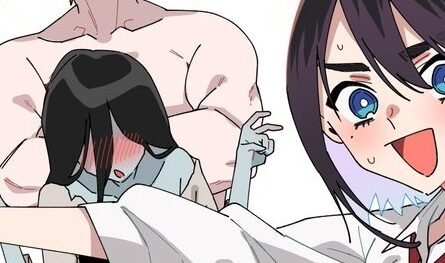
by The only survivors on Earth after the apocalypse are robots who run a hotel and wait for humanity to return. The original TV anime “Apocalypse Hotel” depicts such a world and has become a hot topic. In addition, following the anime’s broadcast, manga artist Takemoto Izumi, the original character designer for this work, has drawn a comic titled “Apocalypse Hotel Pusu Pusu” (Takeshobo).
Set in the same world as the anime, the story unfolds on a different level, depicting the daily lives of characters not shown in the original manga. While connecting with the anime, the story unfolds in a way that deepens the reader’s immersion, drawing comments such as, “It’s a different kind of fun than the anime,” and “I want to read every episode.” Ahead of the sequel series, “Apocalypse Hotel Karikari” (Takecomi!), which begins on December 25th, we spoke with author Takemoto about the story behind the original character designs and his plans for the sequel.
The image of Yachiyo, with her “strange personality,” was incorporated into the manga. How many characters did you draw for the original character designs for the TV anime “Apocalypse Hotel”? Takemoto Izumi (hereafter, Takemoto): A little over 10.
The request came about five years ago, and at the time, there was a lot of room for improvement in the plot, so I drew multiple versions of the main robot (Yachiyo), including a boy version and an adult version. Other characters included the raccoon alien, the owner’s group, and the tentacle aliens (episode 5) and Armageddon (episode 6).
Although they didn’t appear in this work, the vampire girl (who appears in the manga) and the plant girl (Euglena) weren’t set in stone, so I drew as many variations as I could think of. I hardly drew any mechanical parts. It isn’t easy to pull something you can’t imagine, since you don’t know how they work or what their structure is.
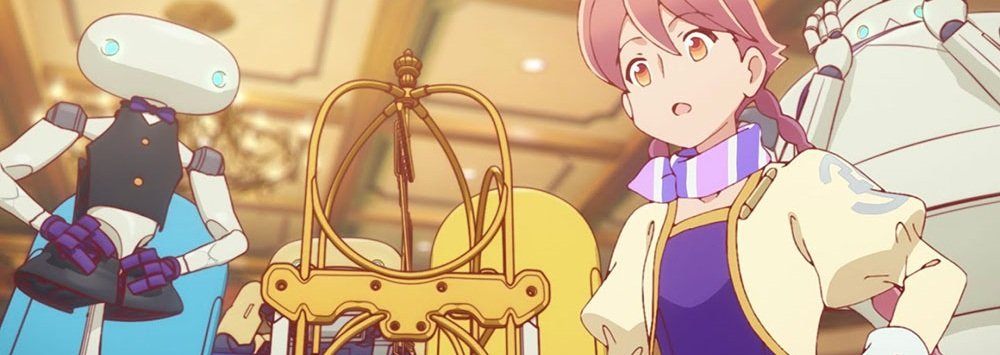
The main character, Yachiyo, is very emotional in the anime, but in “Pusupusu,” she has an elusive, laid-back image. I enjoyed letting my imagination run wild, imagining what her personality might be like in real life. Takemoto: When I read the script, I thought she might have a strange personality, and when I saw the movie with her voice, I realized, “That’s what I thought.” At that point, the character design work was almost complete, so the image of “weird Yachiyo” was reflected in the manga. When I watched the anime, she had a different feel, but it wasn’t too far off, so it was fine.
In the manga, Yachiyo appears as “the early Roboco (who doesn’t have a name yet)” and “Roboco close to the final design.” Did her design change over time? Takemoto: At first, there weren’t any specific instructions, so I made her look like a lively girl so I could change it however I wanted. Partway through, her workplace was altered to a slightly more luxurious hotel, so her uniform became more elegant, but the character herself has remained the same. I chose braids because I hadn’t drawn braids in a while (laughs). Since she’s a robot, I thought it would be fun if her hair moved in a wavy pattern in the anime, but the production team had a hard time making her move (laughs). It would be easy to recognize her as the main character even in silhouette.
Aside from Yachiyo, all the other characters were ones I grew attached to. What do you value when creating characters? Takemoto: I don’t really think about it (laughs). I often include designs I haven’t drawn recently, so if they match the client’s requests, I use them as is. Basically, I design characters that I feel comfortable with. If there are specific instructions like “lots of stray hairs,” I might draw them while wondering how they’ll turn out, but fortunately, that hasn’t happened yet.
Even in the end, things will probably work out. What did you think when you saw the characters moving in the anime? Takemoto: I didn’t have any trouble figuring out what to praise, and it’s an exciting work.
The murder story (episode 10) is so good!? That’s what I thought, but that’s the one that’s burned into my memory the most. Oh, it’s a hotel, so maybe there’s a murder there… (laughs). Speaking of characters, I liked them all, but the owner was excellent, complete with a touch of shadiness. I was surprised by Ponko-chan’s younger brother, Fuguri-kun. His adult character was original to the anime, so I laughed, thinking, “Oh, that’s how it turned out…” (laughs).
The original was so cute (laughs). Viewers will have the same impression. In the book’s afterword, you describe the style of manga based on anime as “anime doujinshi,” but the comic adaptations have their own distinct developments and are worthwhile reads. Takemoto: It was fun to draw. Rather than depicting the main story, you draw manga that fills in the gaps in the story. Back in the day, there were a lot of four-panel comic books based on games, and I thought it was a similar pattern. Reading the comments, even people who watch the anime but don’t buy the manga read it. Because it’s a doujinshi based on the anime, it may have been easier to read than regular comics. If there were manga like this for other anime, I’d buy even more… (laughs). I find it heartwarming that Yachiyo and the others live their everyday lives without being overwhelmed by the apocalyptic world.
The current state of affairs is complicated, so it has crossed over into my daily life, and I feel a sense of security in the oasis-like worldview. Takemoto: I grew up in the 1960s and my teenage years in the 1970s. I wasn’t an Astro Boy, but I grew up in an era where science could solve anything. I still believe that, so I’m writing with the feeling that even if a pandemic or the apocalypse comes, things will work out somehow.
The protagonist acts subjt. I’m objectively watching him and motivating him. It’s because of this feeling that readers can remain optimistic even as they watch an apocalyptic world unfold. The sequel, “Apocalypse Hotel Karikari,” will begin serialization on December 25th. What are your plans for the future? Takemoto: It’s basically the same as “Pusupus.” I create my manga with the anime in mind, and then fill each chapter with gaps that make you wonder, “What’s going on here?” This time, I’ll be covering 12 chapters of silly things I wasn’t able to cover last time fully.
The main character remains the same, but each time a different incident occurs, leading to a proper conclusion. I come up with a lot of ideas, and with long stories, there are plot twists that need to be resolved, so some ideas end up unused, but with one-shots, I can draw them as soon as they come to me.
The fun part about a one-shot series is that you line up several ideas and can choose one by yourself, saying, “The last time was like this, so this time I’ll deviate from that…” It’s incredible how, even though you’re so prolific, you keep coming up with new ideas to draw. Takemoto: It’s just the way I work. I think if I do a long series, I’ll come up with ideas for that series, but if I only do one-shots, I start thinking about them all the time, and ideas keep coming. It’s training. When I was a newbie, I was often asked to draw one-off stories, which were about 30 to 40 pages long and had two or three plot twists and climaxes, so it was quite a challenge, and I had to rack my brains every time. When the pages were short, there was usually only one plot twist and climax. It didn’t take long for me to draw a lot. Each episode of “Pusupusu” was also eight pages long. Have you planned the sequel far enough in advance? Takemoto: I’m drawing smoothly, so I’d like to continue drawing one story every week or ten days.
This time, it’s based on an anime, so I don’t have to come up with an idea first, and I can draw quickly. People who draw doujinshi probably feel the same way. Even if I don’t have much time, I’ll finish it in time for the winter Comiket. As a teenager, I was obsessed with novels and movies, and I read that some of your manga referenced the settings of the works I had come across at the time. Is it essential for manga artists and creators to be exposed to good works? Takemoto: People of the same generation are generally exposed to the same things. They watch the same anime, and the same games are popular. That’s why our knowledge is similar, and the works tend to have predictable plots. If you’re exposed to works that other people haven’t seen, you gain a different kind of knowledge, which may lead to interesting works that are different from others.
When you say different knowledge, what works were you exposed to? Takemoto: I think everyone saw “Raiders of the Lost Ark” and “Star Wars” in the cinema, but I liked watching movies on TV, and I watched a lot of old movies that were broadcast. An older European work would be “Don Camillo” (released in Japan in 1954/Italy/France). It’s a strange story in which a statue of Jesus Christ hanging in a church comes to life and speaks to the main character, a priest (laughs). I’ve been watching strange works like that since I was young, so I know that there are settings and developments that people don’t expect, and that’s reflected in my work.
It’s fun to see expressions that weren’t around 30 years ago become commonplace. In a slightly unusual media mix, you were in charge of the script and storyboards for the interactive comic “Yumimimix” (1993-), which was animated from original drawings. It was a hot topic at the time, and many fans have been reading your manga ever since. Takemoto: I’m glad I was able to be involved in that work at that time. The reason fans are so attached to it is that I was involved in a job that required so much effort, and in a genre that didn’t exist at the time.
The original dot drawings were animated for each screen, and looking back, it seems silly, but when I went to the set, the staff were lined up like in an animation studio, drawing key animations. At the time, I thought it was terrific. It started as a regular adventure game, but the production team was particular, and as they added more animation, saying, “Let’s make this part an animation,” they came up with the ridiculous idea of making it a full-screen animation. But if you think about it, it’s the same as working on a manga.
The script and storyboards are like naming in manga. It was busy, but I was able to draw everything I wanted, so it was the ideal work for a manga artist, and other manga artists around me say, “That was a great game, wasn’t it?” The energy of creating something unseen is motivating. Are there any other works that you’re glad you drew at that time? Takemoto: Up until now, I’ve always drawn with the desire to create something that didn’t exist, so there are quite a few works that I’m glad I started early on. “Sayori na Parallel” (Takeshobo) is a manga about a parallel world. In the past, the concept of parallel worlds wasn’t as common as it is now, and it would suddenly appear when I was reading a foreign science fiction novel, and I would rack my brain trying to figure out what it meant, so it’s fun to see such a term becoming more common. When I included it in my own work, I would explain, but now many people are aware of it. When the term “world line” first appeared, I first encountered it in a novel as an expression like “Indo-European line world,” so I thought it was a new term, easy to understand and use.
There are now tons of expressions that didn’t exist 30 years ago, so it’s really convenient. I’m also looking forward to the development of the sequel, “Apocalypse Hotel KariKari.” Takemoto: I’m sure the anime staff has probably started working on their next project, but in the meantime, I’m alone in the classroom taking a retake (laughs). Please continue to support us. Interview and text by Uja: Yoshida Aki