 by
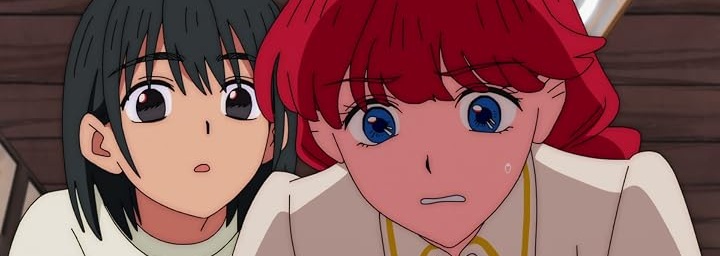
by The Summer 2026 original anime Goodbye, Lara (Sayonara Lala) has offered fans a fascinating look behind the scenes of its visually distinctive opening sequence.
A new making-of video titled “How ‘Goodbye, Lara’ Was Made Behind the Scenes – OP Production Edition” takes viewers behind the production of the opening animation, particularly focusing on the show’s use of traditional cel animation techniques.
The approximately nine-minute documentary reveals that recreating the look of classic animation was far from simple. The production team had to search for specialized equipment, deal with malfunctioning hardware, repair old machines, test cel paints, and carefully adjust lighting before they could begin filming the sequence.
The result is an opening with a nostalgic visual quality that stands apart from many modern digitally produced anime sequences.
Directed by Takushi Koide, Goodbye, Lara is an original television anime produced by Kinema Citrus as part of the studio’s 15th-anniversary project. The series began airing in Japan in July 2026 and is inspired by the classic fairy-tale concept of The Little Mermaid, but moves the story into a modern Japanese setting centered around Lake Biwa.
Goodbye, Lara’s Traditional Animation Gets a Spotlight
The opening sequence of Goodbye, Lara attracted attention soon after its release because some of its scenes use a traditional cel animation approach.
Cel animation is an older production technique in which drawings are transferred onto transparent sheets, known as cels, and painted before being photographed frame by frame.
Before digital animation became the industry standard, this method was widely used for television anime and animated films.
Although modern anime is predominantly produced digitally, the creators of Goodbye, Lara deliberately incorporated elements of this older process into selected parts of the opening.
That choice gives the sequence a distinctive visual texture and helps connect the anime’s modern setting with the nostalgic atmosphere of classic fairy-tale animation.
The opening animation was also released publicly online, allowing viewers to examine the unusual production style for themselves.
The Making-of Video Shows How Difficult the Process Was
The newly released behind-the-scenes video follows the production journey from the early planning meetings to the completion of the opening.
Rather than simply showing finished animation, the documentary focuses on the people and equipment required to create it.
One of the first challenges was finding staff and equipment capable of working with traditional cels.
The team had to search for equipment that was increasingly difficult to find.
Even after suitable equipment was located, the production did not immediately go smoothly.
Some of the equipment had dead batteries or technical problems, meaning that repairs had to be carried out before filming could begin.
This gives viewers an unusual glimpse into the practical difficulties of recreating an animation technique that was once standard but has now become relatively rare.
Director Takushi Koide Wanted the Opening to Feel Different
Director Takushi Koide plays a central role in the making-of documentary.
During the opening storyboard meeting, Koide explains how important the first shot was to him.
One of his priorities was clearly showing Lara’s feet.
This seemingly simple detail carries symbolic importance because Lara is a mermaid princess who eventually stands on land and walks through the streets of Shiga.
For Koide, the opening needed to communicate that idea immediately.
He also expressed a strong desire to make the opening sequence something genuinely memorable rather than simply producing a conventional anime opening.
That philosophy shaped many of the decisions that followed.
“I Wanted to Make an Original Opening”
Koide explains that working on an original anime presented both challenges and opportunities.
Unlike an adaptation, where creators can reference an existing manga or novel for visual ideas, Goodbye, Lara was being developed as an original project.
That meant the staff had to establish the visual identity of the series themselves.
Koide explained that he wanted to avoid simply making an opening that followed familiar conventions.
His approach was to experiment and allow the opening to develop naturally rather than forcing it entirely around his own personal preferences.
He also discussed the idea that even familiar animation expressions can become interesting when they are executed carefully.
In other words, something as simple as a character running or falling can become visually effective if the animation team commits fully to the movement.
This philosophy helps explain why the opening feels simultaneously familiar and unusual.
Finding the Right Equipment Was Only the Beginning
One of the most interesting portions of the documentary focuses on the equipment used for the cel-animation scenes.
The staff had to locate an animation stand, a specialized setup historically used to photograph artwork frame by frame.
Because digital production has largely replaced this workflow, finding functioning equipment suitable for the project was itself a challenge.
After locating the equipment, the team discovered that some components were not working properly.
Instead of abandoning the idea, they began repairing and testing the equipment.
The making-of footage captures this process honestly, showing that recreating a traditional animation technique requires much more than simply drawing on transparent sheets.
Cel Paint Tests Were Another Major Challenge
The production team also had to conduct extensive paint tests.
Traditional cel animation uses specialized paints, and the staff needed to determine how the colors would appear under the actual filming conditions.
This meant preparing large quantities of cel paint and experimenting with different colors and materials.
The tests were important because the final appearance of the animation depends on more than the artwork itself.
The interaction between the painted cels, lighting, camera, and background can significantly change the final image.
The documentary therefore provides a valuable lesson for beginners who may only see the finished animation and assume that the process is straightforward.
The Rare Animation Stand Returns to Action
One of the most visually interesting parts of the making-of video is the actual filming process.
The team uses an animation stand to photograph the artwork frame by frame.
Each movement has to be carefully controlled.
The position of the artwork, camera, lighting, and other elements must remain consistent, while small adjustments are made from one frame to the next.
This is a much more physical process than the workflow used in modern digital animation.
The documentary shows the staff carefully working through these stages, giving viewers an appreciation for the patience and precision required.
Creating Light Effects the Analog Way
The production also includes a traditional technique for creating transmitted-light effects.
Rather than relying entirely on digital compositing, the staff experimented with physical lighting to create the desired visual effect.
This required careful positioning of the light source.
At one point, Koide can be seen adjusting the position of the light himself while examining the result.
The level of detail involved is so demanding that he even jokes about the strain on his eyes.
It is a small moment, but it communicates how much manual effort went into a relatively short portion of the finished opening.
The Staff Celebrate When the Opening Is Finally Finished
After all the equipment problems, tests, repairs,s and adjustments, the opening sequence was finally completed.
The staff responded with applause, celebrating the completion of a production process that had clearly required considerable effort.
For viewers, the finished opening may last only a few minutes.
For the people who created it, however, every shot represents hours of planning, testing and technical work.
That contrast is one of the most valuable aspects of the making-of documentary.
Why Goodbye, Lara Uses Traditional Animation
The decision to incorporate cel animation is not simply a technical experiment.
It fits the overall identity of Goodbye, Lara.
The anime is inspired by Hans Christian Andersen’s The Little Mermaid and deliberately combines a fairy-tale atmosphere with a contemporary Japanese setting.
Lara’s story begins in a traditional fantasy world before moving forward 200 years to her resurrection in Lake Biwa.
The mixture of old and new ideas is therefore central to the series itself.
Using an older animation technique in selected parts of the opening creates another layer of contrast.
It connects the modern anime with the visual language of classic animation while still presenting the story through contemporary production techniques.
The Story of Goodbye, Lara
Goodbye, Lara follows Lara, a mermaid princess who falls in love with a human prince.
Because relationships between mermaids and humans are forbidden in her world, Lara decides to leave the sea and visit the human world.
She receives a potion from the witch Grace, allowing her to transform into a human.
However, the potion comes with a terrible condition.
Unless Lara finds “true love,” she will eventually turn into foam and disappear.
Lara’s dream does not come true, and she ultimately disappears into the sea.
Then, 200 years later, something unexpected happens.
The mermaid princess is resurrected in Lake Biwa.
This time, Lara sets out on another journey in search of true love.
The modern setting gives the classic fairy-tale premise a new identity while allowing the series to explore themes of love, identity, human relationships and the meaning of choosing one’s own future.
Kinema Citrus Celebrates Its 15th Anniversary
Goodbye, Lara is particularly significant because it was created as part of Kinema Citrus’ 15th-anniversary celebration.
The studio is known internationally for anime such as:
- Made in Abyss
- My Happy Marriage
- Revue Starlight
- The Rising of the Shield Hero
For its anniversary project, the studio chose to create an original anime rather than adapt an existing franchise.
That gives the production team greater freedom to establish the story, characters, and visual identity from the ground up.
The official anime site identifies Kinema Citrus as both the original creator and animation production studio.
Goodbye, Lara Anime Broadcast and Streaming Information
The anime premiered in Japan on July 5, 2026, and is currently airing.
The confirmed television schedule includes:
- TOKYO MX: Sundays at 12:30 AM
- BS Asahi: Sundays at 1:30 AM
- Yomiuri TV: Mondays at 1:59 AM
- AT-X: Mondays at 9:30 PM
AT-X also offers repeat broadcasts on Wednesdays and Fridays.
The series is also being distributed across multiple streaming platforms, including ABEMA, d Anime Store, U-NEXT, Prime Video, DMM TV, Hulu, FOD, Lemino, TVer,r and others.
Because Japanese anime schedules can list after-midnight broadcasts under the previous calendar day, viewers should check their local service listings for the exact availability time.
The Opening Theme Is Performed by Ikimonogakari
The opening theme, “Sayonara Lala,” is performed by the popular Japanese music group Ikimonogakari.
The song shares its title with the anime and was created specifically to complement Lara’s emotional journey.
The song is performed by Kiyoe Yoshioka, with lyrics and composition by Yoshiki Mizuno and arrangement by Seiji Kameda.
The combination of Ikimonogakari’s expressive vocals and the opening’s nostalgic visual style gives the sequence a strong emotional identity.
The single is scheduled for physical release on August 26, 2026, with both a standard CD edition and a limited CD+Blu-ray edition. The Blu-ray version includes the music video, behind-the-scenes material, al and the anime’s non-credit opening sequence.
The Ending Theme “Hearts Glow”
The ending theme is “Hearts Glow,” performed by Hana Hope.
The song provides a contrasting mood to the opening while continuing the anime’s focus on emotion and relationships.
Hana Hope is credited for both vocals and composition, with lyrics created by Hana Hope and Yuko Konishi.
The arrangement is by David Baron.
A Complete Soundtrack Is Also on the Way
Fans interested in the anime’s music have another release to look forward to.
The Goodbye, Lara Original Soundtrack, composed by Yuma Yamaguchi, is scheduled for release on September 30, 2026.
The soundtrack is planned as a two-disc release, allowing fans to experience the full musical world created for the series beyond its opening and ending themes.
Blu-ray and DVD Release Will Include the Making-of Documentary
Fans who want to see the complete behind-the-scenes production process will have another opportunity when the first Blu-ray and DVD BOX volume is released.
The full making-of documentary covering the opening production is scheduled to be included as a bonus feature.
That makes the release particularly interesting for animation fans who want to understand how the traditional cel-animation scenes were created.
Rather than simply purchasing the finished anime, viewers will be able to see the creative and technical process that went into producing one of its most distinctive visual sequences.
Staff Behind the Anime
The main creative team includes:
- Original work: Kinema Citrus
- Director: Takushi Koide
- Series composition: Anna Kawahara
- Character design: Shiori Tani
- Art director: Mari Fujino
- Color design: Rika Aizawa
- Director of photography: Kazuto Izumida
- Editing: Masayuki Kurosawa
- Graphic design: Yuto Hama, Mao Yamaguchi
- Music: Yuma Yamaguchi
- Sound director: Yo Yamada
- Animation production: Kinema Citrus
The project brings together both experienced animation professionals and a director making his debut as a series director.
Koide’s background includes work on Revue Starlight, including roles connected to direction, costumes, and mechanical/weapon design, before taking the lead on Goodbye, Lara.
Main Cast
The main cast includes:
- Hana Hishikawa as Lara
- Nana Kawaishi as Mari Otsu
- Rika Fukami as Grace
- Ayumu Murase as Luca
- Tomoyuki Ohno as Shoya Otsu
- Mitsuaki Madono as Makoto Otsu
- Nanae Sumitomo as Ema Otsu
- Masaki Terasoma as Rowan
- Minami Tsuda as Lisa
The series combines veteran performers with younger talent, helping create a cast capable of handling both the fairy-tale elements and the more contemporary emotional drama.
Why the Making-of Video Is Worth Watching
For casual viewers, the documentary provides an interesting look at how anime is made.
For animation fans, it offers something even more valuable: a rare look at a technique that has largely disappeared from mainstream anime production.
The documentary demonstrates that traditional animation is not simply a matter of drawing pictures on transparent sheets.
It requires:
- Finding suitable equipment.
- Repairing and maintaining that equipment.
- Preparing and testing specialized paints.
- Creating artwork specifically for the filming process.
- Carefully positioning cels and backgrounds.
- Controlling lighting.
- Photographing the frames individually.
- Reviewing the results and making adjustments.
Every one of these steps can affect the final image.
That makes the finished opening sequence even more impressive once viewers understand what went into creating it.
Final Thoughts
The new Goodbye, Lara (Sayonara Lala) making-of documentary offers a rare and fascinating look at the craftsmanship behind the anime’s traditional cel-animation scenes.
What initially appears to be a nostalgic visual style is actually the result of a complicated production process involving difficult-to-find equipment, repairs, paint testing, an animation stand, analog lighting techniques, es and countless small adjustments.
Director Takushi Koide and the production staff clearly wanted the opening to have an identity of its own, and the decision to combine modern anime production with traditional cel techniques gives the sequence a distinctive character.
The approach also fits the themes of Goodbye, Lara, an original anime that takes inspiration from The Little Mermaid while moving its story into modern-day Japan and the Lake Biwa region.
With the series currently airing, the opening theme “Sayonara Lala” receiving its own physical release in August, and the complete soundtrack scheduled for September, there is plenty for fans to look forward to beyond the weekly episodes.
For anyone interested in anime production, traditional animation, ceanimationa t, i on or behind-the-scenes documentaries, the Goodbye, Lara OP making-of video is especially worth checking out.
It is a reminder that even in an increasingly digital animation industry, traditional techniques can still create something visually special when artists and filmmakers are willing to put in the time and effort.