 by
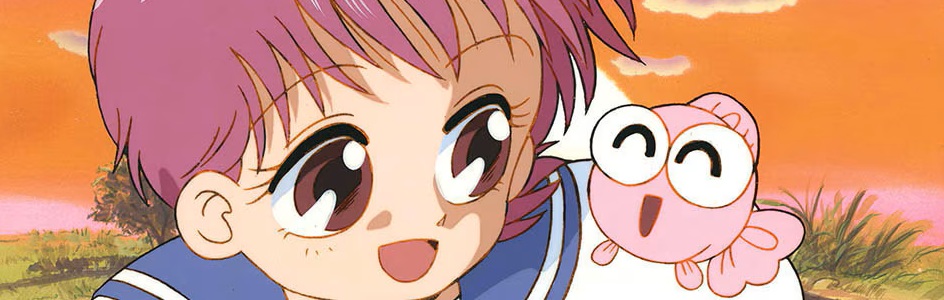
by “It’s so nostalgic!” “Everyone watched this in elementary school!” “It’s Wapiko and Gyopi-chan!”
Fans of classic 1990s anime are getting a major nostalgia trip as the beloved series Goldfish Warning! (Kingyo Chuuihou!) is coming to YouTube for a limited time.
To commemorate the anime’s 35th anniversary, the Toei Animation Museum Channel has announced that the classic Goldfish Warning! TV anime will be released on YouTube beginning September 21, 2026.
The first episode will be available as a YouTube Premiere at 6:00 p.m. JST on Monday, September 21, followed by one new episode every Monday at the same time. Each episode will remain available for two weeks only, making this a limited-time opportunity for longtime fans to revisit the series and for a new generation to discover Wapiko, Gyopi-chan, and the wonderfully chaotic world of Shin Inaka Junior High School.
The announcement immediately sparked an enthusiastic response on social media, with fans sharing memories of watching the series as children and expressing excitement about introducing the anime to their own children.
When Will Goldfish Warning! Be Released on YouTube?
The first episode of Goldfish Warning! will premiere on YouTube on:
September 21, 2026, at 6:00 p.m. JST
The series will then continue with:
- One episode every Monday
- Release time: 6:00 p.m. JST
- Each episode available for two weeks
- First episode: September 21, 2026
- Platform: Toei Animation Museum Channel on YouTube
- First episode format: YouTube Premiere
The initial episode is scheduled to be a special Premiere, meaning fans can watch it together at the scheduled time rather than simply opening the video whenever they want.
After that, the series will continue with one episode being added every Monday.
The important point for viewers is that the videos are not permanent uploads. Each episode will only remain available for two weeks.
At the time of the announcement, Toei Animation had not announced a final date for the entire YouTube campaign. Because the series contains 54 TV episodes, the complete rollout will take considerably longer than a standard one-season streaming campaign. Fans should therefore check the official channel for updates as the weekly releases continue.
A 35th-Anniversary Celebration for a Classic Anime
The YouTube release is being held as part of the 35th anniversary celebration of the Goldfish Warning! TV anime.
The original series premiered in Japan on January 12, 1991, and ran until February 29, 1992, making it one of the memorable comedy anime of the early 1990s.
The television series was produced by Toei Animation and originally aired on the TV Asahi network. It ran for 54 episodes, with the original broadcast schedule set for Saturdays from 7:00 p.m. to 7:30 p.m. JST.
More than three decades later, the series is receiving a new opportunity to reach viewers through an official YouTube release.
For older fans, this is a chance to revisit a childhood favorite without having to search for old recordings or rely on memories of the original television broadcasts.
For younger viewers, it is an opportunity to discover the fast-paced comedy and unusual character designs that made Goldfish Warning! stand out during its original run.
What Is Goldfish Warning!?
Goldfish Warning!, known in Japanese as Kingyo Chuuihou! (きんぎょ注意報!), is a comedy manga created by Neko Nekobe.
The manga was serialized in Kodansha’s popular shōjo manga magazine Nakayoshi, which has historically been home to many influential manga aimed at young female readers.
Although Goldfish Warning! is classified as a shōjo manga, its comedy is broad and energetic. The anime combines school comedy, exaggerated facial expressions, slapstick humor, talking animals, and completely unpredictable situations.
That combination helped the series develop a distinctive identity.
The anime’s official description emphasizes how its adaptation strengthened the comedy elements of the original manga. Characters could suddenly shift from normal proportions into exaggerated, highly expressive forms, creating visual jokes that worked especially well in animation.
The Story Begins With Wapiko and Chitose
The story takes place at a strange rural school called Shin Inaka Junior High School.
At the center of the story is Wapiko, an extremely energetic girl who loves playing more than almost anything else.
Wapiko has a unique talent for turning practically every situation into a game. Classes, cleaning duties, school activities,s and even emergency drills can become opportunities for fun.
She is cheerful, unpredictable, le and almost completely immune to the seriousness of ordinary school life.
Then there is Chitose Fujinomiya, a girl who comes from a completely different background.
Chitose was raised in a wealthy environment and previously attended an elite school. However, after her father’s death and the collapse of the family business, her life changes dramatically.
She eventually transfers to the rural school, bringing her beloved pink goldfish Gyopi-chan with her.
The contrast between the refined Chitose and the carefree Wapiko becomes one of the main sources of comedy.
Chitose expects a more sophisticated life, but instead finds herself surrounded by Wapiko, unusual classmates, tests,s and even farm animals that seem perfectly comfortable becoming part of school life.
Who Is Gyopi-chan?
For many fans, Gyopi-chan is just as memorable as Wapiko.
Gyopi is Chitose’s special pink goldfish and accompanies her after her dramatic change in circumstances.
But this is not an ordinary goldfish.
The strange and fantastical nature of Gyopi-chan is one of the elements that gives Goldfish Warning! its unique charm. The character quickly becomes an important part of the school’s chaotic daily life and one of the most recognizable symbols of the series.
That is why the announcement of the YouTube release immediately brought back comments mentioning “Wapiko and Gyopi-chan.”
For fans who grew up watching the series, seeing those two names together is enough to bring back memories of the early 1990s.
Why Are Fans So Excited About the YouTube Release?
The response to the announcement has been overwhelmingly nostalgic.
Fans have described the news as a surprise and have shared memories of watching the anime during elementary school. Others have said they are excited to watch Gyopi-chan again with their own children.
Some reactions included sentiments such as:
- “It’s so nostalgic!”
- “Seriously?! I’m so excited!”
- “I can watch Gyopi-chan with my kids!”
- “Everyone watched this when we were in elementary school!”
- “It’s Wapiko and Gyopi-chan!”
- “I’m definitely watching this!”
These reactions show how strongly Goldfish Warning! remains associated with childhood memories for viewers who grew up with Japanese television anime in the early 1990s.
Some fans have even mentioned that they still remember the opening song decades later, demonstrating how the music became part of the series’ lasting appeal.
The Anime Had 54 Episodes
One important detail that is sometimes overlooked when discussing Goldfish Warning! is its size.
The television anime was not a short series. It ran for 54 episodes, with many episodes consisting of two shorter comedic stories.
The official Toei Animation episode archive lists the series all the way from Episode 1 through Episode 54, with the final episode titled “Girls’ Day Needs Strength / Goodbye! Wapiko-chan.”
This means the current YouTube release is not simply a small collection of nostalgic highlights. If Toei Animation follows the announced weekly schedule across the entire series, viewers will eventually have the opportunity to revisit the complete 54-episode television anime.
However, because each episode is only available for two weeks, fans will need to keep up with the weekly schedule rather than assuming that all previous episodes will remain online indefinitely.
The Series Had a Distinctive Comedy Style
One of the reasons Goldfish Warning! remains interesting today is its unusual visual comedy.
The original manga already used exaggerated character proportions and sudden changes in expression for comedic effect. The anime leaned into this idea even further.
A character could appear relatively normal in one scene and then suddenly become dramatically distorted for a joke.
This style was particularly effective for Wapiko because her personality was already unpredictable. Her energetic behavior could be matched by equally energetic animation.
The result was a series that often moved quickly from ordinary school life to complete chaos.
Toei Animation itself describes the anime as emphasizing the gag-comedy side of the manga and using animation to bring out its exaggerated character transformations and fast-paced humor.
A Remarkable Creative Team Worked on the Anime
The Goldfish Warning! anime also has an impressive staff lineup when viewed from today’s perspective.
The series director was Junichi Sato, who would later become widely known for his work on major anime projects.
The series composition was handled by Keiko Maruo, while character design was by Satoru Irayoshi. The music was composed by Takanori Arisawa.
The series also featured episode direction and storyboarding work from creators including Kunihiko Ikuhara, who would later become one of the most distinctive directors in Japanese animation.
This makes Goldfish Warning! an interesting piece of anime history beyond its nostalgic value.
It is not simply an old comedy series. It is also a snapshot of a period when several talented creators who would later become major names were developing their craft.
The Music Is Still Part of the Nostalgia
Another major reason fans remember Goldfish Warning! is its music.
The opening theme is “Wapiko Genki Yohou”, performed by Junko Uchida.
The series also featured ending and insert songs including “Super Kingyo” and “Gyoppi Dance.”
The music was composed and arranged by Takanori Arisawa, with the opening theme written by Rumiko Kishida and composed by Akiko Kosaka.
The opening song in particular has remained strongly associated with Wapiko, and social media reactions to the 2026 streaming announcement show that some longtime viewers still remember it decades later.
That kind of musical memory is one of the reasons old anime can suddenly become popular again when official streaming becomes available.
Goldfish Warning! and the Sailor Moon Connection
There is also an interesting piece of anime history surrounding Goldfish Warning!.
Several members of the anime’s creative staff later worked on Sailor Moon, which followed Goldfish Warning! in its television timeslot.
Junichi Sato and composer Takanori Arisawa both went on to become important contributors to the Sailor Moon anime, while other staff members also moved into work on the hugely influential franchise.
This makes Goldfish Warning! particularly interesting for fans studying the development of early-1990s Toei Animation.
The series arrived just before the explosion of Sailor Moon and represents part of the creative transition within Toei’s television animation output during that period.
The Original Manga Ran for Years After the Anime Began
The anime was based on Neko Nekobe’s manga, which began serialization in Nakayoshi in 1989, several years before the television adaptation.
The manga continued beyond the original anime, running until 1993 and eventually collecting its story into eight volumes.
This means the 1991 anime was adapting a manga that was still being published during its television run.
For viewers discovering the series through YouTube in 2026, the manga is another way to explore the original version of Wapiko, Chitose and Gyopi-chan.
There Was Also a 1992 Anime Film
Goldfish Warning! also expanded beyond television.
A short animated film was released in 1992, directed by Junichi Sato, with Keiko Maruo handling the script and Takanori Arisawa providing the music.
The film is separate from the current YouTube announcement, which specifically concerns the television anime.
Toei Animation’s September 2026 announcement does not currently indicate that the film will be included in the weekly YouTube rollout.
Therefore, fans should not assume that the 1992 movie will automatically become available alongside the TV episodes.
What Makes Goldfish Warning! Different From Modern Anime?
For viewers discovering Goldfish Warning! for the first time, the series may feel very different from today’s seasonal anime.
There is no elaborate fantasy power system, complicated serialized mystery,tery or massive seasonal plot.
Instead, the appeal comes from characters, comedy,omedy and everyday chaos.
The school itself becomes part of the joke. Animals can appear in ordinary school situations, Wapiko can turn routine activities into adventures, and Chitose’s attempts to bring order to her new environment often make things even more chaotic.
This makes the series easy to watch casually.
You do not necessarily need to remember every previous episode to understand the next one. Many stories function as short comedic adventures involving the characters and their unusual school life.
That structure makes the series particularly well suited to a weekly nostalgia streaming event.
Why the Limited-Time Format Matters
The two-week availability window is important.
Because each episode disappears after its limited viewing period, viewers cannot simply wait until the entire series is online and then binge-watch everything later.
Instead, the release encourages fans to return every Monday.
For longtime viewers, this creates a weekly nostalgia ritual.
For new viewers, it also provides an opportunity to watch the series gradually rather than trying to finish all 54 episodes at once.
At the same time, fans should remember that the official announcement has not provided a permanent archive schedule. The safest approach is to watch each episode during its two-week availability period and check the official Toei Animation Museum Channel for any changes or additional announcements.
What Should New Viewers Expect?
If you have never watched Goldfish Warning! before, expect a very energetic school comedy.
The main cast includes:
- Wapiko — voiced by Mika Kanai
- Chitose Fujinomiya — voiced by Yumi Takada
- Gyopi — voiced by Minori Matsushima
- Shuichi — voiced by Yoku Shioya
- Aoi — voiced by Nobuo Tobita
- Yurika — voiced by Keiko Han
- Principal — voiced by Kohei Miyauchi
- Tanakayama — voiced by Yoshihiko Kameya
The combination of Wapiko’s limitless energy, Chitose’s refined personality, and Gyopi-chan’s unusual presence creates the central comedic chemistry of the show.
A Nostalgic Chance to Meet Wapiko and Gyopi-chan Again
The return of Goldfish Warning! to official YouTube streaming is more than another catalog release.
It represents the growing interest in making classic anime accessible to modern audiences while giving longtime viewers a chance to revisit the shows they remember from childhood.
For some fans, simply seeing the announcement brought back memories of watching Wapiko and Gyopi-chan after school or during weekend television broadcasts.
For others, this may be the first time they have ever encountered the series.
That combination makes the 35th-anniversary YouTube release especially appealing.
A generation that grew up with Goldfish Warning! can now potentially share it with a younger generation—and the reactions already show that many viewers are excited about exactly that.
Goldfish Warning! is coming to YouTube on September 21, 2026, at 6:00 p.m. JST, with the first episode receiving a special Premiere release on the Toei Animation Museum Channel.
After that, one episode will be released every Monday at 6:00 p.m. JST, with each episode remaining available for two weeks.
The anime originally aired from 1991 to 1992 and consists of 54 episodes, making this a substantial opportunity to revisit one of the memorable comedy anime of the early 1990s.
With Wapiko’s boundless energy, Chitose’s dramatic reactions, and Gyopi-chan’s unforgettable presence, Goldfish Warning! remains a uniquely cheerful piece of anime history.