 by
by The creators of Marriage Toxin have opened up about the making of the popular manga and their thoughts on its first anime season. Original creator Jōmyaku and manga artist Mizuki Yoda discussed everything from the most difficult scenes to draw to the moments in the anime that left them genuinely impressed.
The special interview comes after the first season of the Marriage Toxin anime concluded with its 13th episode on June 30, 2026. The series has already been renewed for a second season, which is scheduled to premiere in January 2027, giving fans plenty to look forward to.
The creators also reflected on how the anime brought their characters to life through animation, voice acting, and action sequences. For fans who discovered Marriage Toxin through the anime, the interview provides an interesting look at the creative process behind the series.
What Is Marriage Toxin About?
Marriage Toxin is an action-comedy series written by Jōmyaku and illustrated by Mizuki Yoda. The manga began serialization on Shueisha’s Shonen Jump+ platform in 2022.
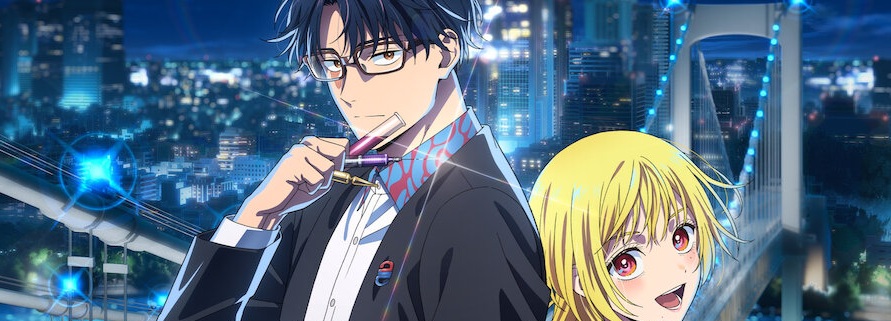
The story follows Hikaru Gero, a young assassin from the Gero family, one of the powerful families known as the Masters. Hikaru belongs to the Poison Masters, a lineage that has specialized in deadly techniques for generations.
Unlike a typical protagonist, Hikaru is extremely skilled at fighting but has almost no experience with romance or ordinary social life. His situation becomes even more complicated when his family demands that he find a partner and continue the family bloodline.
Desperate to protect his younger sister, Akari Gero, Hikaru turns to Mei Kinosaki, a talented marriage swindler. Mei becomes his guide to the complicated world of dating and relationships.
This unusual combination of assassins, romance, comedy,y and high-speed battles is one of the main reasons Marriage Toxin stands out from other action anime.
The anime adaptation was produced by BONES Film, with Motonobu Hori serving as director, Kimiko Ueno handling series composition and scripts, and Kohei Tokuoka working on character designs and chief animation direction. The first season premiered on April 7, 2026, and consisted of 13 episodes.
The Creators Were Impressed by the Anime’s Action
One of the biggest topics in the interview was the anime’s action animation.
Jōmyaku explained that the battle sequences were particularly impressive to watch. The creator said that the anime’s action had a tremendous amount of power and that it was fascinating to see the production team turn scenes from the manga into moving sequences.
One moment that stood out was Hikaru using poison to strengthen his body. According to Jōmyaku, seeing the technique animated created a completely different experience from simply reading it in the manga.
The creator also highlighted the sequence involving Ureshino and the will-o’-the-wisp, praising the visual effects, brushwork,rk and overall presentation.
For the manga creators, these scenes demonstrated one of the biggest advantages of animation: moments that exist as still images on a manga page can gain movement, timing, sound effects and music when adapted for television.
Mizuki Yoda Reveals the Most Difficult Arc to Draw
While Jōmyaku was impressed by the animation, Mizuki Yoda discussed some of the challenges involved in creating the original manga.
According to Yoda, the Beast Tamer arc was particularly difficult to draw.
One reason was the number of unusual creature designs involved in the story. Yoda explained that drawing creatures is especially challenging, making characters such as Byakutora and Jushiro’s “pure beast” form particularly demanding.
The Beast Tamer arc required Yoda to balance detailed character designs with action-heavy scenes. This became even more challenging because the characters had to remain recognizable while moving through complicated battle sequences.
The discussion highlights how much work goes into manga artwork that readers may not immediately notice.
A character may appear on the page for only a few seconds of reading time, but creating that single illustration can require considerable planning, reference work, and revisions.
Jōmyaku Says Yoda Often Expands the Characters Beyond the Original Ideas
The interview also revealed an interesting part of the creative relationship between Jōmyaku and Yoda.
Jōmyaku explained that the original story provides the foundation, while Yoda’s artwork can sometimes make characters feel much larger than initially planned.
One example is Ushio, the Water User.
Jōmyaku originally imagined Ushio primarily as an enemy character. However, after seeing Yoda’s interpretation of the character, the creator became interested in exploring him further.
The same kind of creative expansion happened with other characters, including Naruko, the Sound User, and Teruaki Gero.
Jōmyaku also recalled being particularly impressed by a scene in which Gero uses a leg technique to save Shirosaki from danger.
The scene was not necessarily the loudest or most explosive moment, but the composition made it memorable.
According to the creator, Yoda has repeatedly taken rough ideas and transformed them into character designs and scenes that exceed the original expectations.
Voice Actors Added New Layers to the Characters
The creators also praised the voice cast for bringing out aspects of the characters that were difficult to imagine while working on the manga.
Jōmyaku explained that the anime’s voice performances helped reveal new sides of several characters.
Hikaru Gero, for example, gained an interesting personality through Haruki Ishiya’s performance. Shirosaki Mei also became more charming and mysterious through Shion Wakayama’s voice acting.
The creators also praised the performances of supporting characters.
Naruko’s voice was described as particularly memorable, while Himekawa’s dependable personality and Arashiyama’s cheerful nature also made strong impressions.
Jōmyaku specifically mentioned Ureshino, describing her as one of the more ordinary characters in the series. That normality, however, became part of her appeal.
For viewers, this is an important part of what makes an anime adaptation different from manga. A character’s voice, pauses, tone,e and delivery can completely change how audiences understand their personality.
Jushiro Became a Major Favorite After the Anime
Mizuki Yoda also talked about Dogo Jushiro, a character whose personality was difficult to imagine vocally while creating the manga.
Yoda admitted that it was not easy to picture what Jushiro would sound like.
That changed after hearing Kazuyuki Okitsu perform the character.
The contrast between Jushiro’s calm and attractive voice and his energetic laugh gave the character another dimension. Yoda said that the performance brought out Jushiro’s appeal far beyond what had originally been imagined.
This is another example of how the anime adaptation allowed the original creators to experience their own characters in a new way.
Overseas Fans Are Also Discovering Marriage Toxin
The interview also touched on the international response to the anime.
The creators expressed happiness that Marriage Toxin has attracted attention from overseas viewers.
Jōmyaku noted that characters such as Kinosaki and Arashiyama appeared to be connecting with international audiences.
Yoda also mentioned that an image of Jushiko from the anime gained attention overseas.
The creators were particularly curious about how the concept of “marriage hunting” is understood by viewers outside Japan.
This concept is closely connected to Japanese dating culture and refers to actively searching for a marriage partner rather than simply dating casually. In Marriage Toxin, the idea is presented through the unusual perspective of an assassin who knows almost nothing about romance.
That cultural difference adds another interesting layer for international viewers.
Why Do the Characters Have Hot Spring-Inspired Surnames?
Another fun detail revealed during the interview concerns the characters’ names.
Many of the surnames in Marriage Toxin are connected to famous hot spring locations in Japan.
Jōmyaku explained that the idea came from an interest in place names.
The creator specifically mentioned Gero and Beppu, both of which are associated with famous hot spring destinations.
The name “Gero” was particularly appealing because it sounded distinctive and worked well for a character belonging to the Poison Masters.
Jōmyaku also said that they enjoyed works in which characters have surnames based on locations. This eventually developed into the hot spring naming theme used throughout Marriage Toxin.
For international fans, these names may simply sound unusual, but Japanese readers can recognize some of the references hidden within them.
Yoda Explains How She Designs the Characters
Mizuki Yoda also discussed the details she pays attention to when drawing characters.
For female characters, Yoda places particular importance on their facial expressions, hand movements, ts and hair.
A character’s expression can communicate emotions without dialogue, so important scenes often receive additional attention during the drawing process.
Yoda explained that she may repeatedly adjust an expression until it feels right.
Hair is another important visual element. Rather than treating it as a static part of the design, Yoda tries to make the hair feel alive, particularly during emotionally important scenes.
These small details help give Marriage Toxin its distinctive visual identity.
The Anime’s First Season Set the Stage for Season 2
The first season of Marriage Toxin concluded with Episode 13 on June 30, 2026. Shortly afterward, the production team confirmed that the anime would return for a second season in January 2027.
The first season introduced viewers to Hikaru, Mei, and the unusual world of the Masters while adapting several major story arcs.
The anime’s combination of intense combat, comedy and relationship-focused storytelling helped establish its identity.
The second season announcement means that Hikaru’s journey is far from over. While specific details about the upcoming season’s episode count, new cast members,s and story coverage have not all been revealed, fans can expect the story to continue building on the events established in Season 1.
The exact Season 2 details should be confirmed through future official announcements.
What Makes Marriage Toxin Different?
At first glance, Marriage Toxin may sound like a straightforward action series about assassins. However, its central idea is much more unusual.
Hikaru is extremely capable when it comes to combat, but romance is almost completely outside his experience.
Mei, meanwhile, understands relationships and dating but operates as a professional marriage swindler.
Putting these two characters together creates a natural source of comedy.
Their partnership also allows the series to move between serious battles and lighter character moments without completely abandoning either side.
That balance is one of the defining features of Marriage Toxin.
Marriage Toxin Season 2: What Fans Can Expect
With Season 2 scheduled for January 2027, attention is now turning toward what comes next.
The creators’ comments suggest that the anime team has developed a strong understanding of the manga’s visual identity and characters.
The continuation also gives the production team another opportunity to bring some of the manga’s most ambitious battles to the screen.
For newcomers, the upcoming season also provides a good reason to catch up with the first season before the new episodes arrive.
The first season consisted of 13 episodes and aired from April 7 through June 30, 2026.
With its unusual combination of assassin action, romance, comedy, and matchmaking, Marriage Toxin has established itself as a distinctive anime adaptation.
The special creator interview offers an inside look at why the manga’s characters work so well and how animation has expanded their personalities.
With Season 2 arriving in January 2027, Hikaru Gero, Kinosaki, i and the rest of the cast will soon return for another chapter of the world’s most dangerous matchmaking mission.