 by
As the Lupin the Third anime celebrates its 55th anniversary in 2026, one unusual episode from the 1984 series PART III deserves another look. Written by acclaimed filmmaker Seijun Suzuki, Episode 13, “Warunori Hensōkyoku,” combines bizarre twists, grotesque imagery, and surreal storytelling to create one of the franchise’s strangest adventures.
The Lupin the Third anime has entertained audiences for more than five decades. Based on the manga by Monkey Punch, the franchise began its television journey in 1971 and has since expanded into multiple anime series, theatrical films, and television specials. Its blend of stylish heists, comedy, action, and unforgettable characters has helped it remain popular across generations.
In 2026, the franchise celebrates the 55th anniversary of its television anime debut. To mark the occasion, Nippon Television launched Lupin the Third Best Selection, a special broadcast featuring episodes selected through a fan-voting campaign. The project covers classic television series from PART1 through PART6, as well as the spin-off The Woman Called Fujiko Mine.
Among the franchise’s many television adventures, however, some episodes are remembered not simply for their heists or action scenes, but for their strange and unsettling atmosphere.
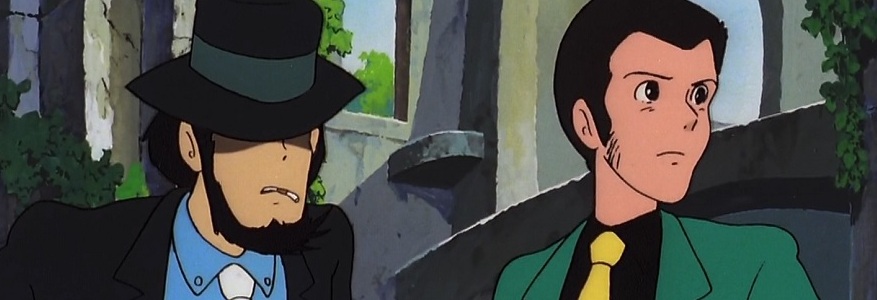
One particularly memorable example comes from Lupin the Third PART IIII, the 1984 television series often nicknamed the “pink-jacket” era. Its experimental visual style and willingness to explore unusual storytelling made it different from the more familiar green-jacket and red-jacket series.
Episode 13, “Warunori Hensōkyoku,” is an especially striking example. Written by film director Seijun Suzuki, the episode abandons the rhythm of a conventional Lupin caper and takes viewers through a chain of increasingly bizarre events involving a mysterious party, a spacecraft, an apparent execution, and a sinister flock of crows.
The result is an adventure that leaves many questions unanswered and creates an atmosphere of uncertainty that lasts until the final scene.
Why Lupin the Third PART III Feels So Different
The series with the pink jacket
The original Lupin the Third television series began in 1971. The second series, PART2, later became one of the franchise’s best-known entries, with its red-jacketed Lupin appearing in a large number of lighthearted and action-packed adventures.
Lupin the Third PART IIII, officially titled PART IIIII, premiered in 1984. Its character designs differed noticeably from those of the previous television series, with a visual approach that drew more directly from the look and spirit of Monkey Punch’s original manga.
The pink jacket worn by Lupin became the series’ most recognizable feature. However, the differences went beyond costume design.
Unlike productions that rely on a chief animation director to maintain a consistent look across episodes, PARTIII did not use one in the same way. As a result, the characters’ appearances and the overall visual atmosphere could vary significantly from one episode to another.
This variation gave the series an unusual identity. Some episodes embraced familiar adventure-comedy elements, while others explored darker situations, strange imagery, and experimental narrative techniques.
The series ran from March 1984 to December 1985 and contained 50 episodes. Despite its nearly two-year broadcast period, interruptions meant that the episodes were not always aired at regular weekly intervals.
This creative freedom is one reason PARTIII remains interesting to longtime fans. It demonstrates how a familiar franchise can take unexpected artistic directions while retaining its central characters.
Episode 13: “Warunori Hensōkyoku” — A Bizarre Masterpiece
Episode 13, “Warunori Hensōkyoku,” first aired in October 1984. It is also known by different English titles, including Masquerade in Hell and Musical Variation of Monkey Business. The variation in English titles reflects the difficulty of translating its unusual Japanese title into a single phrase that captures its tone.
The episode was written by Seijun Suzuki, the celebrated filmmaker known for works such as Zigeunerweisen (1980). Suzuki was famous for his unconventional approach to cinema, often creating stories in which reality, fantasy, and symbolism overlap.
His sensibilities make this episode particularly distinctive. Rather than presenting a straightforward crime story with a clear chain of cause and effect, the narrative moves between unexpected situations, unsettling images, and apparent contradictions.
The result is a story that can be interpreted in different ways. Viewers looking for a conventional explanation may find themselves frustrated, while those who enjoy surreal storytelling may appreciate the episode’s refusal to follow familiar rules.
A long break before the episode aired
The episode also arrived after a notable gap in the series’ broadcast schedule. PARTIII’s Saturday evening time slot was sometimes affected by interruptions for professional baseball broadcasts and special programming.
The gap between Episode 12 and Episode 13 lasted approximately three months. When the series returned with “Warunori Hensōkyoku,” it offered a striking change of tone, making the episode stand out even more in the show’s history.
Instead of a conventional theft or chase, viewers were presented with an increasingly strange sequence of events that seemed to resist straightforward explanation.
The Story Begins With a Tired Lupin
At the beginning of the episode, Lupin is exhausted after struggling against Inspector Koichi Zenigata, his persistent pursuer. Unlike the confident and playful thief audiences usually expect, he appears drained and unable to display his usual energy.
Fujiko Mine soon appears and takes advantage of the situation. She brings Lupin to a party hosted by the wealthy Madame Luisa, where she asks him to steal the jewellery worn by the women attending the gathering.
At first, the plan sounds like a familiar Lupin adventure. A glamorous party, valuable jewellery, and Fujiko’s unpredictable motives are all elements that could easily lead to a standard heist.
However, the episode quickly reveals that the situation is far stranger than it initially appears.
The mansion hosting the party is actually a spacecraft. The guests are launched into space, where they are taken to observe battlefields on Earth from above. What appears to be an extravagant entertainment experience becomes part of a much more disturbing scenario.
The abrupt transition from a wealthy social gathering to a spacecraft overlooking war establishes the episode’s surreal tone. The story does not pause to provide a lengthy explanation for the change. Instead, it moves forward as though such an extraordinary event were simply another part of the adventure.
This is one of the episode’s defining qualities: the audience is repeatedly forced to accept new situations before fully understanding what has happened.
Fujiko’s Plan Takes a Dark Turn
The spacecraft adventure soon becomes more dangerous. Fujiko announces that the ship has been hijacked by guerrillas and uses the crisis as an opportunity to take the jewellery belonging to the wealthy passengers.
The apparent hijacking leads to demands for ransom. The situation also involves the police, with Zenigata designated to handle the exchange.
But there is a problem: the ransom is not enough to cover everyone, including Lupin.
When Fujiko learns this, she coldly declares that Lupin will be executed. The episode shifts from a story about theft and deception to something much more threatening, as Lupin is captured and prepared for an apparent public execution.
The sudden change in Fujiko’s behaviour is especially unsettling. Her motives have always been unpredictable, but the events here push that unpredictability into disturbing territory.
The women who have been released after the ransom payment are even asked to assist with Lupin’s execution. The scene is strange not only because of the threat to Lupin, but because the characters seem to accept an increasingly absurd chain of events without questioning it.
Just as the execution is about to proceed, the situation changes again.
The Crows: The Episode’s Most Disturbing Images
Before Lupin’s execution can take place, a flock of crows suddenly appears and attacks the people gathered at the scene.
The birds interrupt the proceedings and create an opportunity for Lupin to escape. He flees into a cave, but the crows continue to pursue him.
Lupin fights back, striking the birds with his bare hands. The sequence becomes increasingly grotesque as black feathers and blood fill the scene. In one of the episode’s most shocking moments, Lupin is shown eating the raw flesh of the crows.
This imagery is a sharp departure from the familiar tone of many Lupin the Third adventures. Although the franchise has never been entirely free of violence or darker material, this sequence feels deliberately excessive and disturbing.
The crows also serve an unusual narrative purpose. Their sudden arrival changes the course of the story, yet the episode does not immediately explain where they came from or why they have appeared.
Because the birds behave almost like an unexplained force, they become more than a simple obstacle for Lupin. Their presence contributes to the feeling that the world of the episode is operating according to rules that the audience cannot fully understand.
The scene is memorable partly because it refuses to offer a comfortable explanation. Viewers are left to absorb the disturbing images while the narrative moves on to another unexpected development.
Madame Luisa and the Mystery of Fujiko’s Identity
The cave eventually leads Lupin to Madame Luisa’s mansion. There, he encounters Madame Luisa disguised as Fujiko.
This revelation raises questions about the events that came before it. Was the Fujiko who accompanied Lupin to the party really Fujiko? Had Madame Luisa been responsible for the strange behaviour that led to the spacecraft incident and the attempted execution?
The episode suggests that Madame Luisa’s disguise may explain at least some of the earlier confusion, but it does not resolve every mystery.
Madame Luisa has lost her right eye and has become deeply despairing. She asks Lupin to shoot and kill her, presenting him with a situation that differs from the usual games of deception and pursuit.
Lupin refuses to carry out her request and leaves the room. A gunshot is then heard behind him.
The scene offers no easy emotional resolution. Madame Luisa’s desperation introduces a darker subject into the story, while the abrupt sound of the gunshot leaves viewers to wonder what happened after Lupin departed.
The uncertainty is intensified by the episode’s larger structure. Just when one revelation seems to explain the situation, another event introduces fresh questions.
A Final Appearance by the Mysterious Crow
After another confrontation involving Lupin and Zenigata, the mysterious crow appears once again.
Lupin stares at the bird as though captivated by it, and his eyes glow an eerie red. The episode then ends abruptly.
The final image is unsettling because it offers no clear explanation for the crow’s repeated appearances or Lupin’s strange reaction to it. The episode does not reveal whether the bird has a supernatural significance, represents something symbolic, or is simply part of the story’s deliberately irrational design.
This unresolved ending is a major reason the episode continues to attract attention among fans who enjoy the stranger side of the franchise.
Many mystery stories build toward a final revelation that explains the preceding events. “Warunori Hensōkyoku” takes a different approach. It leaves the viewer with an image that feels meaningful but refuses to explain precisely what it means.
Rather than resolving every question, the episode ends by preserving its sense of unease.
Why the Episode Feels So Unsettling
Several elements contribute to the episode’s disturbing atmosphere.
First, the story changes direction without warning. A party becomes a spacecraft adventure, a ransom scheme becomes an execution, and an apparent escape turns into a grotesque confrontation with crows.
Second, the characters’ identities and motives remain uncertain. The revelation involving Madame Luisa’s disguise makes viewers question what they have seen, while the episode provides no comprehensive explanation for every strange event.
Third, the imagery is deliberately uncomfortable. The attack by the crows, the blood and feathers, and Lupin’s actions in the cave create a visual tone that differs sharply from a typical lighthearted caper.
Finally, the ending refuses to provide a clear answer. The crow’s return and Lupin’s glowing eyes leave the story suspended between reality and something more mysterious.
Together, these elements make the episode feel less like a conventional crime adventure and more like a surreal nightmare in which the usual rules of storytelling no longer apply.
Seijun Suzuki’s Influence on Lupin the Third
Seijun Suzuki’s involvement is central to understanding why this episode feels so different. Suzuki was known for his experimental filmmaking and his willingness to challenge conventional storytelling.
His film Zigeunerweisen, released in 1980, is one of the works associated with his distinctive cinematic approach. His style often places atmosphere, visual associations, and unusual transitions alongside more conventional plot elements.
In “Warunori Hensōkyoku,” that approach can be seen in the sudden shifts between locations, the unsettling imagery, and the lack of a straightforward explanation for the events.
The episode does not simply tell viewers what happened and why. Instead, it creates an experience that encourages them to question the connection between one scene and the next.
This makes it a fascinating example of how an established anime franchise can accommodate experimental storytelling. The familiar characters provide a starting point, but the episode uses them to explore a much stranger narrative style.
How Episode 13 Fits Into the Legacy of PARTIII
Lupin the Third PART III is often less discussed than the original green-jacket series or the popular red-jacket series. Yet its willingness to experiment with visual design and storytelling gives it a distinctive place in the franchise.
The series did not maintain exactly the same tone from episode to episode. Some adventures were conventional heists, while others explored unusual premises and darker situations.
“Warunori Hensōkyoku” is an especially clear example of this freedom. It takes the familiar ingredients of a Lupin story—Fujiko’s schemes, Zenigata’s pursuit, and Lupin’s ability to escape danger—and rearranges them into something deeply unpredictable.
For viewers accustomed to the franchise’s more accessible comedy and action, the episode can be surprising. For longtime fans, it offers a reminder that Lupin the Third has always had room for creative risks.
The episode’s unusual reputation also demonstrates that an anime does not need to explain every detail to leave a lasting impression. Sometimes, its most memorable moments are the ones that refuse to fit neatly into a familiar pattern.
Lupin the Third Celebrates 55 Years of Anime History
The franchise’s 55th anniversary in 2026 provides an ideal opportunity to revisit episodes that may not always receive the same attention as its most famous adventures.
Nippon Television’s Lupin the Third Best Selection was created to celebrate the anime’s history through a fan-voting project covering 316 episodes from the six numbered television series and The Woman Called Fujiko Mine. The final selection includes 13 episodes: the top two from each numbered series and the highest-ranked episode from the spin-off. The broadcasts began on October 3, 2026.
Although “Warunori Hensōkyoku” is not necessarily representative of every PARTIII episode, it illustrates why revisiting the series can be rewarding. Its unusual style shows how much variety exists within the larger franchise.
The anniversary is not only an opportunity to celebrate well-known classics. It is also a chance to rediscover episodes that took creative risks and pushed the series into unexpected territory.
“Warunori Hensōkyoku,” Episode 13 of Lupin the Third PART III, remains one of the franchise’s most unusual adventures. Written by Seijun Suzuki, it transforms a seemingly familiar heist into a surreal sequence of spacecraft hijackings, attempted execution, grotesque crow attacks, disguises, and unresolved mysteries.
Its greatest strength is its refusal to provide easy answers. The sudden transitions, disturbing imagery, and final appearance of the crow create an atmosphere that feels closer to a nightmare than a conventional Lupin adventure.
As the Lupin the Third anime celebrates its 55th anniversary in 2026, this episode is worth revisiting for anyone interested in the more experimental side of Japanese animation. It demonstrates that even a long-running, widely recognized franchise can produce stories that are strange, unsettling, and open to interpretation.
For viewers who enjoy anime that blurs the line between reality and fantasy, “Warunori Hensōkyoku” is a memorable example of how far the world of Lupin the Third can stray from the expected.