 by
Cute character designs, unexpectedly dark stories, and daring comedy have made several Fall 2026 anime stand out from the crowd. While many new series are attracting attention for their animation and storytelling, a few have surprised viewers with first episodes that are far more intense and unconventional than their promotional artwork initially suggests.
The autumn anime season has already delivered plenty of memorable moments, but some of the biggest reactions have come from shows that deliberately challenge audience expectations. From a financial tragedy hidden behind adorable character designs to outrageous school comedy and provocative ending visuals, these series have generated plenty of discussion online.
Among the titles drawing attention are FX Fighter Kurumi-chan and Even the Student Council Has Its Holes! Both made strong first impressions, although for very different reasons. The former shocked viewers with its disturbing portrayal of financial loss and family tragedy, while the latter attracted attention through its deliberately crude humour and unconventional visual presentation.
Their first episodes demonstrate how dramatically an anime can differ from what its cute illustrations or familiar genre labels might suggest.
Spoiler warning: This article discusses major events and scenes from the first episodes of FX Fighter Kurumi-chan and Even the Student Council Has Its Holes!
- FX Fighter Kurumi-chan: A Cute-Looking Anime With a Disturbing Financial Story
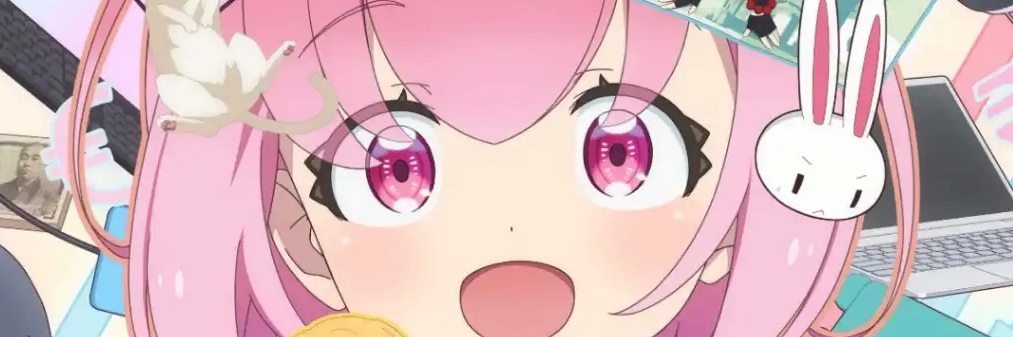
One of the most unexpected premieres of Fall 2026 is FX Fighter Kurumi-chan (Japanese: FX Senshi Kurumi-chan), based on the manga written by Demunyan and illustrated by Daisuki Tansan.
The series follows university student Fukuga Kurumi, voiced by Aina Suzuki, who enters the world of foreign exchange trading, commonly known as FX. Her motivation is not simply to make money or become financially independent. She wants to recover the 20 million yen her late mother lost through FX trading.
At first glance, the anime’s colourful character designs and cute illustrations might suggest a light-hearted slice-of-life comedy. However, Episode 1 quickly reveals that the story is considerably darker than its appearance suggests.
An unusual financial warning appears before the opening theme
One of the first things that surprised viewers was the warning displayed before the anime’s opening sequence.
Instead of immediately introducing the characters or playing the theme song, the episode presented an unusually detailed disclaimer explaining that the story is fictional and that FX margin trading is a high-risk financial activity.
The warning specifically explained that losses can exceed the money deposited as margin. It also cautioned that excessive trading can interfere with everyday life and advised viewers to approach the subject carefully.
The notice went further by addressing high-leverage trading and the risks associated with using overseas brokers that are not registered with Japan’s Financial Services Agency.
This unusual introduction immediately established the serious subject matter behind the anime. Rather than presenting FX trading as an easy way to become wealthy, the series makes viewers aware of the potential financial dangers before the story even begins.
For viewers unfamiliar with the term, FX stands for foreign exchange. It involves buying and selling currencies in an attempt to profit from changes in their exchange rates. In margin trading, investors use deposited funds as collateral to control larger positions, which can magnify both profits and losses.
Kurumi’s family tragedy makes the first episode unexpectedly heartbreaking
The real shock arrives when the episode reveals Kurumi’s family history.
Her mother, Kozue Fukuga, voiced by Mamiko Noto, became involved in FX trading and eventually suffered losses amounting to 20 million yen. The financial disaster severely affected her emotional well-being and damaged her relationship with her family.
The situation becomes increasingly tragic as Kozue struggles to cope with the consequences of her decisions. Her financial losses and emotional distress eventually lead to her death by suicide.
Kurumi is left devastated by the incident. Rather than being able to move forward without looking back, she continues to carry guilt and painful memories connected to her mother’s final days.
Years later, after becoming a university student, Kurumi decides to enter the FX market herself. Her goal is to recover the 20 million yen her mother lost.
However, her decision is not based on a realistic understanding of how difficult financial trading can be. Kurumi initially believes that she can earn the money back without fully appreciating the risks involved.
The first episode therefore presents two connected tragedies: a mother who becomes overwhelmed by financial losses and a daughter who enters the same dangerous market while carrying unresolved emotional pain.
The market crash leaves Kurumi facing the reality of FX trading
Kurumi’s first experience with trading quickly challenges her confidence.
She enters the market believing that she can recover the money her mother lost, but the situation becomes frightening when the market moves against her position. The sudden change in the exchange rate turns what initially seemed like an opportunity into a stressful financial situation.
The anime uses rapidly changing charts, trading terminology, and Kurumi’s emotional reactions to communicate how quickly a position can move from profit to loss.
This is an important part of the series’ appeal. Instead of explaining financial concepts through lengthy classroom-style dialogue, it places viewers alongside Kurumi as she experiences the excitement, anxiety, and fear associated with trading.
The result is a tense first episode that contrasts sharply with the show’s cute character designs.
Viewers reacted with comments such as, “I expected a cruel comedy that contrasted with the adorable artwork, but this was much more brutal than I imagined,” and “I also struggle with FX, so watching this made my stomach turn.”
The performance of Mamiko Noto as Kurumi’s mother also attracted attention. Her emotional portrayal of Kozue’s anger and distress added considerable weight to the episode.
Why FX Fighter Kurumi-chan stands out this season
The series is unusual because it combines financial subject matter with psychological drama and character-driven storytelling.
It does not simply show characters making money through trading. Instead, it explores the emotional consequences of financial decisions, the temptation to recover losses, and the danger of allowing money to control one’s life.
For newcomers, one important concept to understand is loss chasing. This refers to the attempt to recover money already lost by taking further risks. It can lead people to make increasingly emotional decisions rather than carefully evaluating the situation.
Kurumi’s motivation makes this idea especially relevant to the story. She is not entering the market with a completely fresh perspective; she is influenced by her mother’s past and her own feelings of guilt.
The anime began broadcasting on October 1, 2026, on TOKYO MX and other Japanese television stations. It is animated by Passione, with Aina Suzuki voicing Kurumi and Mamiko Noto playing Kozue.
Its first episode has already established that this is not a conventional cute-girl comedy. It is a much darker story about money, grief, and the psychological risks of high-stakes trading.
- Even the Student Council Has Its Holes!: Bold Comedy and an Unforgettable Ending Video
Another Fall 2026 anime that attracted attention immediately after its premiere is Even the Student Council Has Its Holes! (Japanese: Seitokai ni mo Ana wa Aru!), based on the manga by Muchimaro.
Unlike FX Fighter Kurumi-chan, which surprises viewers through its dark subject matter, this series relies on outrageous humour, eccentric characters, and deliberately provocative comedy.
The story takes place at Fujinari Academy, a private school where the student council members are far from ordinary. Rather than behaving like a disciplined group responsible for managing school activities, the members are an unpredictable collection of personalities who frequently create chaos.
The anime follows their unusual daily lives, focusing on the misunderstandings, awkward situations, and bizarre interactions that emerge when these characters spend time together.
Although the setting may sound familiar to fans of school-comedy anime, the series quickly establishes that its humour is considerably more daring than that of a typical school-life story.
The first episode immediately establishes its provocative humour
The first episode introduces several members of the student council and gives viewers an early indication of the kind of comedy they can expect.
One of the characters attracting attention is the public relations officer, Ohtori-tan, voiced by Hiyori Kono. The character has a feminine appearance, but the series uses that contrast as part of its comedy.
The episode includes provocative jokes involving Ohtori-tan and the student council president, Hisako Kotobuki, voiced by Haruka Shiraishi. In one particularly outrageous sequence, the characters become involved in an inappropriate visual gag during a school assembly.
The student council secretary, Ume Mizunoe, voiced by Shogo Sakata, is also involved in some of the episode’s awkward and suggestive situations.
Rather than relying on subtle humour, the anime frequently pushes its jokes to an exaggerated level. This is part of its distinctive style, although viewers who prefer more restrained school comedies may find the approach too provocative.
The series’ appeal comes from the contrast between the characters’ ordinary school responsibilities and their completely unpredictable behaviour.
The ending theme video becomes another talking point
The first episode’s ending video generated its own discussion.
The ending song is “Pi” by Akari Nanawo, and the original video was released alongside the anime’s premiere on October 4, 2026.
Its unusual visual presentation features stylised character designs divided into separate sections, with a roulette-like mechanism changing their outfits and appearances. The playful presentation deliberately embraces the series’ provocative humour rather than following the more conventional approach of showing a collection of attractive character illustrations or a short animated performance.
The ending’s subtitle, “Ups and downs, and holes too ver.”, also plays on the series’ title and its double-entendre humour.
The unusual combination of the song, visual gags, and character designs caught viewers off guard. Some reactions included comments such as, “I can’t believe this actually made it into the broadcast,” and “The roulette sequence in the chorus is something completely new.”
The ending video was not simply a conventional musical break. It became another example of how the anime uses visual comedy to establish its identity.
The opening and ending videos offer different sides of the series
The anime’s opening and ending videos were released on Aniplex’s official YouTube channel on October 4.
The opening theme is “Kaze no Naka wa Hashirukkyanai!” by Sangatsu no Phantasia. Its video carries the subtitle “Welcome to Fujinari Academy ver.”, introducing the school and its eccentric student council members.
The ending theme, “Pi” by Akari Nanawo, uses the subtitle “Ups and downs, and holes too ver.” and leans more heavily into the series’ playful wordplay.
The two videos therefore present different sides of the same comedy. The opening introduces the school’s atmosphere, while the ending embraces the more unusual humour associated with the manga.
There has also been a later music update. On October 25, Aniplex released a creditless version of the ending video. The same update included the release of “Mist – Solo Acoustic ver.”, an insert song performed by Kouki, voiced by Yu Kobayashi, in Episode 4.
This gives the series another musical highlight beyond its original opening and ending themes.
Production, cast, and streaming information
Even the Student Council Has Its Holes! is directed by Naoyuki Tatsuwa, with animation production handled by Passione.
The principal cast includes:
- Shogo Sakata as Ume Mizunoe
- Haruka Shiraishi as Hisako Kotobuki
- Hiyori Kono as Ohtori-tan
The anime is based on Muchimaro’s manga, which is serialized in Kodansha’s Weekly Shonen Magazine.
It began airing in Japan in Fall 2026, with terrestrial broadcasts and streaming availability through services including d Anime Store and AnimeFesta. Other streaming platforms also carry the series, depending on region and service availability.
For viewers who enjoy unconventional school comedy, eccentric characters, and exaggerated visual gags, the anime offers a very different experience from more traditional student council stories.
However, its suggestive humour and provocative presentation may not appeal to everyone. The series is best approached with an understanding of its intentionally outrageous comedic style.
Two Very Different Anime, One Common Surprise
Although FX Fighter Kurumi-chan and Even the Student Council Has Its Holes! belong to different genres, they share one important feature: both challenge the expectations created by their appearances.
FX Fighter Kurumi-chan initially looks like a cute anime about young women and their everyday activities. Its first episode, however, explores financial disaster, family tragedy, and the psychological pressure of trading.
Meanwhile, Even the Student Council Has Its Holes! presents itself as a school comedy, but its first episode quickly reveals a much more provocative sense of humour than viewers might expect from its setting.
Their differences are what make the comparison interesting:
- FX Fighter Kurumi-chan: Cute artwork contrasted with financial danger and emotional tragedy.
- Even the Student Council Has Its Holes!: School-life comedy combined with crude jokes and unconventional visual gags.
Both series demonstrate that a show’s promotional artwork does not always reveal the tone or subject matter of its actual story.
Fall 2026 Anime Continues to Surprise Viewers
The Fall 2026 anime season has already delivered several memorable first episodes, but FX Fighter Kurumi-chan and Even the Student Council Has Its Holes! have attracted attention by taking very different creative approaches.
One uses an adorable visual style to tell a story about financial risk, grief, and emotional trauma. The other embraces outrageous school comedy and a daring presentation that has made its ending video a talking point.
Their first episodes have shown that anime can move far beyond the expectations created by its artwork or genre description. Whether viewers are drawn to dark psychological drama or provocative comedy, both titles have offered something unexpected.
As the season continues, it will be interesting to see whether these series maintain their unusual approaches and what other surprising moments they bring to viewers.