 by
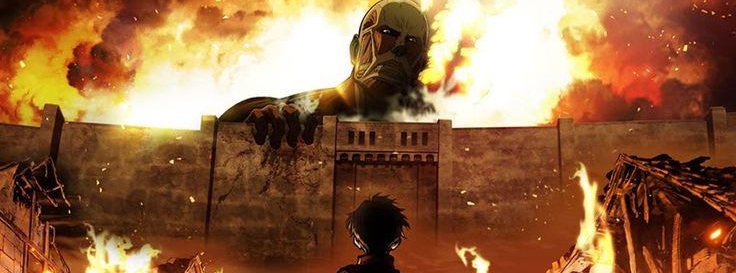
by The official theatrical trailer for Attack on Titan Part 1: Crimson Bow and Arrow has been released, giving fans a new look at the beginning of Hajime Isayama’s hugely popular dark-fantasy series ahead of its return to Japanese theaters.
The compilation film will return to the big screen on October 23, 2026, where it will be shown in SCREEN X, 4DX, and ULTRA 4DX. The upcoming screenings mark the first theatrical return of this Attack on Titan film in approximately 12 years and, more notably, the first time an Attack on Titan title will be presented in SCREEN X.
The newly released trailer focuses on the earliest part of Eren Yeager’s journey and the terrifying battle between humanity and the Titans. It revisits the story’s beginning while giving longtime fans an opportunity to experience some of the series’ most memorable early moments in an immersive theatrical format.
Attack on Titan: Crimson Bow and Arrow Returns to Theaters
Attack on Titan Part 1: Crimson Bow and Arrow will be screened in Japan from Friday, October 23, 2026, in three premium formats: SCREEN X, 4DX, and ULTRA 4DX. The announcement was originally made as part of the Attack on Titan Day celebrations in September, with the official theatrical trailer now providing another look at the upcoming screenings.
The film was originally released in Japan in 2014, making the 2026 theatrical presentation approximately 12 years after its original release.
For fans who watched Attack on Titan when the anime first began, the return offers a chance to revisit the opening chapters on a much larger screen. For newer viewers, it provides another way to experience the beginning of Eren, Mikasa, Armin, and the other members of the 104th Cadet Corps.
The new trailer particularly emphasizes the early conflict between the trainees and the Titans, showing the intense atmosphere that helped make the original anime a major international hit.
What Is SCREEN X?
One of the biggest attractions of the 2026 screening is the use of SCREEN X, which is being introduced to the Attack on Titan franchise for the first time.
SCREEN X is a three-sided multi-projection system. Instead of showing the movie only on the main screen in front of the audience, images are also projected onto the left and right walls of the theater.
This creates a wider field of view and can make certain action sequences feel more expansive. For a series such as Attack on Titan, which features enormous Titans, high-speed movement through cities and forests, and large-scale battles, the format is designed to make the world feel more immersive.
The official announcement specifically highlights this as the first SCREEN X presentation in the franchise.
For beginners, the easiest way to understand SCREEN X is to think of it as a theater presentation that expands the image beyond the normal front-facing screen, allowing parts of the visual experience to continue onto the side walls.
4DX and ULTRA 4DX Add Physical Effects
The film will also be shown in 4DX, a format that combines the movie with physical theater effects.
4DX theaters can use moving seats and environmental effects designed to correspond with what is happening on screen. This can make action sequences feel more physical than a standard movie presentation.
The film will also receive screenings in ULTRA 4DX, which combines the wider three-screen presentation of SCREEN X with 4DX-style motion and environmental effects.
That makes the upcoming Attack on Titan screenings notable not only as a return of an older compilation film, but also as a new theatrical presentation designed around immersive cinema technology.
The New Trailer Revisits the Beginning of the Story
The newly released theatrical trailer focuses on the beginning of Attack on Titan, particularly Eren Yeager and the other members of the training corps as they face the threat of the Titans.
The trailer is designed to remind viewers how the series began: humanity lives behind enormous walls for protection, while mysterious giant creatures known as Titans exist outside.
Eren dreams of seeing the world beyond the walls, but his life changes dramatically when the peaceful existence he knows is destroyed.
The official description highlights Eren and the training corps confronting the Titans, making the trailer a direct introduction to the story’s earliest conflicts.
Rather than focusing on later revelations from the series, the new trailer takes viewers back to the beginning and emphasizes the sense of danger, fear, and discovery that defined the first season.
Important Correction: Crimson Bow and Arrow Covers Episodes 1–13
One important detail for fans and newcomers is that Crimson Bow and Arrow does not cover all 25 episodes of Attack on Titan Season 1.
The film is the first part of a two-part compilation movie project based on the first TV anime season.
Crimson Bow and Arrow covers Episodes 1 through 13, while the second compilation film, Attack on Titan Part 2: Wings of Freedom, continues the story with the remaining portion of Season 1.
The original TV anime’s first season aired from April through September 2013 and consisted of 25 episodes. The first compilation movie was released in Japan in 2014 after re-editing the early portion of the TV series for theatrical presentation.
This distinction is important because the original draft described Crimson Bow and Arrow as re-editing all 25 episodes. In reality, it is the first half of the theatrical compilation, covering the first 13 episodes.
What Story Does Crimson Bow and Arrow Cover?
The movie introduces viewers to a world where humanity is threatened by giant humanoid creatures called Titans.
To protect themselves, people live inside massive defensive walls. Eren Yeager, however, is fascinated by the outside world and wants to see what exists beyond those walls.
His childhood friends Mikasa Ackerman and Armin Arlert share important connections with him as the three grow up together.
Their relatively protected life changes when an enormous Titan appears and breaches the wall.
The attack exposes humanity’s vulnerability and sets Eren on a path toward joining the military and fighting the Titans himself.
The compilation movie follows this early journey, including the training period and the intense battle that becomes one of the first major turning points of the story.
For viewers who are unfamiliar with Attack on Titan, the movie therefore functions as an introduction to the series’ central world, characters, and conflict.
The Movie’s Original Theme Songs
The theatrical version also features music associated with the original compilation film.
The main theme song is “Guren no Zahyou” by Linked Horizon, while the ending theme is “YAMANAIAME,” produced by Hiroyuki Sawano. Sawano also handled the film’s music.
Linked Horizon’s music has long been closely associated with Attack on Titan. The group’s dramatic sound became one of the recognizable musical elements of the franchise from the beginning of the TV anime.
Meanwhile, Hiroyuki Sawano’s score helped establish the large-scale, emotional atmosphere of the series. His involvement in the film’s music and ending theme further connects the theatrical compilation to the original anime.
Hajime Isayama’s Original Manga
Attack on Titan is based on the manga written and illustrated by Hajime Isayama.
The manga began serialization in Kodansha’s Bessatsu Shonen Magazine in 2009 and concluded in 2021.
The series became one of the most successful manga franchises of its generation, with cumulative circulation exceeding 140 million copies worldwide.
The story combines dark fantasy, action, mystery, military drama, and large-scale world-building. What initially appears to be a straightforward story about humans fighting giant monsters gradually develops into a much broader narrative involving the history of the world, political conflict, identity, war, and the meaning of freedom.
The anime adaptation began broadcasting in 2013, introducing the story to an even larger international audience.
Attack on Titan Anime Reached Its Conclusion in 2023
The television anime continued for several years across multiple seasons and production stages.
After the first season in 2013, the anime returned for Season 2 in 2017 and Season 3 across 2018 and 2019. The story then entered The Final Season, which began in 2020.
The concluding television installments were released across multiple parts, with the final chapter airing in November 2023.
That makes the 2026 theatrical return particularly interesting for longtime viewers. Although the main TV anime story has already concluded, the franchise continues to receive theatrical screenings and special presentations.
THE LAST ATTACK Will Also Return in 2027
The theatrical project will not end with Crimson Bow and Arrow.
The official Attack on Titan announcement has also confirmed that Attack on Titan: The Final Chapter – THE LAST ATTACK will receive screenings in SCREEN X, 4DX, and ULTRA 4DX in 2027. A specific 2027 release date has not yet been announced.
This creates an interesting contrast between the two planned theatrical presentations.
Crimson Bow and Arrow takes viewers back to the beginning of the story, when Eren and his friends are only starting to understand the world outside the walls.
THE LAST ATTACK, meanwhile, brings audiences back to the conclusion of the anime’s main storyline.
Both films will therefore represent very different points in the Attack on Titan timeline while being presented using the same immersive theatrical formats.
Why the 2026 Screening Is Special for Fans
The upcoming theatrical event combines several elements that make it different from a normal rewatch.
First, the movie is returning to theaters approximately 12 years after its original release.
Second, this will be the franchise’s first SCREEN X presentation, expanding the image onto the side walls of the theater.
Third, fans will also have the option of experiencing the movie through 4DX and ULTRA 4DX, adding motion and environmental effects to the viewing experience.
For longtime fans, it provides an opportunity to revisit the earliest part of Eren’s journey in a theatrical environment. For newcomers, it offers another entry point into one of the most influential anime stories of the 2010s.
However, viewers who want the complete Season 1 story should remember that Crimson Bow and Arrow covers only the first 13 episodes. The movie is part of a larger two-film compilation rather than a complete adaptation of all 25 Season 1 episodes.
Attack on Titan: Crimson Bow and Arrow – Quick Facts
- Title: Attack on Titan Part 1: Crimson Bow and Arrow
- Japanese title: Gekijoban Shingeki no Kyojin Zenpen: Guren no Yumiya
- Original manga: Hajime Isayama
- Original manga serialization: 2009–2021
- Original anime Season 1: 2013
- Original compilation film release: 2014
- Story coverage: Season 1 Episodes 1–13
- 2026 theatrical screening: October 23, 2026
- Formats: SCREEN X, 4DX, ULTRA 4DX
- SCREEN X: Franchise’s first presentation in the format
- Theme song: “Guren no Zahyou” by Linked Horizon
- Ending theme: “YAMANAIAME,” produced by Hiroyuki Sawano
- Second related theatrical film: Attack on Titan: The Final Chapter – THE LAST ATTACK
- THE LAST ATTACK immersive screening: 2027
- 2027 date: Not yet announced
The release of the new Attack on Titan: Crimson Bow and Arrow theatrical trailer gives fans another look at the beginning of the story ahead of its return to Japanese theaters.
Originally released in 2014, the compilation film revisits the first half of the original TV anime’s first season, covering Episodes 1 through 13. Its 2026 return will give the material a new presentation through SCREEN X, 4DX, and ULTRA 4DX, with SCREEN X making its Attack on Titan debut.
The October 23 screening also comes as the franchise continues its theatrical celebration following the conclusion of the television anime in 2023. With THE LAST ATTACK scheduled to receive the same three premium formats in 2027, fans will eventually have the opportunity to experience both the beginning and conclusion of the anime’s story in immersive theatrical presentations.
For Attack on Titan fans, the upcoming screening is therefore more than simply a repeat of a 2014 compilation movie. It is a new theatrical presentation of the story’s beginning, combining familiar characters and scenes with modern cinema technology.