 by
by As Chinese animation continues to gain international recognition, one question is being asked more frequently across the entertainment industry: Can Chinese animation eventually surpass Japanese anime?
The debate has intensified with the arrival of high-quality productions such as Umbrella Girl and the record-breaking CG blockbuster Nezha. These titles showcase the rapid growth of China’s animation industry and demonstrate its ability to compete on a global scale. However, while China’s animation sector has made remarkable progress in recent years, several challenges remain before it can rival Japan’s influence in the worldwide anime market.
By examining the strengths and limitations revealed through works like Umbrella Girl and Nezha, we can gain a clearer understanding of where Chinese animation stands today and where it may be headed in the future.
Umbrella Girl: A Beautiful Blend of Chinese Storytelling and Japanese Anime Influence
One of the latest examples of China’s growing animation capabilities is Umbrella Girl, an animated fantasy film scheduled for release in Japan on June 19.
Set in ancient China, the story takes place within the mysterious Treasure Pavilion, a location where precious historical artifacts belonging to rulers and nobles are preserved. The film explores the emotional lives of spirits that reside within these treasured objects, weaving together themes of memory, loss, and human connection.
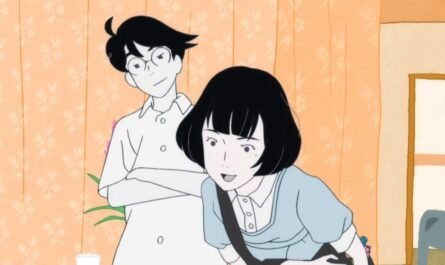
What immediately stands out about Umbrella Girl is its visual presentation. Despite being produced in China, the film closely resembles modern Japanese anime in both style and execution. Its character designs, expressive animation, and beautifully hand-painted backgrounds would not feel out of place in a production from a major Japanese animation studio.
For many viewers, the film serves as evidence of how much Chinese studios have advanced in the field of traditional 2D animation.
The Rise of Chinese Hand-Drawn Animation
For decades, Japan has been considered the global leader in hand-drawn animation. However, Chinese studios have steadily improved their technical capabilities and artistic quality.
Umbrella Girl is not an isolated success. Earlier Chinese animated films, such as The Legend of Hei, received praise from Japanese animators and anime fans alike. The film’s fluid animation, emotional storytelling, and strong direction demonstrated that Chinese creators could produce works comparable to many acclaimed Japanese productions.
In recent years, Chinese studios have increasingly invested in original animation projects, talent development, and advanced production techniques. As a result, the quality gap that once existed between Japanese and Chinese animation has narrowed significantly.
This development has fueled concerns among some industry observers that China could eventually become a serious competitor to Japan in the anime market.
Chinese Animation Is Expanding Beyond Movies
China’s influence is also growing in television animation.
Several Chinese animated series have successfully attracted international audiences, including:
- Link Click
- The Daily Life of the Immortal King
- Heaven Official’s Blessing
- Other historical fantasy and science fiction productions
Many of these series have found dedicated fanbases outside China, particularly among younger viewers who consume anime and animation through streaming platforms.
The success of these titles demonstrates that Chinese animation is no longer limited to its domestic audience. Instead, it is gradually becoming part of the broader global animation landscape.
The Real Giant of China’s Animation Industry: CG Animation
While Japanese audiences often focus on hand-drawn Chinese productions like Umbrella Girl, the reality is that China’s animation industry is largely driven by CG animation.
The biggest example is Nezha, which became one of the most successful animated films in history. Built around Chinese mythology, the franchise has generated enormous box-office revenue and established itself as a cultural phenomenon within China.
Unlike Japan, where 2D animation remains dominant, China’s largest animation studios have invested heavily in computer-generated animation. This approach aligns more closely with Hollywood’s animation model, where major studios rely on large-scale CG productions aimed at mass audiences.
Since the COVID-19 pandemic, several domestically produced Chinese CG films have achieved blockbuster success, while some Hollywood animated releases have struggled to maintain their previous level of dominance in the Chinese market.
This trend highlights China’s growing ability to produce world-class animated spectacles capable of competing commercially with international studios.
Why China’s Biggest Hits Still Depend on the Domestic Market
Despite impressive box-office numbers, Chinese animation still faces a major challenge: international reach.
Although Nezha generated enormous revenue, the vast majority of its earnings came from mainland China. This reflects one of the industry’s biggest strengths and weaknesses simultaneously.
China possesses one of the world’s largest entertainment markets, allowing animated films to become massive financial successes without relying heavily on overseas audiences.
However, this also means that many productions are designed primarily for Chinese viewers.
Stories often draw from:
- Chinese mythology
- Historical legends
- Classical literature
- Traditional folklore
- Cultural references familiar to domestic audiences
While these themes resonate strongly within China, they can sometimes be difficult for international viewers to fully understand without additional cultural context.
As a result, some Chinese productions struggle to achieve the same level of global accessibility enjoyed by many Japanese anime series.
Why Japanese Anime Remains Globally Dominant
Japan’s greatest advantage is not necessarily technology or production budgets—it is cultural reach.
For decades, anime has built a worldwide fanbase through globally recognized franchises, diverse storytelling genres, and a distinctive artistic identity. From action and fantasy to romance and slice-of-life dramas, Japanese anime covers an enormous range of subjects that appeal to audiences across different cultures.
Additionally, Japanese studios have developed extensive international distribution networks, licensing agreements, merchandising businesses, and streaming partnerships.
These factors create an ecosystem that is difficult for competitors to replicate quickly.
Even when Chinese animation reaches a comparable technical level, matching Japan’s global cultural influence remains a much larger challenge.
Japan Could Become the Gateway for Chinese Animation
Interestingly, Japan may play an important role in helping Chinese animation reach wider international audiences.
Because Japan has a long history of cultural exchange with China and remains one of the world’s most influential animation hubs, it serves as a natural bridge between Chinese creators and global anime fans.
Many Chinese animated works have already been well received in Japan. However, the productions that have found the greatest success are often those that embrace hand-drawn animation and storytelling styles familiar to anime audiences.
Works like Umbrella Girl demonstrate how Chinese studios are increasingly creating content that can appeal to both domestic and international viewers.
The Future of Chinese Animation
So, will Chinese animation surpass Japanese anime?
The answer is complex.
From a technical perspective, Chinese studios are rapidly closing the gap. Films like Umbrella Girl prove that China can produce exceptional hand-drawn animation, while blockbusters like Nezha showcase the country’s strength in large-scale CG productions.
However, surpassing Japan requires more than visual quality. It requires global cultural impact, internationally recognized franchises, diverse storytelling, and long-term audience engagement.
Rather than replacing Japanese anime, Chinese animation is more likely to become a powerful parallel force within the global animation industry.
As investment continues to grow and more Chinese productions reach international audiences, viewers can expect increasing collaboration, competition, and innovation between the two animation powerhouses.
For anime and animation fans, that competition may ultimately be the best outcome of all.