 by
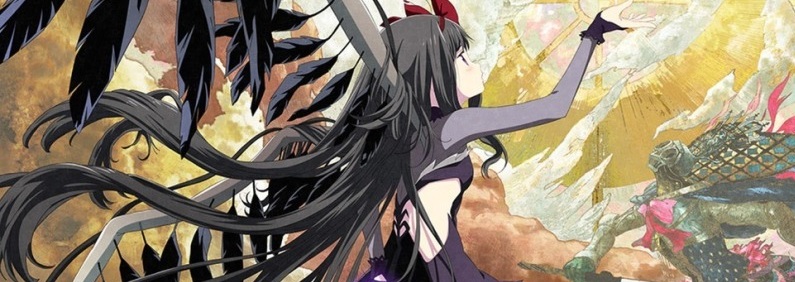
by Screenwriter Gen Urobuchi has looked back on the origins of one of the most influential anime series of the 2010s, revealing how he became involved with Puella Magi Madoka Magica and why his participation was considered such an unexpected choice when the series was first announced.
Urobuchi, a writer associated with Nitroplus and known for darker and more serious stories, was brought into the project after Atsuhiro Iwakami of Aniplex took notice of his work on Fate/Zero. The project was being developed by director Akiyuki Shinbo and character designer Ume Aoki, and Urobuchi was asked to write the script for what would become Puella Magi Madoka Magica.
The result was the 2011 TV anime Puella Magi Madoka Magica, a series that began as what appeared to be a magical-girl story but quickly developed into a much darker and more psychologically complex work.
Now, more than 15 years after the original TV anime and 13 years after Puella Magi Madoka Magica the Movie [Rebellion], Urobuchi is once again part of the core creative team for the newest film, Puella Magi Madoka Magica the Movie -Walpurgisnacht: Rising-.
In a new interview conducted around the film’s release, Urobuchi discussed how he entered the original project, what he thought about the unusual opportunity at the time, and how he now views the anime’s place in the changing Japanese animation industry.
How Gen Urobuchi Became Involved With Madoka Magica
When Puella Magi Madoka Magica was first being developed, Urobuchi was not someone audiences would immediately associate with a conventional magical-girl anime.
His previous work included game scenarios and novels, with Fate/Zero being one of his most prominent projects at the time.
According to Urobuchi, his connection to Madoka Magica began when Atsuhiro Iwakami of Aniplex noticed Fate/Zero.
Iwakami then approached him with an unusual proposal: Shinbo and Aoki were working on a magical-girl project, and Urobuchi was asked if he would write the script.
For Urobuchi, however, there was one obvious problem.
He did not know how to write a magical-girl story.
Rather than pretending that he already understood the genre, the production team introduced him to two works associated with Shinbo: Magical Girl Lyrical Nanoha and Le Portrait de Petit Cossette (Cossette no Shouzou).
These two works gave Urobuchi a reference point for understanding the type of project Shinbo and Aoki were creating.
Magical Girl Lyrical Nanoha and Le Portrait de Petit Cossette Became His References
Urobuchi explained that after watching the two works, he interpreted the new project as something that could exist somewhere between them.
He used that interpretation to prepare the initial project proposal.
The proposal received approval, and production of what would eventually become Puella Magi Madoka Magica began.
This is an important detail because it shows that Madoka Magica did not simply begin with Urobuchi deciding to make a dark version of a magical-girl story.
Instead, he was invited into an existing project and had to find his own way of understanding the genre.
His solution was to take inspiration from the material presented to him and create something that combined elements from different sides of Shinbo’s previous work.
That approach eventually produced a series that looked familiar on the surface but was structurally very different from many viewers’ expectations.
Even Urobuchi Was Surprised by the Casting
Looking back, Urobuchi admitted that he himself was surprised that he had been selected to write a magical-girl anime.
At the time, he was eager to accept different kinds of creative work and was interested in trying something he had never done before.
Rather than seeing his lack of experience with the genre as a major disadvantage, he viewed the uncertainty as part of the adventure.
He explained that he was happy to receive an opportunity to do something unfamiliar and was young enough at the time to believe that being confused was simply part of the experience.
That attitude turned out to be extremely important.
Instead of following every established expectation of the magical-girl genre, Urobuchi approached the project from outside the traditional anime-writing system.
The result helped Madoka Magica develop an identity of its own.
Why Urobuchi’s Participation Was So Surprising
When Puella Magi Madoka Magica was announced, anime fans already knew Urobuchi for work with a considerably darker tone.
That made the idea of him writing a magical-girl series an unusual combination.
The project also brought together a particularly distinctive group of creators:
- Gen Urobuchi — Series scriptwriter
- Akiyuki Shinbo — Director and creative leader
- Ume Aoki — Character original designer
- Shaft — Animation studio
At first glance, these creative elements did not necessarily suggest a conventional magical-girl anime.
That difference became one of the series’ biggest strengths.
The cute character designs and familiar magical-girl framework were combined with psychological drama, philosophical questions, tragedy, and an increasingly complicated understanding of what it meant to become a magical girl.
Madoka Magica Was Part of a Larger Change in Anime
In his latest interview, Urobuchi offered another interesting observation about the period when Madoka Magica was created.
He believes that the importance of the series was connected not only to the story itself, but also to a broader change in the anime industry.
According to Urobuchi, writers from outside the traditional anime-writing world were increasingly being invited to work on television anime.
Before that shift, it was more common for anime writers to build their careers gradually within the industry. A writer might begin as an assistant, work on individual episodes, and eventually move toward series composition and larger writing responsibilities.
Urobuchi came from a different background.
He had established himself through game writing and novels, rather than following that traditional anime career path.
He believes Madoka Magica became one of the particularly visible examples of this changing approach.
The “Outsider Writer” Approach
Urobuchi explained that, according to what he understood from the production process, Shinbo wanted a writer who was not overly accustomed to conventional anime writing.
That reportedly became one of the reasons Urobuchi was brought into the project.
This is an important distinction.
Rather than trying to find someone who already knew exactly how a traditional magical-girl television series should be written, the production wanted someone who could approach the concept from a different perspective.
Urobuchi’s background therefore became an advantage.
He was familiar with storytelling, game scenarios, and darker themes, but he did not have the same assumptions about anime production that a career anime writer might have had.
That difference helped the series develop its unusual tone.
The Anime Industry Was Changing Around 2011
The early 2010s were an interesting period for anime screenwriting.
Urobuchi pointed out that writers from other areas of the entertainment industry were becoming increasingly visible in anime.
He specifically mentioned creators such as Jun Maeda, associated with Angel Beats!, and Fumiaki Maruto, known for Saekano: How to Raise a Boring Girlfriend, as examples of writers whose work outside conventional anime scripting had attracted attention.
This did not mean that traditional anime writers disappeared.
Instead, the industry was increasingly willing to bring in creators with different professional backgrounds.
For Urobuchi, Madoka Magica became one of the projects that stood out during this broader transition.
Why Madoka Magica Felt Different
For beginners, one of the easiest ways to understand Madoka Magica is to think of it as a series that uses the familiar language of magical-girl anime but asks much darker questions about it.
The characters transform.
They receive magical powers.
They fight supernatural enemies.
They form friendships.
At first, these elements can look familiar.
But the series gradually asks questions about the price of those powers, the meaning of hope, the consequences of wishes, and what happens when people are forced to make impossible choices.
This combination helped the series appeal not only to existing magical-girl fans but also to viewers who normally did not watch the genre.
The Original 2011 Series Became a Major Anime Phenomenon
Puella Magi Madoka Magica premiered in 2011 and quickly became one of the most discussed anime series of its era.
Its success led to compilation films in 2012, followed by the direct sequel Puella Magi Madoka Magica the Movie [Rebellion] in 2013.
Rebellion dramatically expanded the story and became a major turning point for the franchise.
The newest film, Walpurgisnacht: Rising, continues from the events of Rebellion, making it an important chapter for fans who have followed the story since the beginning.
13 Years After Rebellion, Madoka Returns
The release of Walpurgisnacht: Rising is particularly significant because it arrives 13 years after [Rebellion].
The franchise has continued through games, merchandise, collaborations, and other projects during that period, but fans have been waiting for a completely new theatrical story.
The new movie finally continues the narrative.
That long gap also means the creators and cast are returning to characters they originally worked on more than a decade ago.
This has created an interesting situation for the people involved in the project.
They are not the same creators they were in 2011.
Their understanding of the characters has changed with age and experience.
Urobuchi Sees the Original Story Differently Now
One of the most interesting parts of the new interview is Urobuchi’s reflection on how much he has changed since writing the original series.
Looking back at Madoka Magica more than a decade later, he said that the series was possible partly because he could understand and empathize with the fears and concerns of young girls at that stage of his life.
Today, he feels that he could not necessarily write the same story.
Part of that is simply getting older.
But Urobuchi also pointed to changes in society.
The younger generation now grows up with smartphones, social media, and a very different information environment. He said that he no longer has the same intuitive understanding of what young people today fear, desire, or find enjoyable as he did when he was younger.
Why the Characters Still Resonate
Despite that generational distance, Urobuchi said he is pleased that the emotions explored in Madoka Magica continue to reach audiences, including its strong female fanbase.
The series focuses on feelings that are not limited to one specific era.
Fear, loneliness, friendship, sacrifice, regret, hope, and the desire to protect someone remain universal human experiences.
That may help explain why the story continues to attract viewers more than a decade after its original broadcast.
The technology and social environment around young people may change, but the emotional questions at the center of the story can remain recognizable.
Madoka Magica and the New Film
Urobuchi remains involved in Walpurgisnacht: Rising as the scriptwriter and is again working alongside the franchise’s core creative team.
The new movie continues the story following Rebellion, making knowledge of the earlier entries particularly valuable for viewers.
For newcomers, the recommended viewing order is straightforward:
- Puella Magi Madoka Magica — 2011 TV anime
- Puella Magi Madoka Magica the Movie Part I: Beginnings — recap film
- Puella Magi Madoka Magica the Movie Part II: Eternal — recap film
- Puella Magi Madoka Magica the Movie [Rebellion] — sequel
- Puella Magi Madoka Magica the Movie -Walpurgisnacht: Rising — latest new film
The first two movies retell the television series, so viewers who have watched the original anime can generally move directly to Rebellion.
Why Revisiting the Original Series Matters
Recent interviews with the cast have also emphasized that revisiting the earlier stories can change how viewers understand the characters.
Aoi Yuki, the voice actress for Madoka, recently explained that the original series can feel different depending on the viewer’s age and circumstances when they watch it.
She noted that the detailed psychological writing allows audiences to empathize with different characters at different points in their lives.
That observation fits closely with Urobuchi’s own comments.
The original Madoka Magica was written for a particular moment in time, but the emotions inside the story can continue to be interpreted differently by new generations.
A Different Kind of Magical-Girl Story
One reason Madoka Magica remains important is that it did not simply try to make magical-girl anime darker for the sake of being darker.
Its story uses the genre’s familiar concepts to explore serious ideas.
What is a wish worth?
What happens when someone receives exactly what they asked for?
Can hope exist without sacrifice?
What does it mean to save another person?
And can someone truly understand another person’s suffering?
These questions helped give the series an identity beyond its visual style.
The Power of Mystery and Discussion
Another major part of the franchise’s appeal is the way it encourages viewers to discuss and interpret what they have seen.
The series does not always provide simple answers.
Instead, viewers often debate character motivations, the meaning of events, and the rules governing the world.
That quality has become increasingly important in an era where viewers can immediately discuss anime on social media.
Interestingly, recent comments from Aoi Yuki similarly emphasized the pleasure of thinking about the series together rather than simply looking for one definitive answer. She described Madoka Magica as a work that encourages people to think and philosophize together.
What Urobuchi’s Story Tells Us About Madoka Magica
Urobuchi’s latest interview provides an interesting perspective on why Madoka Magica turned out the way it did.
The series was not created by someone who had spent years writing conventional magical-girl anime.
Instead, the project brought together a director with a distinctive visual and storytelling style, a character designer known for a very different kind of work, and a writer coming from the game and novel industries.
That combination produced something difficult to classify.
It looked like a magical-girl anime.
It sounded like a magical-girl anime.
But its storytelling philosophy was different.
That creative mismatch became one of its greatest strengths.
Madoka Magica’s Legacy Continues
More than 15 years after the original television series, Puella Magi Madoka Magica remains a major reference point in anime discussions.
Its influence can be seen in the way later anime approach genre expectations, psychological storytelling, character tragedy, and mystery.
The franchise has also demonstrated unusual longevity.
What began as a 2011 television anime developed into theatrical films, games, merchandise, collaborations, and now another major theatrical installment.
The release of Walpurgisnacht: Rising demonstrates that the original story still has enough emotional and cultural weight to bring its creators and cast back together after more than a decade.
Gen Urobuchi’s latest reflections provide a fascinating look behind the creation of Puella Magi Madoka Magica.
What initially sounded like an unusual casting decision—bringing a writer known for serious and darker stories into a magical-girl project—ultimately became one of the defining creative choices of the series.
Urobuchi was not originally an expert in magical-girl storytelling. He was introduced to Magical Girl Lyrical Nanoha and Le Portrait de Petit Cossette, interpreted what he saw, and proposed a story that could exist between those creative influences. The proposal received the green light, beginning the production of a series that would eventually become a major anime phenomenon.
His comments about the anime industry are equally interesting. Looking back, he sees Madoka Magica as part of a broader period when writers from outside the traditional anime pipeline were increasingly entering television animation. That shift helped bring different storytelling backgrounds and creative perspectives into anime.
More than a decade later, Urobuchi also recognizes that he has changed. The fears and concerns of young people are different today, particularly in an era shaped by smartphones and social media. Yet the continued emotional connection audiences have with Madoka Magica suggests that the central themes of the story remain powerful.
Now, with Puella Magi Madoka Magica the Movie -Walpurgisnacht: Rising- continuing the story after Rebellion, fans have the opportunity to see how that original creative vision has evolved.
For longtime viewers, the film is a continuation of a story that began in 2011. For newer anime fans, it is also a chance to discover why the collaboration between Gen Urobuchi, Akiyuki Shinbo, Ume Aoki, and Shaft became so important in the first place.