 by
A legendary Japanese comedy character is preparing to make a comeback! The classic gag manga and anime Obocchama-kun is returning with a completely new television anime titled Obocchama-kun REBORN, scheduled to air on the TV Asahi network in 2027. The revival marks the first new Japanese television anime in 35 years, bringing the mischievous rich boy Chama Obo back to the screen for longtime fans and a new generation of viewers.
Created by manga artist Yoshinori Kobayashi, Obocchama-kun became one of the most recognisable gag-comedy franchises of Japan’s Showa and Heisei eras. Its popularity was driven by outrageous jokes, exaggerated expressions, memorable characters, and the protagonist’s unusual way of speaking, known as Chama-go.
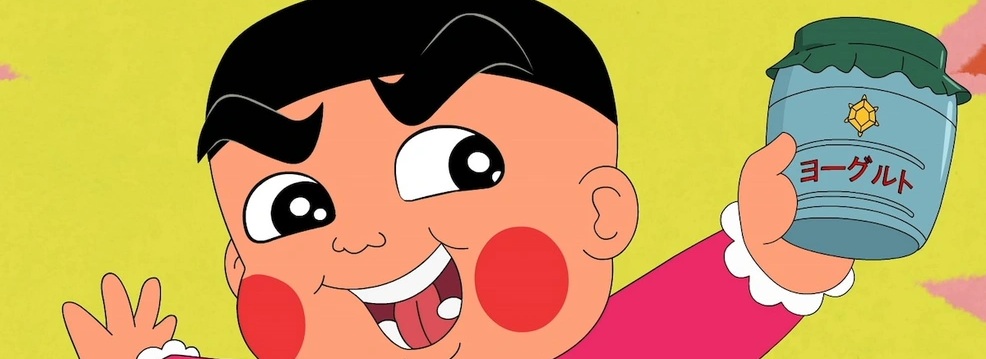
One of Chama’s most famous expressions, “Oha-yogurt,” combines the Japanese morning greeting “Ohayō” with the word “yogurt.” Another popular phrase, “Sonna banana,” is a playful expression based on the Japanese phrase meaning “No way!” These short, silly wordplays became hugely popular among children and were frequently repeated in classrooms and everyday conversations.
The new project is especially interesting because its development was inspired by the original anime’s success in India. After the classic series attracted a strong audience there in 2021, requests for more episodes helped encourage a Japan-India collaboration.
The new anime will feature previously unadapted stories from the original manga, along with original episodes fully supervised by Kobayashi. Even better, Chie Kojiro will return as the voice of Chama, reprising the role she has played since the original television anime began in 1989.
With its distinctive comedy, international background, and a fresh collection of stories, Obocchama-kun REBORN is preparing to bring Chama-go into the Reiwa era.
Obocchama-kun REBORN: The Legendary Gag Anime Returns After 35 Years
The original Obocchama-kun television anime aired on TV Asahi from 1989 to 1992. It became a major hit among Japanese children and helped turn the manga’s protagonist into a familiar figure in Japanese pop culture.
Now, the franchise is returning with its first completely new Japanese television anime since the original series ended.
Titled Obocchama-kun REBORN, the new production is scheduled to air on the TV Asahi network in 2027. The project is being developed as a Japan-India collaboration, with Green Gold Animation handling animation production and Shin-Ei Animation and Sony Pictures Networks India providing production cooperation.
The new series will not simply repeat the old episodes. It will include popular stories from the original manga that have never previously been adapted into animation, as well as newly created stories supervised by Yoshinori Kobayashi.
This approach gives the revival two important goals: bringing back the comedy that longtime fans remember while introducing fresh adventures to children who may be discovering Chama for the first time.
The announcement is also significant because 2027 marks 35 years since the original television anime ended in 1992. Meanwhile, the original manga began in 1986, making 2026 its 40th anniversary year.
The return of Chama therefore celebrates both the long history of the franchise and its potential future.
Who Is Obocchama-kun? Meet Chama Obo
The main character of the series is Chama Obo, also known as Obocchama-kun.
Chama is the extraordinarily wealthy heir to the Obo Zaibatsu, a powerful and globally influential business family. As the son of one of the world’s richest families, he has access to an almost unbelievable amount of money and luxury.
However, his personality is just as extraordinary as his wealth.
Chama is a fifth-grade elementary school student who often behaves in unpredictable and exaggerated ways. He has a cheerful, mischievous personality and frequently creates chaotic situations through his unusual ideas and jokes.
His enormous wealth allows him to do things that ordinary children could never imagine. At the same time, he is not simply a spoiled rich boy. His relationships with friends and classmates reveal a more emotional side, including his loyalty, affection, and desire to build friendships.
The comedy often comes from the contrast between Chama’s luxurious lifestyle and his childish behaviour.
Despite having almost unlimited money, he can become excited about the smallest things. His unusual logic, dramatic reactions, and love of wordplay are central to the series’ humour.
The story follows Chama as he interacts with his family, classmates, and other eccentric characters, turning ordinary school life into a series of unpredictable comic adventures.
Chama-go: The Unique Language That Made the Anime Famous
One of the biggest reasons Obocchama-kun became so popular was its distinctive language, known as Chama-go.
Chama-go is a collection of humorous expressions and invented words created by combining familiar Japanese phrases with unexpected sounds and meanings.
Rather than relying only on conventional jokes, the series uses wordplay, exaggerated pronunciation, facial expressions, and physical comedy to create memorable moments.
Many of Chama’s expressions became popular catchphrases among children during the original anime’s broadcast.
Here are some examples:
- Oha-yogurt
“Oha-yogurt” is a playful combination of the Japanese morning greeting “Ohayō” and “yogurt.”
It transforms an ordinary greeting into a silly expression that is easy to remember and repeat.
- Sonna Banana
“Sonna banana” is a humorous variation of the Japanese expression “Sonna!” meaning something like “No way!” or “That can’t be!”
By replacing the expected sound with “banana,” Chama turns a familiar reaction into a funny one-liner.
- Konnichihuahua
“Konnichihuahua” combines “Konnichiwa,” the Japanese greeting for “Hello,” with “Chihuahua,” the name of a small dog breed.
The result is another example of Chama’s playful approach to everyday language.
- Tomodachinko
One of the best-known and most controversial expressions associated with the original series is “Tomodachinko.”
The phrase became famous because of its crude double meaning. Although some parents and adults objected to its vulgar humour, it became particularly popular among children during the original anime’s run.
The new international version of the franchise has taken a different approach to this joke, showing how Chama-go can be adapted for different audiences and cultures.
Why Chama-go Could Appeal to Generation Z and Today’s Young Viewers
At first glance, the humour of Obocchama-kun may appear to belong to a different generation. However, the basic concept behind Chama-go has several qualities that could make it interesting to modern viewers.
Today’s younger audiences are familiar with short videos, memes, reaction images, catchphrases, and jokes that spread quickly through social media.
Chama-go uses a similar principle: short, memorable expressions that communicate a joke almost immediately.
Short Phrases That Are Easy to Remember
Many of Chama’s expressions are based on familiar words. The joke becomes clear as soon as viewers hear the unexpected combination.
For example, “Oha-yogurt” does not require a complicated explanation. The familiar greeting makes the meaning easy to recognise, while the unusual ending creates the humour.
This simplicity makes the expressions easy to remember and repeat.
Visual Comedy That Works Beyond Language
Another important feature of the series is its reliance on visual humour.
Chama’s jokes are not always dependent on dialogue. His facial expressions, exaggerated gestures, and unusual actions often communicate the punchline.
For example, he may stick a banknote to his forehead while making a joke about money, or use an exaggerated movement to express anger.
This kind of physical comedy can remain understandable even when viewers do not speak Japanese.
It is also one reason the series has been able to reach audiences outside Japan.
Memorable Expressions That Can Become Catchphrases
Social media culture often revolves around short phrases that people repeat in different situations.
Chama-go has a similar quality. Its expressions can be remembered, quoted, and imitated without requiring viewers to know every detail of the story.
That does not guarantee that the humour will become a trend among Generation Z, but it gives the new anime an interesting opportunity to introduce its distinctive comedy to a younger audience.
The challenge will be to preserve the original spirit of Chama-go while making the jokes understandable and enjoyable for viewers who did not grow up with the classic series.
How Obocchama-kun Became Popular in India
One of the most interesting parts of the Obocchama-kun REBORN project is that its comeback was inspired by the franchise’s popularity in India.
The original anime was introduced to Indian audiences in 2021. Its cheerful characters, exaggerated comedy, and energetic storytelling attracted a strong response from local children.
According to TV Asahi, the series ranked No. 1 among children’s channel programmes in India for 40 out of 52 weeks in 2021.
The timing also played an important role. The series reached Indian audiences during the COVID-19 pandemic, when cheerful entertainment offered children a welcome escape from difficult circumstances.
Its success encouraged requests for a continuation. Discussions between the Japanese rights holders, TV Asahi, and Indian partners eventually helped bring the new production project to life.
This is an unusual route for an anime revival. Instead of relying only on nostalgia from its original Japanese audience, the project gained renewed momentum through its international audience.
Why India Was Important to the Revival
The popularity of the original anime in India demonstrated that its comedy could appeal to children who were unfamiliar with the show’s Japanese cultural background.
It also encouraged the production team to consider how the series could be adapted for audiences with different languages, customs, and humour.
The result is a project that connects Japanese creative work with Indian animation and broadcasting expertise.
Green Gold Animation is responsible for animation production, while Shin-Ei Animation and Sony Pictures Networks India are involved as production partners.
The collaboration also reflects a broader trend in the animation industry: Japanese franchises increasingly work with international studios to reach new audiences and develop content for different markets.
Friend-Rich: How the Indian Version Adapted Chama’s Comedy
One of the most interesting examples of cultural adaptation is the Indian version’s treatment of Chama-go.
The original expression “Tomodachinko” was not used in the Indian version. Instead, it was replaced with “Friend-Rich.”
The new joke involves Chama placing a one-rupee coin on a friend’s forehead.
The gag connects the idea of friendship with the concept of wealth. Its message is that having a friend is valuable, even if the money involved is only one rupee.
This is a good example of localisation.
Localisation means adapting a story, joke, or cultural reference so that audiences in another country can understand and enjoy it. A direct translation does not always work because different languages have different wordplay, cultural references, and social expectations.
Rather than simply translating the original expression, the production team created a new joke using a visual action that could be understood by Indian children.
The one-rupee coin also became an important part of the gag, turning the idea of friendship into something that could be shown visually.
The Indian adaptation demonstrates that the spirit of a comedy character can survive even when individual jokes need to change.
For Obocchama-kun, this ability to adapt may be one of the most important reasons the franchise has been able to cross cultural boundaries.
A Japan-India Collaboration with an International Future
The revival of Obocchama-kun is not simply a Japanese anime returning after a long break. It is also an example of international cooperation in the animation industry.
The project brings together several companies with different responsibilities.
- TV Asahi: Production and Japanese broadcasting.
- Green Gold Animation: Animation production.
- Shin-Ei Animation: Production cooperation.
- Sony Pictures Networks India: Production cooperation.
Green Gold Animation is an Indian animation studio known for creating and producing animated entertainment for younger audiences.
Shin-Ei Animation, meanwhile, is a well-known Japanese studio associated with popular anime franchises, including Doraemon and Crayon Shin-chan.
The combination of Japanese creative supervision and Indian production expertise gives the project an international identity.
The franchise also received international industry exposure at MIPCOM 2024, a major global television and content market held in Cannes, France. Such events provide opportunities for production companies and broadcasters to introduce projects to international buyers and partners.
For Obocchama-kun, international exposure is especially relevant because the new production was developed in response to demand from outside Japan.
Yoshinori Kobayashi Returns to Supervise the New Stories
The new anime will be based on the original manga by Yoshinori Kobayashi, who will fully supervise the original stories created for Obocchama-kun REBORN.
Kobayashi began his career as a manga artist and became widely recognised for his distinctive approach to comedy and social commentary.
Apart from Obocchama-kun, his other notable works include Tōdai Icchokusen and Gōmanism Sengen.
His style often combines sharp observations, exaggerated expressions, and distinctive language.
The new anime’s original stories will benefit from his involvement, helping the production retain the character’s established personality and comedic identity.
The revival will also include manga stories that were never adapted into the original television anime. This gives longtime fans something new to look forward to, even if they are already familiar with the classic series.
For younger viewers, the new stories will provide an opportunity to discover Chama without needing to watch the original anime first.
Chie Kojiro Returns as Chama Obo
One of the most exciting announcements for longtime fans is the return of Chie Kojiro as the voice of Chama Obo.
Kojiro has voiced the character since the original anime began in 1989. Her return gives the new series a direct connection to the classic production.
In her comment about the revival, Kojiro expressed her happiness that Chama had continued to live in the memories of fans over the years.
She also said that she could still bring the same energy and vocal performance to the character. Her experience since the original series has allowed her to become even more involved in the creative process alongside the new production team.
Kojiro described the recording sessions as enjoyable and said she felt that everyone was working together to create something special.
Her return is particularly meaningful because Chama’s unusual speech patterns and energetic delivery are such important parts of the character.
For fans who remember the original series, hearing the familiar voice again should be one of the highlights of Obocchama-kun REBORN.
The Original Obocchama-kun Anime: A Look Back
To understand why the revival is attracting attention, it is worth looking at the history of the original franchise.
The Obocchama-kun manga began serialization in Monthly CoroCoro Comic in 1986.
The story quickly attracted young readers with its unusual protagonist, exaggerated jokes, and energetic comedy.
In 1989, the television anime adaptation began broadcasting on TV Asahi. It continued until 1992 and became a major hit among children.
The series was particularly well known for its distinctive character designs and Chama-go expressions, which became part of everyday playground and classroom conversations.
The manga also received the 34th Shogakukan Manga Award in the Children’s category, recognising its impact as a work for young readers.
The franchise’s popularity was not limited to the original manga and television anime. Its characters and catchphrases became recognisable parts of Japanese popular culture.
Now, more than three decades after the original anime ended, the franchise is preparing to introduce Chama to a new generation.
What Can Fans Expect from Obocchama-kun REBORN?
The new series has several elements that may appeal to both longtime fans and first-time viewers.
A completely new anime production: The revival will feature newly produced animation rather than simply reusing footage from the original television series.
Previously unadapted manga stories: The new anime will include notable manga episodes that did not appear in the original television adaptation.
Original stories supervised by Kobayashi: The creator’s involvement should help preserve the character’s personality and distinctive humour.
The return of Chie Kojiro: The original voice actress will once again play Chama, maintaining an important connection with the classic series.
An international production: The involvement of Indian and Japanese companies reflects the franchise’s growing international identity.
The biggest question is how the production will balance its original humour with the expectations of modern audiences.
Some of the older jokes may need to be handled differently for today’s viewers, but the series’ combination of wordplay, visual comedy, and friendship gives it several ways to remain entertaining.
Can Chama-go Win Over a New Generation?
Obocchama-kun REBORN is more than a nostalgic return for fans who grew up watching the original anime. It is also an opportunity to introduce one of Japan’s most distinctive gag-comedy characters to a new generation.
The franchise’s journey from Japan to India shows that humour does not always need to depend on language alone. Through visual jokes, memorable expressions, and creative localisation, Chie’s comedy has found ways to connect with audiences from different cultural backgrounds.
The return of Chie Kojiro, the involvement of original creator Yoshinori Kobayashi, and the addition of previously unadapted manga stories give the new anime a strong connection to its roots.
Whether today’s children will repeat Chama-go in the same way that earlier generations did remains to be seen. However, the combination of short catchphrases, expressive animation, and unpredictable comedy gives the series an interesting opportunity to connect with modern audiences.
With its Japanese-Indian production partnership and a 2027 television premiere confirmed, Chama Obo is officially preparing for his next big adventure.
Gobusatango! Chama is coming back!