 by
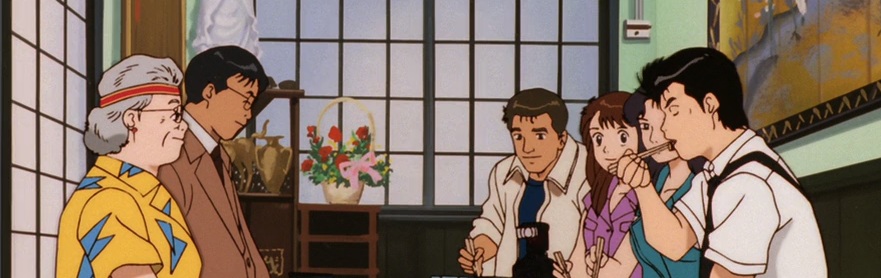
by Oishinbo, one of Japan’s most influential gourmet manga and anime series, is making a major comeback. A new television anime, “Shin Oishinbo,” is scheduled to premiere in 2027, marking the return of the franchise to television roughly 35 years after the original TV series ended. The new production was officially announced in September 2026 and will continue the story of the classic anime while introducing a new voice cast and production team.
The revival is significant not simply because a beloved older anime is returning. Oishinbo is a series that has spent decades asking difficult questions about food: What makes a dish truly delicious? Does expensive food automatically mean better food? How much do ingredients, preparation techniques, tradition, and the people behind a meal matter?
Those questions remain surprisingly relevant in the Reiwa era.
Today, people can discover restaurants through social media, compare thousands of reviews online, watch food influencers, order meals instantly through delivery apps, and learn about nutrition with a few taps on a smartphone. Food has become more accessible than ever, but the amount of information surrounding it has also increased dramatically.
That makes Oishinbo’s central question—“What is truly good food?”—worth revisiting.
From a 1980s Manga to a 2027 Anime Revival
Oishinbo was created by writer Tetsu Kariya and illustrator Akira Hanasaki. The manga began serialization in Shogakukan’s Big Comic Spirits in 1983 and eventually became one of Japan’s best-known food-related manga series. It has reached 111 collected volumes and more than 135 million copies in circulation, according to recent reports.
The story primarily follows Shiro Yamaoka, a food-loving journalist with an exceptionally refined palate, and Yuko Kurita, his colleague. Their work often brings them into conflict with the demanding gourmet Yuzan Kaibara, who is also Yamaoka’s estranged father.
At the heart of the story is a competition between the “Ultimate Menu” and the “Supreme Menu.”
The original television anime aired from 1988 to 1992, producing 136 episodes. It was followed by two television anime specials in 1992 and 1993. The original anime was produced by Shin-Ei Animation, which is also involved in the production of the new series.
Now, after decades away from television, Oishinbo is returning as “Shin Oishinbo” in 2027.
The newly announced main cast includes:
- Yohei Azakami as Shiro Yamaoka
- Hitomi Sasaki as Yuko Kurita
- Akio Otsuka as Yuzan Kaibara
The production is being directed by Kenichi Nishida, with Takahiro Nagano handling series composition and Nozomi Kawashige working on character designs. SynergySP and Vega Entertainment are handling animation production, while Shin-Ei Animation is responsible for production.
The casting of Yuzan Kaibara has attracted particular attention. Akio Otsuka is taking over the role previously voiced by his father, the late Chikao Otsuka, in the original television anime.
This gives the revival an unusual connection between the original anime and the new production.
Why Is Oishinbo Returning Now?
The most interesting question is not simply “Why is Oishinbo coming back?” but rather “Why does Oishinbo still have something to say today?”
Food culture has changed dramatically since the original anime aired.
In the 1980s and early 1990s, discovering a restaurant often depended on personal recommendations, magazines, newspapers, television programs, or simply visiting a place yourself.
Today, a restaurant can become famous overnight because of a short video on social media.
A single photograph can influence where thousands of people decide to eat. Online reviews can shape expectations before a person even visits a restaurant. Food trends can spread internationally within hours.
At the same time, consumers are increasingly interested in questions about:
- Where ingredients come from
- How food is produced
- Food safety
- Sustainability
- Nutrition
- Agricultural practices
- Traditional cooking methods
- Artificial ingredients and processing
- Restaurant working conditions
- Food waste
- Local and seasonal products
In this environment, Oishinbo’s habit of questioning the meaning and value of food feels surprisingly modern.
The Central Question: What Makes Food Truly Good?
One of Oishinbo’s greatest strengths is that it does not always define good food simply by price.
A luxurious ingredient does not automatically produce a great meal.
Instead, the series frequently considers several elements together: the quality of ingredients, preparation methods, cooking techniques, cultural background, the skill of the chef, and the intention behind the dish.
This creates a broader definition of food quality.
For example, a simple meal prepared with excellent ingredients and careful technique may be presented as more meaningful than an expensive dish designed primarily to impress.
This idea remains relevant today.
Modern consumers are surrounded by labels such as “premium,” “luxury,” “limited edition,” “viral,” and “best-selling.” But popularity and price do not necessarily answer the question of whether something is actually good.
That is one reason Oishinbo continues to provide an interesting perspective.
It encourages viewers to ask:
Why do I think this food is good?
Is it because it genuinely tastes good?
Because someone recommended it?
Because it is expensive?
Because it has millions of views?
Or because I personally understand and appreciate what went into making it?
Oishinbo and the Age of Social Media
This question becomes even more interesting in the Reiwa era.
Food reviews are everywhere.
A person can search for a restaurant and immediately see its rating, photographs, menu, prices, customer comments, videos, and influencer recommendations.
This is extremely convenient, but it can also make it difficult to develop an independent opinion.
A restaurant with a low online rating may still serve food that a particular person loves. Likewise, a restaurant that is extremely popular may not suit everyone’s taste.
The modern food experience is therefore influenced by two different things:
personal taste and collective opinion.
Oishinbo repeatedly returns to the importance of examining food for oneself.
That does not mean ignoring expert opinions or reviews. Rather, it suggests that information should be considered carefully instead of being accepted automatically.
In today’s information-heavy environment, that is an especially useful lesson.
Convenience Versus Craftsmanship
Another theme that feels relevant to modern audiences is the relationship between convenience and craftsmanship.
The Reiwa era places enormous value on speed.
People want food that is:
- Fast
- Affordable
- Convenient
- Easy to order
- Easy to prepare
- Available anywhere
There is nothing inherently wrong with convenience. Ready-made meals, delivery services, supermarkets, frozen foods, and convenience stores have made everyday life easier for millions of people.
However, Oishinbo asks us to consider what may be lost when food is evaluated only by speed, price, or efficiency.
Cooking can also involve patience.
Ingredients may require time to grow, age, ferment, prepare, or cook. Traditional techniques can take years to master. A chef may spend enormous effort creating a dish that looks simple to the customer.
The series therefore provides an alternative way of thinking about food: convenience has value, but effort and craftsmanship also have value.
That balance is particularly meaningful today.
The Importance of Ingredients
Oishinbo has always placed considerable emphasis on ingredients.
The series frequently explores the idea that good cooking begins with understanding the raw materials.
Seasonality, freshness, origin, farming methods, preparation, and storage can all affect the final result.
This perspective fits naturally with current interest in local food and sustainable consumption.
Consumers today increasingly want to know where their food comes from and how it was produced.
Questions such as these have become common:
Where was this ingredient grown?
How was it produced?
Is it seasonal?
How far did it travel?
How was it stored?
What happens to the waste?
These questions were not invented in the Reiwa era, but modern technology has made it easier for consumers to investigate them.
In that sense, Oishinbo’s focus on the relationship between ingredients and the people who produce them remains highly relevant.
Food Safety: An Important Strength—and a Major Caution
Food safety is one of the most complicated parts of Oishinbo.
The manga has addressed controversial topics involving additives, agricultural chemicals, livestock production, food regulations, and other issues related to modern food.
This can be one of the series’ strengths because it encourages readers to ask questions.
However, it is also important for modern viewers to understand that a fictional manga should not automatically be treated as a scientific source.
This distinction is particularly important when discussing health, radiation, chemicals, or food safety.
A dramatic story can raise an important question without necessarily providing the scientifically established answer.
That is a lesson worth remembering when watching Oishinbo today.
The 2014 Fukushima Controversy
The most famous example is the controversy surrounding the manga’s 2014 storyline about Fukushima.
In an episode commonly associated with the “Truth About Fukushima” storyline, characters experienced symptoms including nosebleeds after visiting the Fukushima Daiichi Nuclear Power Station. The depiction led to strong criticism from local authorities and others who argued that it could create a misleading impression about Fukushima and contribute to reputational damage.
Futaba Town, which was heavily affected by the Fukushima Daiichi disaster, formally protested the portrayal, stating that the manga could contribute to harmful rumors and misconceptions about the area.
The Japanese government also commented publicly on the controversy at the time. The Chief Cabinet Secretary said that scientific information should be communicated accurately and referred to expert views that did not establish a connection between the depicted nosebleeds and radiation exposure among residents.
The controversy became so serious that Oishinbo went on an indefinite hiatus after the Fukushima-related storyline.
This episode remains important when discussing the legacy of Oishinbo because it demonstrates both the power and the responsibility of popular storytelling.
What Does Current Science Say About Fukushima?
It is important to separate the manga’s fictional depiction from later scientific assessments.
The United Nations Scientific Committee on the Effects of Atomic Radiation (UNSCEAR) has conducted extensive assessments of radiation exposure following the Fukushima Daiichi accident. Its 2020/2021 assessment reviewed scientific literature and monitoring data available through the end of 2019.
UNSCEAR reported that no adverse health effects among Fukushima residents had been documented that could be directly attributed to radiation exposure from the accident. It also concluded that future radiation-related health effects were unlikely to be detectable at the population level based on its assessment of exposure levels.
This does not erase the experiences of people affected by the earthquake, tsunami, evacuation, disruption, or social consequences of the disaster. Instead, it demonstrates why claims about health effects need to be evaluated using appropriate scientific evidence.
That distinction is particularly valuable when revisiting Oishinbo today.
The series can raise questions about food and safety, but readers should compare those questions with reliable scientific evidence rather than treating the manga itself as proof.
Why This Controversy Matters Even More in the Reiwa Era
The 2014 controversy took place before today’s social-media environment had reached its current scale.
Today, information can spread globally within minutes.
A dramatic food-safety claim can be copied, shortened into a headline, transformed into a short video, and shared thousands of times before experts have an opportunity to explain the evidence.
That creates a new responsibility for both creators and audiences.
When reading or watching a story about food safety, viewers should ask:
- Is this a fictional event or a documented fact?
- What evidence supports the claim?
- Is the information current?
- Are experts in agreement?
- Could the statement affect a particular community or group?
- Is the source trying to inform, entertain, persuade, or provoke an emotional reaction?
These questions are useful far beyond Oishinbo.
They are part of being an informed consumer in the digital age.
Oishinbo Is About People, Not Just Food
Another reason the series has survived for decades is that Oishinbo is not really just a cooking story.
Food is used as a way to explore human relationships.
The conflict between Yamaoka and Kaibara is not simply a competition between two people with different opinions about cuisine. Their relationship is also shaped by family history, pride, expectations, disappointment, and mutual influence.
Food becomes a language through which characters express emotions.
The series also explores relationships between:
- Parents and children
- Chefs and customers
- Farmers and consumers
- Colleagues
- Friends
- Traditional craftsmen and younger generations
- Producers and businesses
This gives Oishinbo a wider emotional dimension.
A meal can represent family.
A recipe can represent tradition.
A restaurant can represent someone’s life’s work.
An ingredient can represent an entire region.
That is why the series can move from a discussion about a bowl of rice to a much larger discussion about culture and identity.
The Meaning of Tradition in Modern Food Culture
The Reiwa era is also a time when traditional culture and modern technology increasingly overlap.
Japanese cuisine is internationally popular, but the meaning of traditional cooking continues to evolve.
Younger chefs experiment with new ingredients and techniques while also studying older methods.
Restaurants use social media to attract customers.
Traditional producers can promote their products to international audiences.
Cooking techniques can be shared through online videos.
At the same time, there is growing concern about whether traditional knowledge will be preserved.
Oishinbo has long been interested in this relationship between tradition and innovation.
Its return provides an opportunity to reconsider how food traditions can survive without becoming frozen in the past.
The “Ultimate” and the “Supreme” as More Than a Competition
The famous battle between the Ultimate Menu and the Supreme Menu is one of the series’ defining concepts.
On the surface, it is a culinary competition.
But on a deeper level, it represents a disagreement over what food should be.
Should the best food prioritize tradition?
Should it prioritize creativity?
Should it use the finest ingredients?
Should it be accessible to ordinary people?
Should it preserve established techniques?
Or should it constantly evolve?
There is no single simple answer to these questions.
That is part of what makes the rivalry interesting.
Rather than treating food as a simple ranking system, Oishinbo uses cuisine to explore competing ideas about quality, culture, craftsmanship, and personal values.
What Can New Viewers Expect From Shin Oishinbo?
For people who have never watched the original anime, Shin Oishinbo offers an unusual opportunity.
The franchise has more than four decades of history, but the new series is not simply being presented as a remake.
It is described as a continuation of the earlier anime, returning to the culinary conflict involving Yamaoka and Kaibara while bringing the characters into a new production era.
The new series also has the advantage of arriving at a time when food-related entertainment is extremely popular.
Cooking channels, restaurant videos, food documentaries, recipe creators, gourmet travel programs, and short-form food content are now major parts of online culture.
In that environment, a classic anime devoted to food has a natural opportunity to reach a new generation.
The challenge will be balancing the distinctive personality of the original work with the expectations of a modern audience.
A New Cast With a Link to the Original
One of the most interesting elements of Shin Oishinbo is the new voice cast.
Yohei Azakami will voice Shiro Yamaoka, while Hitomi Sasaki will voice Yuko Kurita. Akio Otsuka will portray Yuzan Kaibara.
Akio Otsuka’s involvement is especially notable because his father, Chikao Otsuka, voiced Kaibara in the original anime.
This creates a rare generational connection between the two versions of the series.
It also gives the new adaptation a symbolic link to its history while allowing a new generation of performers to reinterpret the characters.
Will Oishinbo Still Work in 2027?
That is perhaps the most interesting question.
Some elements of a series created in the 1980s may naturally feel dated.
Food production has changed.
Restaurant culture has changed.
Technology has changed.
The way people consume information has changed.
Even the language surrounding health and food safety has evolved.
At the same time, some questions have not changed at all.
What makes food meaningful?
How much should tradition matter?
How should we judge quality?
Who decides what is “good”?
What responsibilities do creators have when discussing sensitive topics?
And how much should we trust popular opinion?
These questions remain relevant regardless of the decade.
That is why Oishinbo has the potential to offer more than nostalgia.
The Strengths and Weaknesses of Oishinbo
Looking at the series objectively, Oishinbo has several notable strengths.
Strengths
- It makes food interesting.
The series can turn ordinary ingredients and dishes into subjects of investigation. - It connects food with culture.
Cuisine is presented as part of history, tradition, regional identity, and personal experience. - It encourages curiosity.
Rather than simply showing food, it often asks why something tastes the way it does. - It explores craftsmanship.
The work of farmers, fishermen, producers, chefs, and artisans receives considerable attention. - It has strong human drama.
The complicated relationship between Yamaoka and Kaibara gives the series a narrative foundation beyond food. - It raises important questions.
Topics such as food safety and production can encourage viewers to investigate issues more carefully.
Weaknesses and Limitations
However, the series also has limitations.
- Some arguments are strongly opinionated.
The characters can express their beliefs with great confidence, which may make fictional or disputed claims sound more definitive than they are. - Some information has become dated.
Food science, agricultural practices, nutrition, and safety standards have developed significantly since the manga and original anime were created. - Controversial topics require additional sources.
The Fukushima controversy demonstrates why viewers should distinguish storytelling from scientific evidence. - The dramatic presentation can oversimplify complex issues.
Real-world food systems are often more complicated than a simple conflict between “good” and “bad” choices.
These limitations do not necessarily make the work unworthy of revisiting. Instead, they make it more interesting to watch critically.
How Beginners Should Watch Oishinbo Today
New viewers do not need extensive knowledge of Japanese cuisine to understand Oishinbo.
A useful approach is to treat the series as both entertainment and a historical document.
Enjoy the food discussions.
Pay attention to the cultural background.
Notice how restaurants and producers are portrayed.
But when the story makes a claim about health, science, or food safety, check reliable modern sources as well.
This approach allows viewers to appreciate what Oishinbo does well without assuming that every statement made by its characters represents fact.
Why the Revival Matters
The revival of Oishinbo in the Reiwa era is significant because the series arrives at a moment when people are surrounded by more food information than ever before.
We have access to more choices.
More reviews.
More recipes.
More restaurants.
More nutritional information.
More food videos.
More opinions.
Yet having more information does not necessarily make it easier to decide what is truly valuable.
That is where Oishinbo’s central philosophy remains interesting.
It asks us to slow down and look beyond the surface.
Instead of asking only:
“Is this popular?”
we can ask:
“Why is it popular?”
Instead of asking:
“Is this expensive?”
we can ask:
“What makes it valuable?”
Instead of asking:
“Does everyone say this is delicious?”
we can ask:
“What do I actually think?”
And instead of accepting every food-related claim we encounter online, we can ask:
“What is the evidence?”
The return of “Shin Oishinbo” in 2027 is more than a nostalgic revival of a classic gourmet anime. It is an opportunity to revisit a series that has spent decades examining food, culture, craftsmanship, family relationships, and the complicated meaning of quality. The new anime is being developed as a continuation of the earlier TV series, with a new cast and production team while retaining its connection to the original Shin-Ei Animation production.
At the same time, modern audiences should approach Oishinbo with both appreciation and critical thinking.
Its food philosophy can still be fascinating.
Its human drama remains distinctive.
Its discussions about ingredients and craftsmanship can still inspire curiosity.
But its claims about science, health, and food safety should be examined against current evidence rather than accepted simply because they appear in a popular manga or anime.
Perhaps that is the most appropriate way to experience Oishinbo in the Reiwa era.
Taste the story, appreciate the culture, question the claims, and decide what good food means for yourself.
With Shin Oishinbo scheduled for 2027, a new generation now has a chance to discover why this decades-old food manga became such an important part of Japanese popular culture in the first place.