 by
Reirin and Keigetsu team up with Mothra and Battra in a special crossover visual! The unexpected collaboration celebrates the anime’s beloved characters and their connection to the legendary kaiju franchise.
The TV anime “Although I Am an Unworthy Villainess: The Tale of the Butterfly-Rat Swap in the Imperial Court” has revealed a special collaboration with the legendary monster franchise Mothra.
A newly released collaboration visual brings together four characters: Reirin, Keigetsu, Mothra, and Battra. The crossover connects the anime’s central characters with two iconic giant monsters, creating an unusual combination that fans have been requesting.
According to the announcement, the collaboration was made possible in response to fan requests. In particular, Reirin’s popularity and her nickname, “The Princess’ Mothra,” helped inspire the special project.
The announcement has attracted attention because it brings together two very different fictional worlds: the elegant imperial-court setting of Although I Am an Unworthy Villainess and the spectacular monster mythology of Mothra.
Reirin and Keigetsu Meet Mothra and Battra in the New Collaboration Visual
The newly unveiled visual features Reirin and Keigetsu alongside Mothra and Battra.
The crossover is especially meaningful because Mothra is not simply an unrelated guest character. The monster has a connection to Reirin through the affectionate nickname given to her by fans.
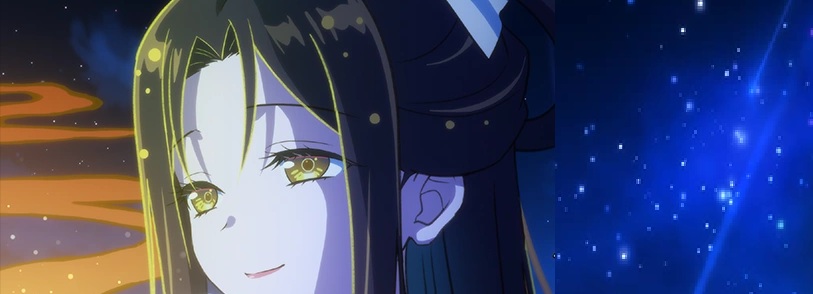
Reirin, the young princess of the Huang family, is admired by the people around her and is known as “The Princess’ Butterfly.” Her graceful appearance and strong personality have made her an important figure in the story.
However, Reirin’s appeal goes beyond her elegant image.
Even after her body is switched with Keigetsu’s, she continues to face difficult situations with determination and an unbreakable spirit. Her ability to overcome adversity has earned her admiration from readers and viewers.
Fans have playfully called her “The Princess’ Mothra,” creating a connection between the character and the famous giant moth monster.
That fan-created nickname eventually inspired this official collaboration.
The inclusion of Battra adds another familiar face from the Mothra franchise, making the visual an exciting crossover for fans of both series.
Why Is Mothra So Popular?
For readers who are unfamiliar with the monster, Mothra is one of the most recognizable creatures in Japanese kaiju entertainment.
Mothra first appeared in the 1961 Japanese film Mothra and later became a recurring character in numerous Godzilla movies.
Unlike many giant monsters known primarily for destruction, Mothra is often portrayed as a protector.
One of the creature’s most distinctive characteristics is its life cycle.
Mothra begins as an egg, emerges as a larva, and eventually forms a cocoon before transforming into its impressive adult moth form.
This metamorphosis is one of the most recognizable elements of the character’s mythology.
Mothra is also known for its connection to the protection of nature, humanity, and its offspring. Depending on the film, it appears as a powerful guardian that fights against threats to the Earth.
Its colorful wings, distinctive appearance, and majestic presence have helped it remain popular across generations.
The monster’s popularity has also extended beyond its original film, making Mothra an important part of the wider Godzilla franchise.
Battra Adds Another Iconic Kaiju to the Crossover
The collaboration also features Battra, another well-known monster from the Mothra-related kaiju mythology.
Battra is particularly associated with the 1992 film Godzilla vs. Mothra.
While Mothra is frequently depicted as a guardian, Battra has a different role and personality in the story.
The two monsters are connected through their relationship with the Earth’s protection, although their methods and attitudes are not always the same.
Their contrasting identities make them an interesting pair for a crossover visual.
By featuring both Mothra and Battra alongside Reirin and Keigetsu, the collaboration brings together characters with different personalities and backgrounds.
For fans of classic Japanese monster films, seeing the two kaiju appear in an anime collaboration is an especially enjoyable surprise.
How Reirin Became Known as “The Princess’ Mothra”
The collaboration’s most interesting detail is its connection to the fans.
In Although I Am an Unworthy Villainess, Reirin is introduced as a beloved young princess of the Huang family.
She is admired for her graceful appearance and is associated with the image of a butterfly.
However, her character is not defined only by her beauty or royal status.
After the body-swap incident with Keigetsu, Reirin finds herself facing an entirely different set of challenges.
Despite the difficulties, she refuses to give up.
Her strong will, confidence, and ability to overcome adversity have become important parts of her appeal.
The nickname “The Princess’ Mothra” reflects the way fans connect her determination and elegant image with the famous monster.
What began as a playful fan comparison eventually became the inspiration for an official collaboration.
This makes the project more than a simple promotional crossover. It also highlights how fan enthusiasm can influence special projects and bring unexpected ideas to life.
What Is “Although I Am an Unworthy Villainess” About?
Although I Am an Unworthy Villainess: The Tale of the Butterfly-Rat Swap in the Imperial Court is based on a novel written by Satsuki Nakamura, with illustrations by Yukiya.
The novel is published by Ichijinsha Novels, and the series has also received a manga adaptation illustrated by Ei Ohi, which is serialized in Monthly Comic ZERO-SUM.
The story takes place in an imperial-court setting and follows Reirin, a young princess whose life changes dramatically after she becomes involved in a body-swapping incident with Keigetsu.
A body-swap story is a familiar fantasy and comedy premise in which two characters exchange bodies and must deal with the unexpected consequences.
However, the series adds its own twists through its court politics, character relationships, and the contrast between Reirin’s personality and the circumstances in which she finds herself.
The story’s appeal comes from watching the characters adapt to unfamiliar situations while navigating the expectations and rivalries of the imperial court.
For newcomers, the combination of fantasy, romance, comedy, and palace intrigue offers an accessible introduction to the series.
Season 2 of the TV Anime Is Scheduled for January 2027
Alongside the collaboration announcement, the anime’s next major milestone is approaching.
The second season of “Although I Am an Unworthy Villainess” is scheduled to begin broadcasting in January 2027.
The upcoming season is expected to bring viewers back into the story of Reirin and Keigetsu as their unusual circumstances continue to shape their lives.
The January 2027 broadcast also allows the franchise to reach a wider audience.
The Mothra collaboration provides an additional promotional highlight ahead of the new season, particularly among fans who enjoy both anime and classic Japanese monster movies.
However, the supplied announcement does not provide further details about the second season’s exact premiere date, broadcast schedule, episode count, or additional cast and staff announcements.
Fans should wait for official updates before treating any unannounced information as confirmed.
A Fun Collaboration Inspired by the Fans
The collaboration between Although I Am an Unworthy Villainess and Mothra is an unexpected but fitting crossover.
Reirin’s association with butterflies and her strong personality created a natural connection to Mothra, while the inclusion of Battra adds another recognizable kaiju to the visual.
Most importantly, the project demonstrates how a fan nickname can grow into an official collaboration.
With Season 2 scheduled for January 2027, fans have another reason to look forward to the series’ return.
For now, the newly released visual offers a memorable meeting between Reirin, Keigetsu, Mothra, and Battra.
It is a special crossover that celebrates both the anime’s characters and the long-lasting popularity of one of Japan’s most beloved giant monsters.