 by
As autumn arrives, there is something undeniably nostalgic about looking back on our school days. The memories of classrooms, club activities, friendships, and first love may become a little hazier with every passing year, but a good coming-of-age anime can bring those feelings rushing back.
When we feel the urge to experience the excitement of youth again, high-school romance and romantic comedy anime offer the perfect escape. They take us into a world where a small conversation can feel significant, a glance can make someone’s heart race, and even the most ordinary school day can become an unforgettable memory.
I spent much of my own high school life concentrating on studies and extracurricular activities, so I never really experienced the kind of romance often portrayed in anime. That is why watching fictional students navigate their feelings sometimes makes me wonder: What would my school days have been like if I had experienced something similar? Perhaps that is part of the appeal of these stories. They allow us to revisit a version of youth that we may have missed—or simply wish we could experience again.
This autumn, three romance-focused anime have particularly caught my attention. Blue Box Season 2 offers an uplifting combination of sports and first love, The Ramparts of Ice explores the complicated emotions behind friendships and relationships, and The Cold Sato-san is Only Sweet to Me delivers a lighter romantic comedy filled with awkward moments and amusing misunderstandings.
Although all three series revolve around high-school students, they approach romance and growing up in very different ways. Here is what makes each one worth watching.
Note: This article discusses character relationships and developments from the early episodes. Some details may be considered spoilers for viewers who have not started these series.
- Giving Everything to Love and Sports: Blue Box Season 2
The first series on my list is Blue Box (Ao no Hako), a coming-of-age romance that beautifully combines school life, competitive sports, and the excitement of first love.
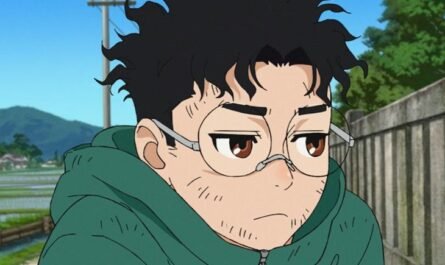
Based on the manga by Kouji Miura, the story follows Taiki Inomata, a dedicated badminton player at Eimei High School. Every morning, he practises alongside Chinatsu Kano, a talented senior who plays basketball. Taiki gradually develops feelings for Chinatsu, and an unexpected change in their living arrangements brings the two closer together.
What makes Blue Box so appealing is the way it portrays young people who are genuinely committed to their ambitions. The characters are not simply thinking about romance; they are also working hard to improve their athletic abilities, overcome personal challenges, and achieve their goals.
Season 2 began airing on October 4, 2026, bringing viewers back into the characters’ evolving relationships and sporting journeys. The new season continues to explore how emotions, friendships, and competition influence one another.
The beauty of balancing romance and ambition
One of the most enjoyable aspects of Blue Box is its portrayal of the connection between love and personal motivation. Having someone special to admire can become a powerful reason to work harder. At the same time, romantic feelings can sometimes create uncertainty, distraction, or pressure.
Taiki’s determination is particularly inspiring. He does not simply expect his feelings for Chinatsu to change his life. Instead, he continues practising and trying to become a better athlete. His efforts make his romantic journey feel connected to his personal growth.
Chinatsu is equally interesting because she has ambitions of her own. Her dedication to basketball is an important part of her identity, and the story gives her goals and struggles room to develop beyond her relationship with Taiki.
Looking back at my own school days, I find these characters almost impossibly dazzling. They seem to give everything they have to both their dreams and their feelings. I also appreciate that the series does not make every character unpleasant or unnecessarily dramatic. Its gentle atmosphere is one of the reasons it feels so refreshing.
However, Season 2 introduces Yumeka Kido, a former mini-basketball teammate of Chinatsu. Yumeka has a complicated personality and a talent for basketball that Chinatsu once admired. Her return adds a new layer of tension to Chinatsu’s personal and sporting life. She is not simply another character who appears to create romantic complications; her history with Chinatsu gives her arrival greater emotional significance.
I find Yumeka’s slightly sharp personality an interesting change of pace. Most of the central characters are earnest and considerate, so her more difficult attitude creates a different kind of energy. It might be challenging to deal with someone who speaks so bluntly in real life, but her presence makes the relationships feel less predictable.
A beautiful visual style that reflects the characters’ feelings
The animation is another major reason to watch Blue Box. Its bright colours, delicate expressions, and carefully composed backgrounds help create an atmosphere that feels both youthful and nostalgic.
The visual presentation is especially effective during quiet moments. A character looking away, hesitating before speaking, or watching someone from a distance can communicate emotions without requiring a long explanation.
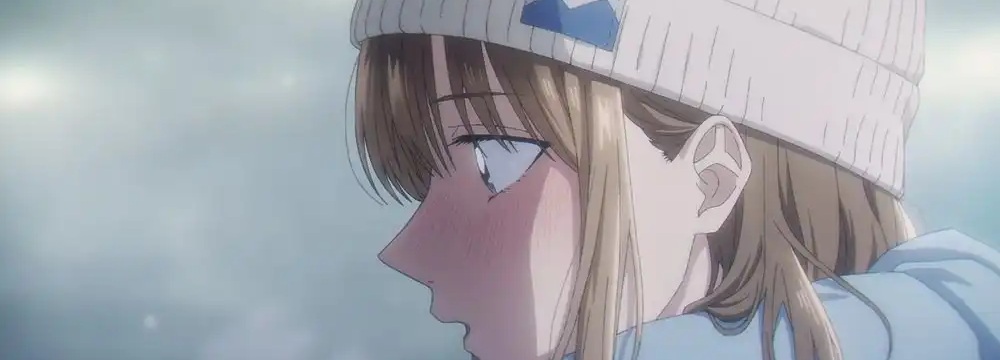
Season 2 also brings a winter atmosphere to the story. Snowy scenery and quieter moments help emphasise the changing relationships between the characters. The opening theme, “Anata no Hana no Iro” by aiko, and the ending theme, “blue in” by Elsewhere Kiko, add to the emotional tone of the new season.
What I appreciate most is that Blue Box does not treat romance and sports as two separate storylines. They constantly influence each other. A character’s emotional state can affect their performance, while a difficult match can reveal something about their personality or relationships.
I want to keep cheering for Taiki, Chinatsu, and the others as they move forward, even when their feelings become complicated. Their youth may be different from the one I experienced, but that is precisely what makes their journey so enjoyable to watch.
- A Story That Hits Close to Home: The Ramparts of Ice Season 2
The second anime is The Ramparts of Ice, an ensemble coming-of-age drama that explores the misunderstandings and emotional struggles that can arise between friends and romantic partners.
The story centres on four high-school students: Koyuki Hikawa, a girl who keeps her distance from other people; Miki Azumi, a former school idol and Koyuki’s childhood friend; Minato Amamiya, an outgoing boy who has little difficulty approaching others; and Yota Hino, a gentle and considerate member of the basketball club.
At first glance, their personalities seem very different. However, their relationships gradually become connected through friendship, affection, jealousy, insecurity, and feelings that are difficult to express.
Season 2 began its worldwide weekly release on Netflix on October 1 in Pacific Time, corresponding to October 2 in Japan. The new season continues to follow the four characters as their relationships become increasingly complicated.
When understanding someone becomes a psychological battle
Unlike the straightforward romantic atmosphere of Blue Box, The Ramparts of Ice places considerable emphasis on communication and emotional misunderstandings.
The characters often try to understand what another person really means by analysing their words, expressions, and behaviour. Sometimes they interpret a small comment as something much more serious than intended. At other times, they hide their true feelings because they are afraid of hurting someone or damaging an important relationship.
Watching them can make me feel as though I am observing a psychological battle. They spend so much time trying to understand one another that even a simple conversation can become emotionally exhausting.
Their ability to explain their feelings is sometimes surprisingly articulate for high-school students. Nevertheless, once you understand the experiences and insecurities behind their words, it becomes easier to empathise with them.
Koyuki is particularly compelling because her emotional distance is not simply a personality quirk. She has difficulty trusting people and opening herself up, even when she wants to become closer to them. Her interactions with Miki and Minato gradually challenge the protective walls she has built around herself.
Miki also has her own struggles. Although she may appear confident and sociable, her relationships are not as simple as they look. Meanwhile, Minato’s outgoing personality can sometimes make it difficult for him to recognise how his actions affect other people.
Yota adds another important dimension to the group. His gentle nature makes him approachable, but he also has feelings and insecurities that he must confront.
Romance is not always pure and sparkling.
One thing I particularly like about this series is that it does not present high school romance as a completely perfect experience.
The characters misunderstand each other, become jealous, struggle to communicate, and sometimes make situations worse by trying too hard to avoid hurting someone. They want to be honest, but they also fear rejection. They want to become closer, but they are not always ready to reveal what they really feel.
The arrival of Momoka Kuriki adds another layer to the emotional drama. Her confident, competitive, and sometimes difficult behaviour can make her seem like a typical romantic rival. There are moments when I find myself thinking that she is being a little too aggressive, especially when interacting with someone older.
At the same time, I cannot help admiring her willingness to express her opinions. She does not always hide what she thinks just to maintain a pleasant atmosphere. While her approach may not be ideal in every situation, it raises an interesting question: Do we sometimes make our own lives more difficult by worrying too much about how other people will react?
Of course, being honest does not mean ignoring other people’s feelings. The series makes it clear that communication requires more than simply saying whatever comes to mind. We also need to understand the impact of our words and learn to listen.
This is where The Ramparts of Ice feels especially relatable. Its characters are not always good at expressing affection, and their attempts to protect themselves often create new misunderstandings.
Their struggles are not limited to romance, either. The same fears can affect friendships, family relationships, and everyday interactions. Many people know what it feels like to want to say something but remain silent because they are afraid of being misunderstood.
That is why this series can feel surprisingly personal. It may not offer the same bright, uncomplicated sense of youth as Blue Box, but its emotionally complicated characters make it equally engaging. I often find myself wanting to tell them to be more honest with one another, while also understanding why that is so difficult.
- I Cannot Stop Laughing at Her Behaviour: The Cold Sato-san is Only Sweet to Me.
The third series is The Cold Sato-san is Only Sweet to Me, based on the light novel by Kazami Saruwatari.
Compared with the emotional complexity of The Ramparts of Ice, this series offers a much lighter romantic-comedy experience. It follows Koharu Sato, a high school girl known for her cold attitude towards her classmates, and Sota Oshio, a friendly boy who works at his family’s café.
Although Koharu appears distant and difficult to approach at school, Sota discovers that she has a much softer and more awkward side. The two gradually become closer, revealing feelings that neither of them finds particularly easy to express.
The anime premiered on October 6, 2026, and is produced by Tezuka Productions. Its central appeal is the contrast between Koharu’s chilly public image and her unexpectedly sweet behaviour around Sota.
The heroine is cute, but her behaviour is something else!
One of the biggest reasons I enjoy this anime is Koharu’s personality. Understandably, she behaves differently around Sota, her first love, but her attitude towards other people can be so blunt that I sometimes find myself laughing at her behaviour.
She wants to make more friends and become popular on social media, yet her approach to achieving that goal is not exactly smooth.
For example, she tries to take attractive photographs for a fictional social-media platform called Minstagram. Unfortunately, her photography skills are so poor that it can be difficult to understand what she is trying to capture.
I cannot help thinking, “If you want to make friends, perhaps you should start by being a little kinder to people!”
Her behaviour is certainly unusual, but that is also what makes her entertaining. She is not a perfect romantic heroine who always knows how to act. Instead, she is awkward, inexperienced, and sometimes unintentionally funny.
There is also a softer side to her personality. When she is with Sota, her usual cold expression gives way to much more affectionate behaviour. The contrast between these two sides is the main source of the series’ romantic comedy.
Sota’s affection makes their relationship even sweeter
Sota is almost the opposite of Koharu. He is friendly, responsible, and comfortable interacting with other people. He also helps manage the social-media presence of his family’s café, which makes him much better at photography than Koharu.
What makes their relationship amusing is just how openly affectionate Sota can be. He clearly adores Koharu, and he is not shy about showing it. His constant admiration of her can sometimes make me wonder whether he is overlooking some of her more unusual habits.
There are moments when the two seem so affectionate that I find myself wondering how their relationship could become any sweeter. Their interactions can be extremely lovey-dovey, but they also have an innocent charm that makes them easy to root for.
The early episodes establish that their feelings are not entirely one-sided. Both characters have liked each other for some time, but their awkwardness and misunderstandings have prevented them from expressing themselves clearly.
The series also introduces supporting characters who add variety to the story. Sota’s family and the people around the café provide opportunities for amusing interactions, while Koharu’s cousin Rinka Sudo brings a more direct and practical perspective to romantic conversations.
The story is not only about two people falling in love. It also explores how they learn to understand themselves and become more comfortable around others.
Is there a reason behind Koharu’s cold attitude?
Although the anime is mainly a light romantic comedy, there are hints that Koharu’s behaviour may have deeper reasons.
Her tendency to become emotional, her difficulty interacting with people, and her lack of confidence in certain everyday situations suggest that there may be more to her personality than simple shyness.
Episode 4, titled “Magic,” brings Koharu’s family circumstances into the story through a misunderstanding and a conversation involving her father at the café. This adds another point of interest beyond the couple’s sweet interactions.
I am curious to see whether the series will explore these family dynamics in greater depth. Understanding why Koharu behaves the way she does could make her character more relatable and give her relationship with Sota additional emotional weight.
For now, I enjoy watching the two gradually become more comfortable with one another. Their relationship may sometimes feel almost too sweet, but that is exactly the kind of lighthearted entertainment I want from a romantic comedy.
I am also looking forward to seeing how the supporting characters influence their relationship. There is plenty of room for misunderstandings, funny situations, and heartwarming moments as the story continues.
Which Fall 2026 Romance Anime Should You Watch?
All three series explore youth, friendship, and romance, but each offers a different viewing experience.
- Choose Blue Box if you enjoy: Sports, personal ambition, gentle romance, and characters who work hard to achieve their dreams.
- Choose The Ramparts of Ice if you enjoy: Emotional storytelling, complicated friendships, misunderstandings, and realistic relationship struggles.
- Choose The Cold Sato-san is Only Sweet to Me if you enjoy: Light romantic comedy, awkward characters, sweet interactions, and plenty of humour.
What makes this trio particularly interesting is that none of the three shows presents youth in the same way. Blue Box captures the excitement of pursuing a dream while falling in love. The Ramparts of Ice explores the uncertainty and emotional difficulty of connecting with other people. The Cold Sato-san is Only Sweet to Me reminds us that even the most awkward person can have a surprisingly affectionate side.
Three Different Ways to Experience Youth Again
As the years pass, our memories of school life may become less vivid, but stories about friendship, first love, and growing up can still make us feel as though we are back in those days.
That is what I enjoy about these three Fall 2026 anime. They each offer a different kind of youthful experience: the bright determination of Blue Box, the emotionally complicated relationships of The Ramparts of Ice, and the playful sweetness of The Cold Sato-san is Only Sweet to Me.
Personally, I find it difficult to choose just one favourite. Sometimes I want the motivation and optimism of Blue Box. On other days, I want a story that makes me think about human relationships, which is where The Ramparts of Ice stands out. And when I simply want to relax and laugh, Koharu and Sota’s amusing romantic adventures are an excellent choice.
Perhaps the greatest charm of coming-of-age anime is that you do not have to be a teenager to enjoy them. Whether you are remembering your own school days or imagining the experiences you never had, these stories can bring back the excitement, uncertainty, and warmth of growing up.
If you are looking for romance anime to brighten your autumn, these three series are well worth adding to your watchlist.