 by
by From a historic 1958 classic to highly anticipated 2026 films, BIFF’s Japanese Animation Special looks at the past, present, and future of Japanese animation
The 31st Busan International Film Festival (BIFF) is preparing a major celebration of Japanese animation. The festival has announced a special program featuring 13 Japanese animation films, bringing together historic classics, influential works from previous generations, and several new films attracting attention from international film festivals.
The special program, officially titled “Japanese Animation Special: Masterpieces of Madness, Exhilarating Prospects 12+1,” will be presented during the 31st Busan International Film Festival, which opens in Busan, South Korea, on October 6, 2026. The lineup is designed to explore the history of Japanese animation while also introducing audiences to some of the filmmakers shaping its future.
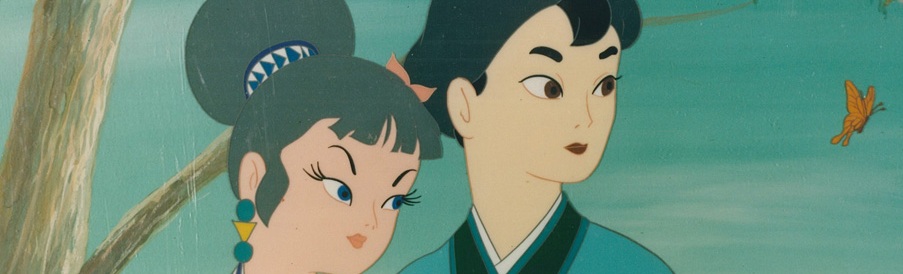
One of the most important titles in the program is “The White Snake Enchantress” (Hakujaden, 1958), directed by Taiji Yabushita. The film is widely recognized as Japan’s first full-length color animated feature and is an important milestone in the development of Japanese theatrical animation.
The special exhibition will not simply look back at famous anime. According to BIFF, it will connect landmark works from the history of Japanese animation with contemporary original theatrical films and a European classic that influenced Japanese animation.
“The White Snake Enchantress” A Landmark in Japanese Animation History
At the center of the program is “The White Snake Enchantress,” a 1958 animated feature based on a traditional Chinese legend.
Directed by Taiji Yabushita, the film was produced during the early development of Japan’s modern animation industry. Its use of color, detailed character animation, expressive backgrounds, and feature-length storytelling represented a major achievement for Japanese animation at the time.
The film is also famous for its connection to Hayao Miyazaki.
Miyazaki saw the movie when he was a high school student and later spoke about the enormous emotional impact it had on him. The film is therefore often discussed not only as an important historical animation work but also as one of the early works that influenced a future generation of Japanese animation creators.
For viewers who mainly know Japanese animation through modern productions, seeing “The White Snake Enchantress” on a large cinema screen offers an opportunity to understand how far the medium has developed over the decades.
A Special Program Spanning Nearly a Century of Animation
The BIFF program is notable because it does not focus on just one era.
Instead, the 13-film lineup connects different periods of Japanese animation history. The selection includes experimental works, science-fiction films, influential theatrical productions, and new original animation.
Among the classic titles are:
- “The White Snake Enchantress” (1958) — directed by Taiji Yabushita
- “Belladonna of Sadness” (1973) — directed by Eiichi Yamamoto
- “Phoenix 2772: Space Firebird” (1980) — associated with Osamu Tezuka
- “Angel’s Egg” (1985) — directed by Mamoru Oshii
- “Memories” (1995) — an anthology involving Koji Morimoto, Tensai Okamura, and Katsuhiro Otomo
- “Metropolis” (2001) — directed by Rintaro
- “Mind Game” (2004) — directed by Masaaki Yuasa
- “Hide and Seek” (2004) — directed by Shuhei Morita
The lineup demonstrates how Japanese animation has repeatedly experimented with different artistic styles, storytelling techniques, genres, and production methods.
For beginners, this is an especially interesting aspect of the exhibition. Japanese animation is often associated internationally with television anime and popular franchises, but these films demonstrate that the medium also has a long history of experimental and auteur-driven cinema.
“Belladonna of Sadness” and Other Influential Classics
One of the most distinctive films in the lineup is Eiichi Yamamoto’s “Belladonna of Sadness” (1973).
The film is known for its unconventional visual style and adult-oriented storytelling. It occupies an important place in the history of Japanese experimental animation and demonstrates how animation can be used to explore subjects and visual ideas far beyond conventional children’s entertainment.
Another major title is “Phoenix 2772: Space Firebird” (1980), based on the ideas of legendary manga creator Osamu Tezuka.
The film combines science fiction, adventure, philosophical ideas, and Tezuka’s fascination with humanity and the future.
The selection also includes “Angel’s Egg” (1985) by Mamoru Oshii, a highly atmospheric and symbolic work known for its minimal dialogue and striking visual storytelling.
Together, these films show that Japanese animation has never been limited to one particular style.
“Memories,” “Metropolis,” and the Evolution of Anime Cinema
The program then moves into the 1990s and 2000s with several influential productions.
“Memories” (1995) is an anthology film consisting of three different stories. The project brought together prominent creators and demonstrated the possibilities of combining different visual approaches within a single theatrical production.
“Metropolis” (2001), directed by Rintaro and inspired by the work of Osamu Tezuka, is another major highlight.
The film combines futuristic science fiction with a richly detailed vision of a vast metropolis populated by humans and robots. Its large-scale visual design and themes surrounding technology, class, and humanity have helped it remain an important title for anime and science-fiction fans.
Meanwhile, Masaaki Yuasa’s “Mind Game” (2004) represents another major shift in animation style.
The film is known for its highly energetic visual language and unconventional storytelling. Its inclusion demonstrates BIFF’s interest not only in commercially successful animation but also in works that challenge traditional ideas about what animated filmmaking can look like.
Four New Japanese Animated Films Represent the Future
The special exhibition also looks toward the future with several new Japanese theatrical animation projects.
Among the new films are:
- “ghost / The End of the Night” (2026) — directed by Shingo Natsume
- “Shiranui” (2026) — directed by Ryo Katanosaka
- “We Are Aliens” (2026) — directed by Kohei Kadowaki
- “A New Dawn” (2026) — directed by Yoshitoshi Shinomiya
These titles represent a younger generation of Japanese animation filmmakers and show how the country’s animation industry continues to develop beyond established franchises.
BIFF’s official program describes the special exhibition as a combination of important works from Japanese animation history and new films that are attracting attention from the international film community.
“We Are Aliens”
Among the new titles, “We Are Aliens” is particularly noteworthy because it is scheduled for release in Japan in 2026.
The story follows Tsubasa and Kyotaro, who become close friends during their elementary-school years. A small betrayal during adolescence later leaves a lasting mark on one of their lives.
The film gives the festival program a more intimate and character-focused perspective, contrasting with the large-scale fantasy and science-fiction works elsewhere in the lineup.
“Shiranui”
Ryo Katanosaka’s “Shiranui” is set in a seaside village in Kumamoto.
The story centers on a 10-year-old boy named Minato, who prays to a mysterious light known as “Shiranui.” What begins as a seemingly innocent wish gradually develops into something much darker.
The film adds a regional Japanese setting and folklore-inspired atmosphere to the festival’s contemporary lineup.
“A New Dawn”
Yoshitoshi Shinomiya’s “A New Dawn” follows Keitaro, a young man whose family has been involved in a fireworks workshop for generations.
The workshop faces demolition because of redevelopment, while Keitaro’s father has disappeared. Keitaro continues searching for a legendary firework called “Shuhari,” and a reunion with his childhood friend Kaoru sets the story on a two-day countdown toward the final fireworks display.
A European Classic Joins the “12+1” Program.
The “12+1” concept also includes one important European animation classic: “The King and the Mockingbird,” directed by Paul Grimault.
The film was originally released in 1952 and later completed and released in its better-known form in 1980.
Its inclusion is significant because the program is not simply intended to celebrate Japanese animation in isolation. BIFF is also examining some of the international influences that helped shape the development of animation in Japan.
This makes the exhibition more than a collection of popular anime films. It becomes a cinematic journey through different artistic traditions and generations.
Rintaro to Return to Korea After 17 Years
Another major highlight will be the participation of legendary anime director Rintaro.
Rintaro, known for works including “Metropolis” and major contributions to Japanese animation history, will visit Korea for the festival.
According to BIFF, this will mark his first visit to Korea in 17 years.
He will be joined by four contemporary directors:
- Kohei Kadowaki
- Ryo Katanosaka
- Shingo Natsume
- Yoshitoshi Shinomiya
The filmmakers are scheduled to meet audiences in Busan and participate in discussions connected to the special exhibition.
For animation fans, this creates an opportunity to hear directly from both an established master and a younger generation of filmmakers.
Why This Exhibition Is Important for Anime Fans
For people who primarily know anime through television series, the BIFF special exhibition offers a broader view of Japanese animation.
Japanese animation has a long theatrical history stretching back decades before many of today’s internationally popular franchises existed.
The exhibition shows how filmmakers experimented with:
- traditional folklore and legends,
- science fiction,
- fantasy,
- philosophical storytelling,
- experimental visuals,
- 3DCG,
- symbolic narratives,
- and character-driven drama.
It also highlights the connection between Japanese animation and international cinema.
By placing historic films alongside new productions, BIFF is effectively asking audiences to consider where Japanese animation came from—and where it might be going next.
The 31st Busan International Film Festival
The 31st Busan International Film Festival will open on October 6, 2026, in Busan, South Korea, and run through October 15. The festival’s wider industry event, the Asian Contents & Film Market, is scheduled for October 10–13.
The Japanese Animation Special is expected to be one of the festival’s notable programs, particularly for viewers interested in animation history and contemporary Japanese filmmaking.
With 13 films covering classic masterpieces, influential experimental works, modern animation, and new theatrical productions, the program offers something for both longtime anime fans and newcomers.
The Busan International Film Festival’s Japanese Animation Special is shaping up to be an unusually broad celebration of Japanese animation.
From the historic “The White Snake Enchantress” to landmark works such as “Belladonna of Sadness,” “Angel’s Egg,” “Memories,” “Metropolis,” and “Mind Game,” the program looks back at the films that helped define Japanese animation as an art form.
At the same time, the inclusion of 2026 films such as “We Are Aliens,” “Shiranui,” “ghost / The End of the Night,” and “A New Dawn” gives audiences a chance to discover the filmmakers who may shape the next generation of animation.
With Rintaro returning to Korea after 17 years and four contemporary directors also scheduled to meet audiences, the special exhibition is set to become an important gathering for animation enthusiasts.
For anyone curious about Japanese anime history, classic anime films, modern Japanese animation, or the future of theatrical anime, the BIFF program could be one of the most interesting animation events of 2026.