 by
A short pixel-art animation created by Don’t Toy with Me, Miss Nagatoro manga artist Nanashi has taken social media by storm! The artist recently shared a dynamic, 2D fighting-game-style animation as a way to take a short break from work. However, what was intended as a casual creative exercise quickly attracted attention for its impressive movement, detailed pixel art, and action-packed presentation.
The approximately five-second clip features a mysterious girl wearing a witch-like hat, with long, flowing hair and enormous tentacles. She performs a series of energetic attacks before launching herself into the air, creating a dramatic circular movement with her tentacles.
Many viewers recognised the character as resembling Abigail Williams from Fate/Grand Order (FGO). Fans praised the animation’s quality and fluid action, with some even comparing its movements to classic fighting-game techniques. Others began imagining what it would look like if Abigail appeared in a full 2D fighting game.
The unexpected reaction has turned Nanashi’s small creative break into a popular topic among anime, manga,ga and gaming fans.
Nanashi Shares a Pixel-Art Animation as a Creative Break
Nanashi, the manga artist best known for creating Don’t Toy with Me, Miss Nagatoro, shared the animation on November 6, 2026, through the artist’s official X account, @774nanash.
Alongside the clip, Nanashi wrote:
“Sometimes I feel like drawing some random motions to take a break, but I don’t have time for this, so I get back to work.”
The comment makes the post even more amusing. While the artist described the animation as a casual way to relax, the finished result looks like a carefully designed action sequence from a professional 2D fighting game.
The short clip demonstrates how much character movement and personality can be communicated through pixel art. Even though the animation lasts only around five seconds, it includes several distinct actions, with the character’s hair and tentacles moving dynamically throughout the sequence.
Rather than presenting a static illustration, Nanashi created a small animated performance that gives the impression of a playable fighting-game character executing a special move.
The post quickly attracted attention from fans who were surprised that such a polished animation had been created simply as a break from regular work.
A Witch-Hat Girl with Giant Tentacles Steals the Spotlight
The animation features a girl wearing a witch-like hat, with long hair flowing behind her as she moves.
Her most noticeable feature is the collection of enormous tentacles that she controls during the sequence. These tentacles are not merely decorative elements; they form an important part of the character’s fighting style.
The character swings them around with considerable force, creating a series of dramatic movements. The animation then builds toward its final action, as she rises into the air while her tentacles sweep around her in a large circular arc.
The movement gives the impression of a special attack or finishing animation from a 2D fighting game.
One reason the clip attracted so much attention is the contrast between its small pixel-art appearance and the scale of the action. The character occupies a relatively small portion of the screen, but the movements of the tentacles create a strong sense of power and momentum.
Her flowing hair, changing poses,s and carefully timed attacks also help make the animation feel energetic rather than mechanical.
Although the clip is very short, it gives viewers enough visual information to imagine how the character might move in a larger game.
Fans Recognise Abigail Williams from Fate/Grand Order
Many viewers immediately associated the animated character with Abigail Williams, a popular Servant from the mobile role-playing game Fate/Grand Order.
Abigail is known for her connection to supernatural and cosmic themes, as well as her distinctive appearance and tentacle-based visual motifs.
The girl in Nanashi’s animation shares several visual similarities with the character, particularly the witch-like hat, long hair,ir and enormous tentacles.
However, the artist’s accompanying caption does not explicitly identify the character by name. It is therefore best to describe the animation as resembling Abigail Williams rather than treating it as an officially commissioned Fate/Grand Order project.
The resemblance nevertheless became a major part of the online discussion. Fans familiar with FGO quickly connected the animation to Abigail and began imagining how the character might look in a fighting game.
The comments also demonstrate how fan art can create excitement by combining familiar character designs with a completely different artistic format.
The Animation’s Fighting-Game Movements Impress Viewers
One of the most frequently discussed aspects of the clip is its fighting-game-inspired movement.
The character does not simply swing her tentacles randomly. The actions have a clear sense of timing, direction, and impact, making them look like a sequence of attacks designed for a 2D action game.
Several viewers praised the sense of dynamism, while others highlighted the contrast between powerful movements and the smooth transitions connecting them.
Some fans also noticed similarities to the visual language of older arcade fighting games.
Fans Spot a Possible Genocide Cutter Reference
One particularly popular reaction was:
“There’s the Genocide Cutter!”
This comment refers to the famous anti-air attack used by Rugal Bernstein, a major boss character from SNK’s The King of Fighters series.
The Genocide Cutter is known for its dramatic upward kicking motion, which creates a crescent-shaped trajectory as the character launches into the air.
In Nanashi’s animation, the final sweeping movement of the tentacles creates a similar visual impression. The curved motion reminded viewers of Rugal’s iconic attack, leading to comparisons between the two sequences.
The reference is particularly amusing because it connects a modern pixel-art animation to a classic fighting-game move recognised by long-time arcade fans.
The comparison also shows how familiar fighting-game animations can influence the way viewers interpret new artwork.
Fans Compare the Clip to Capcom’s Classic Fighting Games
The reactions were not limited to The King of Fighters.
Some viewers also compared the animation’s overall appearance to Capcom’s classic fighting-game series, particularly Darkstalkers, which is known in Japan as Vampire.
The series features supernatural characters, unusual attack animations and distinctive visual designs. Its cast includes monsters, vampires and other fantasy-inspired fighters, making it an appropriate comparison for a character who uses enormous tentacles in battle.
One fan suggested that the animated girl would not look out of place in the Vampire series.
Other comments expressed enthusiasm for the possibility of seeing an FGO fighting game featuring Abigail.
Some even joked that the animation looked polished enough to be transferred directly into an existing fighting-game project.
These reactions highlight the clip’s appeal beyond its pixel-art presentation. It is not only visually impressive; it also feels familiar to people who grew up playing traditional 2D fighting games.
Why Does the Pixel Animation Look So Impressive?
Pixel art is often associated with retro video games, particularly titles from the 8-bit and 16-bit eras.
However, creating a convincing pixel-art animation can be a demanding process. Artists must communicate movement, expression,s and physical impact using a limited number of visible pixels.
Unlike high-resolution illustrations, pixel art requires careful decisions about the placement of individual pixels. Small changes can affect the character’s silhouette, movement, and overall readability.
Nanashi’s animation demonstrates several qualities that help make short action sequences effective.
- Clear character silhouettes
The character’s hat, long hair,r and tentacles remain visually recognisable throughout the movement. This is important because a readable silhouette allows viewers to understand what the character is doing, even when the animation moves quickly.
- Strong sense of momentum
The tentacles create large sweeping movements that make the attacks feel powerful. Their curved paths also help guide the viewer’s attention across the screen.
- Carefully timed action
The character’s movements have distinct stages, from the initial attack to the final upward motion. This creates a sense of rhythm rather than making the animation appear like a collection of unrelated poses.
- Dynamic use of space
The final circular movement gives the sequence a dramatic finish. Instead of keeping the action confined to a small area, the character’s tentacles create a large visual shape that makes the ending memorable.
These elements are particularly important in fighting games, where players need to understand attacks quickly and recognise when a character is performing a special move.
Fans Want to See Abigail Williams in a 2D Fighting Game
Perhaps the most entertaining part of the discussion is the number of fans asking for a fighting game featuring Abigail Williams.
Some viewers imagined the character as a playable fighter in an FGO crossover game, while others joked about seeing her as the main character in a 2D action title.
There were also comparisons to Melty Blood, a 2D fighting-game series known for its anime-inspired characters and fast-paced combat.
The animation’s visual style and attack movements made it easy for fans to imagine how the character might fit into such a game.
However, these comments are fan reactions rather than an announcement. There is currently no confirmed fighting game or action game based on Nanashi’s animation. The artist has not announced a game project connected to the clip.
Even so, the response shows how a short piece of fan-style artwork can inspire an entire community to imagine new possibilities for a familiar character.
Who Is Nanashi, the Creator of Don’t Toy with Me, Miss Nagatoro?
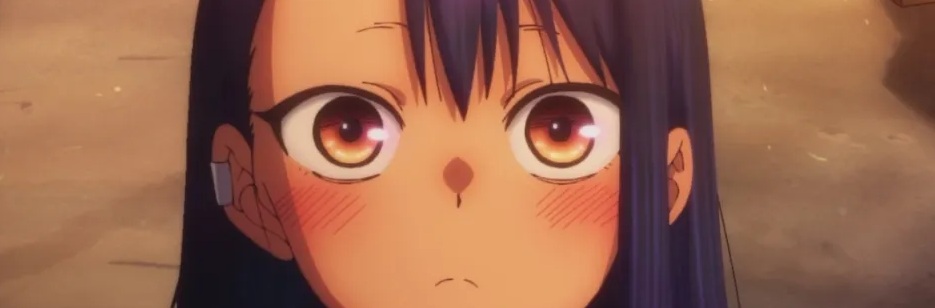
Nanashi is a Japanese manga artist best known internationally for the romantic comedy manga Don’t Toy with Me, Miss Nagatoro.
The series follows Hayase Nagatoro, a playful and teasing high school girl who enjoys teasing her shy senior, an aspiring artist. Although their relationship begins with awkward and sometimes uncomfortable interactions, it gradually develops into a romantic comedy about friendship, confidence,nce and growing closer to another person.
The manga began as a webcomic before receiving an official serialization in Kodansha’s Weekly Shonen Magazine.
It concluded in July 2024, with its final collected volume, Volume 20, released later that year.
The series also received two television anime seasons:
- Season 1: Broadcast in 2021.
- Season 2 – Don’t Toy with Me, Miss Nagatoro 2nd Attack: Broadcast in 2023.
The anime adaptations helped introduce the characters to an international audience and established Nagatoro as one of the recognisable romantic-comedy characters of the early 2020s.
Nanashi’s latest pixel-art animation offers fans a different look at the artist’s creative interests. Instead of manga panels and character illustrations, the post showcases an ability to create short, action-oriented animated sequences.
A Small Creative Break That Became a Viral Moment
Nanashi’s post is a good example of how a small creative experiment can attract attention online.
The artist described the animation as a casual exercise and even joked about returning to work. However, the response suggests that fans were impressed by more than just the character design.
The movement, visual timing, and fighting-game-inspired presentation gave the clip a personality of its own.
For some viewers, the animation recalled classic arcade games. For others, the resemblance to Abigail Williams from Fate/Grand Order was the biggest attraction.
The combination of those elements helped the post reach different communities, including manga readers, FGO fans, and fighting-game enthusiasts.
Although the clip is only a few seconds long, it has already inspired discussions about potential game adaptations and further animated work.
Will Nanashi Create More Pixel-Art Animations?
For now, Nanashi has indicated that it is time to return to regular work rather than continue making random animations.
That playful comment has not stopped fans from hoping to see more.
Some have already imagined a complete Abigail Williams action game, while others would simply like to see another short fighting-game-style animation.
There is no confirmed plan for a longer project, but the reaction demonstrates that fans would welcome more experiments in this style.
Whether Nanashi decides to create another pixel-art animation in the future remains to be seen. For now, this short clip has given fans a memorable glimpse of the artist’s animation skills beyond manga illustration.
Nanashi’s latest pixel-art animation has become a talking point among fans thanks to its impressive movement, striking attacks,s and nostalgic 2D fighting-game style.
The short clip, shared as a casual creative break, has been praised for its quality and dynamic action. Its resemblance to Abigail Williams from Fate/Grand Order has also encouraged fans to imagine the character appearing in a fighting game.
Comparisons to Rugal Bernstein’s Genocide Cutter, Capcom’s Darkstalkers, a nd Melty Blood have added another layer of fun to the discussion.
Although no game adaptation has been announced, the enthusiasm surrounding the animation shows how much viewers enjoyed seeing Nanashi experiment with pixel art.
For fans of Don’t Toy with Me, Miss Nagatoro, Fate/Grand Order and classic fighting games, this unexpected creative break has certainly delivered something worth watching.