 by
by What were the most common anime trends in this milestone year?
2025 marks the 100th anniversary of the Showa era. Due to this influence, this year sees a plethora of retro-inspired anime. The nostalgic feel is refreshing to younger generations and irresistible to longtime fans. This time, we’ll introduce three standout works.
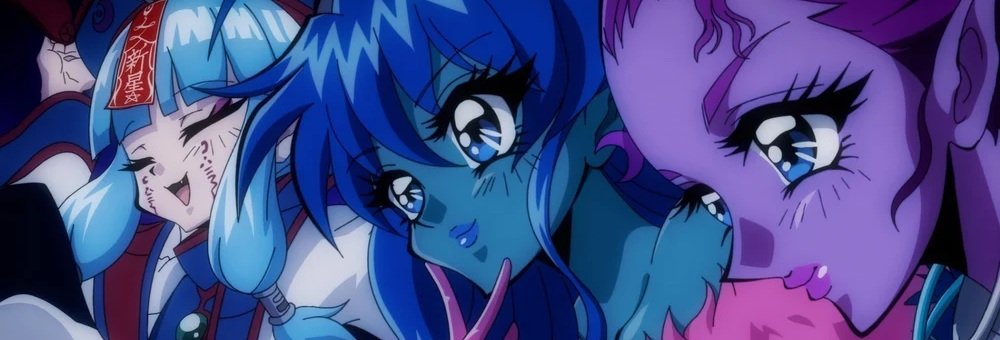
“Shinsei Galverse.” “Shinsei Galverse,” with its concept of “incorporating gyaru culture into nostalgic anime from the 90s and 00s and reconstructing it with modern values,” debuted in June with an unusual format: a single episode. Its visuals are quintessentially 90s, entirely out of place in the 2025 anime scene. What’s even more noteworthy is the extraordinarily epic story, despite its only 22 minutes.
The rich worldview and storytelling, reminiscent of the prologue to a feature-length series, instantly draws viewers in. Although it’s only one episode, it’s arguably one of the most challenging anime of 2025.
” Original! BanG Dream! “
The first episode of “Original! BanG Dream-chan,” the latest short anime in the popular “BanG Dream!” series, also had a strong retro feel. The series’ main characters, including Toyama Kasumi, are depicted in the same ’90s style as “Shinsei Galverse,” and the story, with its cheesy plot, is told in a digest format in just one minute.
The chaos and sheer volume of information defy the very notion of a short anime. From the second episode onward, the series became the usual “BanG Dream!” short anime, but the impact of this first episode was so strong. It was a shame to end it with just one joke, and some viewers may have wanted to see a series in this vein.
“As an assassin, my status is clearly stronger than that of the hero.”
Considering the two works introduced so far have a strong, gimmicky feel, I recommend the currently airing “Assassin, My Status is Clearly Stronger than the Hero’s.” This work, a type of fantasy set in another world, is unique in its visuals, reminiscent of the heyday of OVAs. A distinctive feature of this work is its extensive use of shadows.
This is not the case with the cover illustrations of the novel versions, so this is likely the result of the direction of veteran director Nobuyoshi Habara, known for “Fafner in the Azure” and “Kyoukai Senki,” and his staff. Thanks to this, the “dark fantasy” feel is well-conceived. Even old anime fans shouldn’t be put off by the assumption that “it’s a Narou-style work, so it’s probably just another typical work,” but should definitely give the series a watch.
However, upon closer inspection, the style of the works introduced here seems more strongly influenced by the early Heisei period, particularly anime from the 1990s, than strictly the “Showa” era. Considering the recent spate of remakes and re-broadcasts of nostalgic anime, it may be fair to say that this is part of a modern-day revival of the 90s.