 by
by The first half of 2026 has been a remarkable period for Twin Engine, one of Japan’s most innovative anime production groups. While many studios delivered standout titles this year, four of the most talked-about anime projects—Super Princess Kaguya!, Witch Hat Atelier, Nihon Sangoku, and Mononoke: The Movie – Chapter 3: Serpent God—all share one common connection: they were produced under the Twin Engine umbrella.
Together, these four works highlight the company’s diverse creative vision, ranging from heartfelt original films and faithful manga adaptations to politically charged dramas and visually groundbreaking theatrical anime. More importantly, they demonstrate how Twin Engine has evolved beyond a traditional production company into a creative ecosystem that develops original intellectual properties (IP), nurtures new animation studios, and explores alternative production models.
As Twin Engine enters a new chapter, its achievements in early 2026 may represent one of the most significant milestones in the company’s history.
What Is Twin Engine?
Founded in 2014 by producer Koji Yamamoto, the former founding editor of Fuji TV’s influential Noitamina anime programming block, Twin Engine operates differently from most anime studios.
Instead of functioning as a single animation studio, Twin Engine serves as a holding company that oversees nearly 20 affiliated animation studios, each maintaining its own creative identity while benefiting from shared planning, production, and business support.
The company’s philosophy—“Create and deliver ourselves”—reflects its goal of managing every stage of anime production, including:
- Original IP development
- Anime planning
- Production management
- Promotion and marketing
- Domestic and international distribution
Twin Engine has also embraced partnerships with global streaming services such as Netflix while experimenting with production models that sometimes move beyond Japan’s traditional anime production committee system. This flexibility allows individual studios to pursue ambitious creative projects while retaining their unique artistic styles.
‘Super Princess Kaguya!’ Expands Studio Colorido’s Creative Identity
Among Twin Engine’s biggest successes this year is Super Princess Kaguya!, an original theatrical anime produced by Studio Colorido.
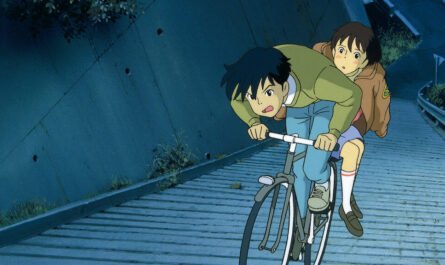
Known for emotionally driven films such as Penguin Highway, A Whisker Away, and Drifting Home, Studio Colorido has built a reputation for magical realism stories set in contemporary Japan.
However, Super Princess Kaguya! marks an important evolution for the studio.
Set in a near-future world where virtual reality and advanced technology have become part of everyday life, the story follows Iroha Sakayori, a hardworking high school student balancing school and part-time jobs. Her life changes after meeting the cheerful streamer Kaguya, whose mysterious origins echo the legendary Japanese folktale The Tale of the Bamboo Cutter.
As the two form a close friendship through livestreaming, gaming, and shared adventures, Kaguya eventually returns to the moon, leaving Iroha heartbroken. Yet the story does not end there. Through futuristic concepts such as time travel and humanoid technology, fate gives the pair another chance to reunite.
Unlike many previous Studio Colorido films, the protagonist does not simply return to her ordinary life after experiencing extraordinary events. Instead, Iroha’s journey inspires her to pursue a career in scientific research, giving the film a more forward-looking conclusion.
Despite exploring new genres and themes, the movie retains Studio Colorido’s signature emotional storytelling centered on family, friendship, and personal growth.
Original IP Development Through Short Films
One particularly noteworthy aspect of Super Princess Kaguya! is its production model.
Director Tomotaka Shibayama and Studio Colorido continued Twin Engine’s strategy of developing original feature films by first experimenting with shorter animated works.
This approach allows creators to:
- Test original concepts.
- Measure audience reactions.
- Refine characters and world-building.
- Expand successful ideas into larger productions.
As demand for original anime continues to grow globally, this development model could become increasingly important for future projects.
‘Witch Hat Atelier’ Demonstrates BUG FILMS’ Technical Growth
One of the most anticipated television anime of 2026 was Witch Hat Atelier, adapted from Kamome Shirahama’s award-winning fantasy manga.
Animated by BUG FILMS, the series follows Coco, a young girl who dreams of becoming a witch after her mother is accidentally turned to stone by forbidden magic.
Determined to save her, Coco begins studying magic under the guidance of experienced witches while discovering the responsibilities and dangers that come with extraordinary power.
The anime faithfully recreates Shirahama’s intricate artwork and magical atmosphere, earning praise from both longtime manga readers and newcomers.
Production Delay Led to Higher Quality
Originally scheduled to premiere in 2025, Witch Hat Atelier was postponed to Spring 2026 to allow additional production time.
The decision proved worthwhile.
Critics praised the anime’s:
- Beautiful background art.
- Detailed magical effects.
- Fluid animation.
- Strong emotional storytelling.
- Faithful adaptation of the original manga.
Rather than rushing production, BUG FILMS prioritized quality—a decision widely appreciated by fans.
BUG FILMS May Soon Enter the Original Anime Market
According to the studio’s previously published long-term vision, BUG FILMS intends to strengthen its brand through original productions after completing major adaptation projects.
Although no original anime has yet been officially announced, many industry observers expect the studio’s next major project to be an entirely original work.
If so, Witch Hat Atelier could represent the final stage in BUG FILMS’ transition from adaptation specialist to original content creator.
‘Nihon Sangoku’ Marks a New Beginning for Studio Kafka
Another standout project from Twin Engine is Nihon Sangoku, animated by Studio Kafka.
Based on the manga serialized through MangaONE, the political fantasy takes place in a future Japan where repeated disasters have reduced civilization to technology levels resembling the Taisho era.
The country has fractured into three rival nations, and protagonist Misumi Seiki attempts to reunify Japan through diplomacy, intelligence, and strategic planning rather than overwhelming military power.
The series distinguishes itself with:
- Political intrigue.
- Thought-provoking world-building.
- Sharp dialogue.
- Occasional dark humor.
- Complex moral conflicts.
The anime became one of Spring 2026’s surprise hits and ranked among the season’s most-watched titles on streaming platforms such as Amazon Prime Video.
Studio Kafka Steps Into the Spotlight
Studio Kafka was originally established after separating from WIT STUDIO during production of The Ancient Magus’ Bride Season 2.
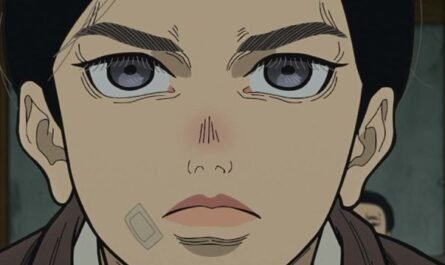
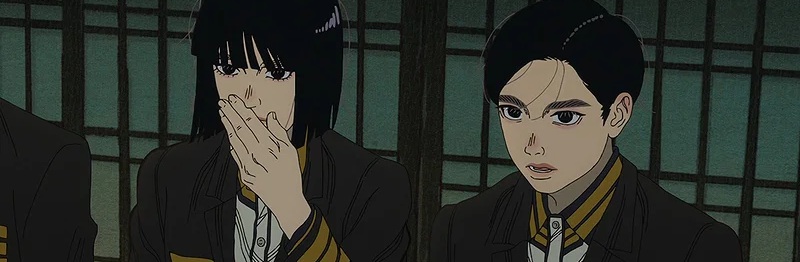
While the studio previously collaborated on projects including Mononoke: The Movie, Nihon Sangoku represents its first major original television production developed largely under its own identity.
For Twin Engine, the series signals growing confidence in allowing its affiliated studios to lead ambitious standalone productions.
‘Mononoke: The Movie – Chapter 3’ Brings a Landmark Era to a Close
The release of Mononoke: The Movie – Chapter 3: Serpent God represents another defining moment for Twin Engine.
The Mononoke franchise first originated nearly 20 years ago as part of the anthology anime Ayakashi: Samurai Horror Tales within Fuji TV’s historic Noitamina programming block.
Over two decades, the series became celebrated for its:
- Distinctive visual style.
- Psychological storytelling.
- Social commentary.
- Exploration of Japanese folklore.
The third film concludes not only the current theatrical trilogy but also a creative era closely associated with producer Koji Yamamoto.
Social Commentary Remains Central to Mononoke
Like previous entries, Serpent God explores themes extending far beyond supernatural horror.
The film addresses issues including:
- Institutional power.
- Patriarchal systems.
- Women’s rights.
- Bureaucratic corruption.
- Social inequality.
- Individual freedom.
Its willingness to combine historical fantasy with contemporary social criticism continues to distinguish Mononoke from conventional anime films.
Koji Yamamoto Begins a New Chapter
One of the biggest developments surrounding Twin Engine is the announcement that founder Koji Yamamoto is stepping back from active producing.
Rather than retiring from the company entirely, Yamamoto has stated that he intends to focus on mentoring younger producers and helping shape the next generation of creators.
His decision symbolizes a major transition for Twin Engine as leadership gradually shifts toward emerging talent.
Beyond Anime: Building the Next Generation of Original IP
Twin Engine’s ambitions now extend well beyond anime production.
In recent years, the company has expanded into publishing and original content development through several major initiatives.
These include:
Aniseka Novel Award
Launched with former Dengeki Bunko editor Kazuma Miki, the competition guarantees publication and anime adaptation opportunities for winning entries.
The inaugural contest attracted more than 6,000 submissions, demonstrating strong interest from aspiring creators.
Twin Engine Manga Project
Twin Engine has also launched its own manga label and digital magazine dedicated to discovering stories with anime adaptation potential.
Following the publication of multiple serialized and one-shot manga in late 2025, the company is preparing to expand its publishing business even further.
This strategy allows Twin Engine to develop intellectual properties from their earliest stages instead of relying solely on existing manga or novels.
Twin Engine’s Growing Role in the Anime Industry
The first half of 2026 illustrates how Twin Engine has matured into one of the anime industry’s most influential creative organizations.
Each of its major projects highlights a different strength:
- Super Princess Kaguya! Demonstrates the potential of original animated films.
- Witch Hat Atelier showcases faithful, high-quality manga adaptation.
- Nihon Sangoku establishes Studio Kafka as a rising production studio.
- Mononoke: The Movie – Chapter 3 concludes a landmark franchise while marking the beginning of a new leadership era.
At the same time, Twin Engine’s investment in novels, manga, and original IP development positions the company for long-term growth across multiple entertainment industries.
Looking Ahead
With nearly 20 affiliated studios, an expanding publishing business, innovative production strategies, and an increasing focus on creating original intellectual properties, Twin Engine is entering one of the most ambitious periods in its history.
Its achievements during the first half of 2026 demonstrate not only the diversity of its creative portfolio but also its determination to shape the future of anime from concept to screen.
As new projects continue to emerge from Studio Colorido, BUG FILMS, Studio Kafka, and the rest of the Twin Engine group, fans and industry observers alike will be watching closely to see how this influential company continues to redefine modern anime production.