 by
by A newly released drawing video featuring Akira Matsushima, the character designer and chief animation director of Demon Slayer: Kimetsu no Yaiba, has given fans a rare look at the artistry behind the hit anime.
A special drawing video originally showcased by Akira Matsushima at Anime Expo 2026 has now been released through the official Demon Slayer: Kimetsu no Yaiba English-language X account and ufotable’s official YouTube channel. The footage shows Matsushima creating line art of Tanjiro Kamado and Giyu Tomioka, and fans have been flooding social media with praise for the remarkable level of detail and control in his traditional drawing technique.
The video is particularly fascinating because it does not simply show the finished illustration. Instead, viewers can watch the artwork gradually appear as Matsushima works with an analog pen, building the characters line by line.
For Demon Slayer fans, the footage offers an unusual behind-the-scenes look at the hand-drawn craftsmanship that contributes to the franchise’s distinctive visual identity.
Akira Matsushima’s Demon Slayer Drawing Video Goes Viral With Fans
The newly released footage begins with a close-up of Matsushima’s hand and drawing surface.
As the pen moves across the page, the outlines of Tanjiro Kamado and Giyu Tomioka gradually take shape.
Tanjiro is shown holding his sword with a focused expression, while Giyu appears alongside him in a similarly serious pose. The drawing emphasizes their distinctive character designs, including their hair, facial features, uniforms, swords, and clothing folds.
What makes the video especially satisfying to watch is the gradual transformation from a mostly blank page into a recognizable Demon Slayer illustration.
Every line contributes something.
The characters’ facial expressions become clearer. Their clothing gains structure. Their poses become more dynamic. Small details that might be easy to overlook in a finished anime frame become much more noticeable when viewers can watch the artist create them individually.
Fans quickly reacted to the video with comments expressing amazement at how delicate and precise the drawing looked.
Some viewers were surprised that the artwork was being created with an analog pen rather than appearing to have been produced entirely digitally. Others said they could not stop watching the process because of how satisfying it was to see the characters emerge from the page.
Comments included reactions along the lines of:
- “It’s so detailed that I thought it was digitally drawn.”
- “The artwork is so amazing, it makes me happy just watching.”
- “I couldn’t look away.”
- “It’s breathtaking.”
- “Watching it with the music gives me chills.”
These reactions highlight something that Demon Slayer has consistently demonstrated throughout its anime production: the appeal is not only in the final animation, but also in the enormous amount of artistic work required to create it.
The Video Was Originally Presented at Anime Expo 2026
The drawing session was originally part of Anime Expo 2026, where Matsushima showcased his artwork for fans attending the event.
The footage was later made available online through official Demon Slayer and ufotable channels, allowing people who were not able to attend Anime Expo to watch the drawing process.
The official English Demon Slayer account described the release as a special look at the artistry of Matsushima, specifically identifying him as the Character Designer and Chief Animation Director of Demon Slayer: Kimetsu no Yaiba Infinity Castle I.
That makes the video more than simply a fan-service drawing.
It offers viewers a glimpse at the work of one of the artists responsible for maintaining the appearance of the characters throughout the anime and the Infinity Castle film.
Who Is Akira Matsushima?
For newcomers, Akira Matsushima is one of the most important artists associated with the Demon Slayer anime adaptation.
He serves as the series’ character designer and chief animation director, helping translate Koyoharu Gotouge’s original manga characters into the visual language of the anime.
The role of a character designer involves establishing how characters will look in animation, including their proportions, facial features, hairstyles, costumes, and other defining characteristics.
A chief animation director has a different but closely related responsibility.
In a large anime production, many different animators may work on individual scenes. Their drawings can naturally vary from one artist to another. The chief animation director helps maintain consistency by correcting or supervising drawings so that characters continue to look like the established designs.
That is particularly important for a series like Demon Slayer, where the cast contains dozens of highly recognizable characters.
Matsushima’s work therefore has a direct connection to the visual appearance fans see on screen.
Why Seeing the Drawing Process Is So Fascinating
Watching a finished illustration is one thing.
Watching an experienced animator create that illustration is something completely different.
The drawing video allows viewers to observe how Matsushima thinks about line weight, anatomy, clothing, facial expression, and pose.
For example, the folds in Tanjiro and Giyu’s clothing are not random decorative marks. They help communicate the shape and movement of the fabric.
The characters’ faces are also carefully constructed. A tiny adjustment to the eyes or eyebrows can change the emotional impression of a character.
The same principle applies to their sword poses.
A character holding a sword is not simply a matter of drawing a weapon in the correct position. The position of the arms, shoulders, hands, torso, and head all have to work together to create a convincing pose.
That is why seemingly simple anime artwork can require an enormous amount of skill.
Tanjiro and Giyu Make a Perfect Pair for the Demonstration
The choice of Tanjiro Kamado and Giyu Tomioka is also particularly fitting.
Tanjiro is the central protagonist of Demon Slayer, while Giyu is the Water Hashira who plays an important role in Tanjiro’s journey.
Both characters are instantly recognizable.
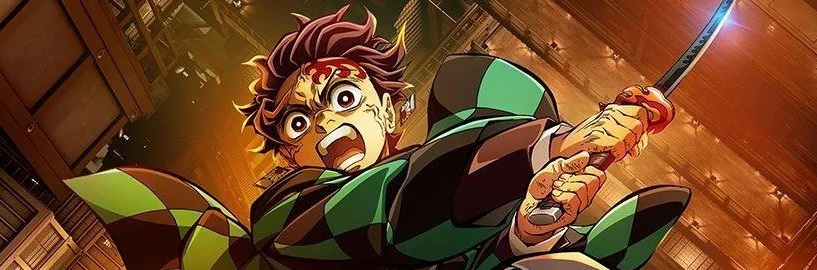
Tanjiro’s signature green-and-black checkered haori and distinctive hairstyle make his silhouette easy to identify, while Giyu’s mismatched haori is one of the most recognizable designs among the Hashira.
The two characters also share a connection to Water Breathing, making them especially appropriate subjects for a drawing centered on the series’ swordsmanship aesthetic.
The final artwork emphasizes the serious side of both characters, giving the demonstration a dramatic Demon Slayer atmosphere.
Fans Notice the Traditional Drawing Technique
One of the most frequently mentioned aspects of the video is the fact that Matsushima uses an analog pen.
Modern anime production relies heavily on digital tools, and many artists use tablets and specialized software for parts of the process.
That can sometimes make the final result appear very different from traditional animation artwork.
In Matsushima’s video, however, viewers can clearly see the physical process of creating lines by hand.
The pen moves across the paper, producing different shapes and details through changes in direction, pressure, and movement.
This is one reason the footage has been so satisfying for artists and anime fans alike.
It turns something that can seem almost magical—the creation of polished anime artwork—into a visible, step-by-step process.
Demon Slayer and the Importance of Hand-Drawn Animation
The drawing video also connects with a larger conversation about how Demon Slayer is produced.
Studio Ufotable has become known for combining traditional hand-drawn animation with digital compositing and computer-generated imagery.
The studio’s approach can be seen particularly clearly in Demon Slayer: Kimetsu no Yaiba Infinity Castle, where complex environments such as the Infinity Castle require extensive digital work while character animation remains rooted in hand-drawn techniques.
A behind-the-scenes feature released earlier in 2026 showed how ufotable’s staff combine 2D animation, digital environments, compositing, and CG techniques to create the film’s elaborate visuals.
This makes Matsushima’s analog drawing video especially interesting.
It represents just one part of a much larger production process.
The final image on screen may contain hand-drawn character animation, digital backgrounds, effects, lighting, compositing, and CG elements, but the character drawings remain fundamental to the overall result.
The Anime’s Visual Style Starts With Character Design
Before an animated character can move across the screen, the production team needs a clear idea of what that character should look like.
This is where character design becomes extremely important.
The character designer establishes the visual foundation that animators use when drawing individual scenes.
Tanjiro must continue to look like Tanjiro whether he is standing quietly, running through a forest, fighting a demon, or reacting emotionally to another character.
The same applies to Giyu and every other member of the cast.
Consistency is especially challenging in action-heavy anime because characters may be drawn from unusual camera angles, at extreme speeds, or in highly exaggerated poses.
Matsushima’s role helps maintain that consistency across the production.
From Manga to Anime: How Demon Slayer Characters Change
The original Demon Slayer manga was created by Koyoharu Gotouge.
When a manga is adapted into animation, the production team cannot simply copy every panel exactly as it appears on the page.
Animation requires characters to move.
That means the production staff must determine how a character will look from different angles, how their expressions will change, and how their clothes and hair should behave while they move.
The anime therefore has its own visual interpretation of Gotouge’s characters.
Matsushima’s character designs form a crucial bridge between the original manga and the animated adaptation.
A Look at the Craft Behind Infinity Castle
The timing of the drawing-video release is also significant because the Demon Slayer franchise is currently in its Infinity Castle era.
The first Demon Slayer: Kimetsu no Yaiba Infinity Castle film was released in Japan in July 2025 and became a major worldwide theatrical success.
The film is the first installment in a planned Infinity Castle trilogy, which adapts the final major battle portion of the manga.
The official Demon Slayer website lists the first film’s digital release for July 28, 2026, while the Blu-ray and DVD release followed on July 29 in Japan.
The official English account has also confirmed that Infinity Castle I is now available to stream through Crunchyroll and is available for digital purchase.
For fans who have already seen the movie, Matsushima’s drawing video provides another way to appreciate the people behind the visuals.
Infinity Castle Has Become a Major Animation Showcase
The first Infinity Castle movie has also received considerable attention for its animation production.
A behind-the-scenes feature highlighted how ufotable combined traditional 2D character animation with elaborate CG environments and digital compositing to create the constantly shifting architecture of the Infinity Castle.
The production philosophy is especially interesting because the Infinity Castle is an environment that frequently ignores normal ideas of gravity, perspective, and spatial orientation.
Rooms shift.
Buildings rotate.
Characters fall through enormous spaces.
The camera moves through environments that would be extremely difficult to reproduce using conventional backgrounds alone.
That means the animators and digital artists have to work together closely.
Matsushima’s drawing video gives fans a much smaller-scale look at the same philosophy: start with carefully crafted character artwork and build the finished visual from there.
The Original Demon Slayer Manga Has Finished
For anyone new to the franchise, the story began as Gotouge’s manga in Weekly Shonen Jump.
The manga has now concluded, meaning the overall story is already complete in its source material.
The anime adaptation began in 2019 and has since expanded into multiple television seasons, special theatrical releases, and the Infinity Castle film trilogy.
The official Demon Slayer website describes the series as the story of Tanjiro, a kindhearted boy whose family is slaughtered by a demon, while his younger sister Nezuko is transformed into a demon. Tanjiro joins the Demon Slayer Corps in the hope of finding a way to return Nezuko to human form.
That simple premise gradually grows into a much larger story involving the Hashira, the Twelve Kizuki, Muzan Kibutsuji, and the final conflict between humans and demons.
Who Is Tanjiro Kamado?
Tanjiro is the protagonist of Demon Slayer.
After his family is attacked, he discovers that his sister Nezuko has survived but has become a demon.
Instead of abandoning her, Tanjiro decides to search for a way to restore her humanity.
He eventually joins the Demon Slayer Corps, an organization dedicated to fighting demons.
Tanjiro is known for his kindness and determination, but he also develops into an increasingly skilled swordsman throughout the story.
His combination of empathy and combat ability has made him one of the most recognizable modern anime protagonists.
Who Is Giyu Tomioka?
Giyu Tomioka is the Water Hashira, one of the most powerful swordsmen in the Demon Slayer Corps.
He is one of the first major Demon Slayer characters encountered by Tanjiro and Nezuko.
Giyu’s personality is much quieter and more reserved than Tanjiro’s.
His serious expression and calm fighting style have made him one of the franchise’s most popular characters.
That makes the drawing video particularly appealing to fans: viewers get to see Matsushima recreate two characters who represent very different personalities while sharing the same disciplined swordsmanship aesthetic.
Fans Are Praising the Video as More Than Just “Good Art”
The reactions to the video have focused not only on the finished illustration but on the experience of watching it being created.
Fans have described the footage as mesmerizing, breathtaking, and deeply satisfying.
Some viewers said they were surprised by the level of precision in the analog drawing, while others praised the way the background music enhanced the experience.
The strongest reactions essentially share the same idea: watching a professional animator draw makes the artistry behind the anime feel more tangible.
Of course, fan comments are subjective rather than an objective measurement of quality, but the response demonstrates how strongly Matsushima’s artwork resonates with the Demon Slayer community.
Why Drawing Videos Matter to Anime Fans
Drawing videos can be valuable because they reveal a part of anime production that viewers rarely see.
When watching an episode, the audience sees only the final result.
They do not normally see:
- The initial rough sketch
- Character construction
- Line-art decisions
- Corrections
- Animation checks
- Color design
- Background production
- Digital compositing
- Visual effects
- Final editing
A professional drawing demonstration removes some of that mystery.
Even people who do not draw can understand how much concentration goes into creating a single character illustration.
For aspiring artists, the footage can be even more valuable because it provides a real example of how an experienced professional approaches line work.
More Behind-the-Scenes Demon Slayer Content
The Matsushima drawing video is not the first time the franchise has given audiences a behind-the-scenes look at its artwork.
ufotable has previously released and participated in content showing how Demon Slayer animation is created.
The studio’s official materials have also showcased Matsushima’s illustrations and drawing work, including artwork created for international events.
An earlier ufotable release featured a Matsushima drawing session from Anime Expo and showed artwork of Tanjiro Kamado and Muichiro Tokito, demonstrating the studio’s continued interest in sharing the creative process with fans.
The newer 2026 video therefore continues a tradition of allowing fans to see the people behind the animation.
What This Means for Demon Slayer Fans in 2026
The franchise remains extremely active even though the original manga has concluded.
The Infinity Castle project is currently carrying the main anime story toward its conclusion, while the franchise continues to receive merchandise, home-video releases, streaming availability, promotional events, and behind-the-scenes material.
The first Infinity Castle movie also won several honors at the 2026 Anime Awards, including Film of the Year and Best Score, according to the official Demon Slayer website.
That continued activity helps explain why a relatively simple drawing video can generate such a strong response.
The audience for Demon Slayer is enormous, and many fans are interested not only in the characters and story but also in the artists and animators who create the series.
Akira Matsushima’s newly released drawing video offers something that Demon Slayer fans do not often get: an extended look at the actual hand-drawn process behind the characters.
Watching Tanjiro Kamado and Giyu Tomioka gradually emerge from a blank page makes the artistry behind the anime much easier to appreciate.
The finished characters may look effortless on screen, but the drawing process shows how carefully every line is considered.
From facial expressions and hair to clothing folds and sword poses, Matsushima builds the illustration piece by piece.
The video is also a reminder that modern anime production is not simply a matter of pressing buttons on a computer. Demon Slayer uses a combination of traditional drawing, digital tools, CG, compositing, and other techniques to create its distinctive look.
For longtime fans, the footage is a satisfying behind-the-scenes treat.
For aspiring artists, it is an opportunity to observe the technique of one of the industry’s most recognizable character designers.
And for newcomers, it is perhaps the simplest demonstration of why the visual side of Demon Slayer has become such a major part of the franchise’s identity.
With the Infinity Castle trilogy continuing the anime’s final storyline and the franchise still releasing new official content in 2026, fans have plenty to look forward to.
For now, however, there is something wonderfully simple about watching a blank page turn into Tanjiro and Giyu—one precise line at a time.
Demon Slayer Akira Matsushima Drawing Video — Quick Facts
Anime: Demon Slayer: Kimetsu no Yaiba
Artist: Akira Matsushima
Role: Character Designer / Chief Animation Director
Drawing subjects: Tanjiro Kamado and Giyu Tomioka
Technique shown: Analog pen / traditional line drawing
Original presentation: Anime Expo 2026
Online release: September 2026
Official video platform: ufotable YouTube
Series studio: ufotable
Original creator: Koyoharu Gotouge
Current anime project: Demon Slayer: Kimetsu no Yaiba Infinity Castle trilogy