 by
Revisit Autumn 2016, one of anime’s most memorable seasons, featuring Yuri!!! on ICE, Sound! Euphonium 2, Haikyu!!, JoJo’s Bizarre Adventure, Flip Flappers, and many more classics.
Autumn 2016: The Legendary Anime Season Fans Still Remember
The Autumn 2026 anime season has arrived, bringing a fresh lineup of highly anticipated sequels, original productions, and new adaptations. However, as anime fans look back at the industry’s history, one particular season continues to inspire nostalgia: Autumn 2016.
Ten years ago, Japanese television was filled with an extraordinary variety of anime. Sports dramas, romantic comedies, musical coming-of-age stories, supernatural mysteries, historical fantasies, and experimental original productions all competed for viewers’ attention at the same time.
The lineup included widely celebrated titles such as Yuri!!! on ICE, Sound! Euphonium 2, Haikyu!! Karasuno High School vs. Shiratorizawa Academy, and Natsume’s Book of Friends Season 5. At the same time, original productions such as Flip Flappers, Izetta: The Last Witch, and The Great Passage offered distinctive stories that could easily have been overlooked amid the season’s major releases.
Even anime that took unusual approaches to their genres, including Keijo!!! and Scorching Ping Pong Girls, found audiences through their unique concepts and energetic presentations.
What made this season particularly memorable was not simply the number of recognizable titles. It was the sheer range of experiences available to viewers. Someone looking for emotional drama could find it in one series, while another viewer interested in intense competition, romance, or experimental animation could discover an entirely different favorite.
A decade later, Autumn 2016 remains an excellent example of how a single anime season can bring together mainstream favorites and underappreciated works.
Let’s revisit the standout anime that made this season so special and explore why many of these series continue to be discussed today.
- Established Franchises Delivered Outstanding Entertainment
One of the biggest strengths of Autumn 2016 was the presence of established franchises that already had dedicated audiences.
Returning series gave viewers familiar characters and ongoing stories, while their new episodes continued to expand worlds that fans had spent years following.
JoJo’s Bizarre Adventure: Diamond Is Unbreakable
JoJo’s Bizarre Adventure: Diamond Is Unbreakable was approaching the conclusion of its 2016 broadcast run during the autumn season.
Set in the seemingly peaceful town of Morioh, the story follows Josuke Higashikata and his companions as they encounter people with supernatural Stand abilities and investigate increasingly dangerous incidents.
Unlike a conventional action series that focuses exclusively on defeating powerful enemies, Diamond Is Unbreakable combines supernatural battles with mysteries, eccentric personalities, and everyday life in a small Japanese town.
The contrast between Morioh’s ordinary appearance and the bizarre events occurring beneath the surface is one of the arc’s greatest strengths.
As the story approached its climax in late 2016, viewers had the opportunity to see several ongoing mysteries and conflicts reach their conclusions. Its distinctive visual style, memorable characters, and unpredictable storytelling helped make it one of the season’s defining returning series.
It is worth noting that Diamond Is Unbreakable began airing in April 2016, rather than premiering in autumn. Its inclusion in this retrospective reflects how it continued into the fall and reached its conclusion in December.
Natsume’s Book of Friends Season 5
For viewers who preferred quiet storytelling and emotional depth, Natsume’s Book of Friends Season 5 offered a welcome return.
The series follows Takashi Natsume, a boy who can see supernatural beings known as yokai. After inheriting the mysterious Book of Friends from his grandmother, he begins returning the names of spirits whose identities were recorded in it.
Although the premise involves supernatural encounters, the series is often more interested in loneliness, compassion, memories, and the connections between humans and spirits than in action.
Each encounter allows Natsume to understand another character’s experiences while gradually developing his own relationships with the people around him.
Season 5 continued the franchise’s gentle approach to supernatural storytelling, reminding viewers that a fantasy series does not need constant battles or dramatic twists to be emotionally engaging.
Its quiet atmosphere also made it a memorable contrast to the louder, more competitive anime airing during the same season.
Uta no Prince-sama: Maji LOVE Legend Star
The fourth season of Uta no Prince-sama, subtitled Maji LOVE Legend Star, continued to attract fans of idol anime and music-driven storytelling.
The series follows aspiring performers navigating the entertainment industry, developing their musical talents, and building relationships through their shared ambitions.
Its appeal comes from a combination of energetic musical performances, dramatic character moments, colorful visuals, and the relationships between its central idols.
For fans who had followed the previous seasons, the autumn installment offered another opportunity to reconnect with familiar performers and their ambitions.
The series also demonstrated how strongly music-oriented anime could appeal to audiences through a combination of character development, songs, and concert-style sequences.
- Sound! Euphonium 2: A Masterclass in Musical Coming-of-Age Drama
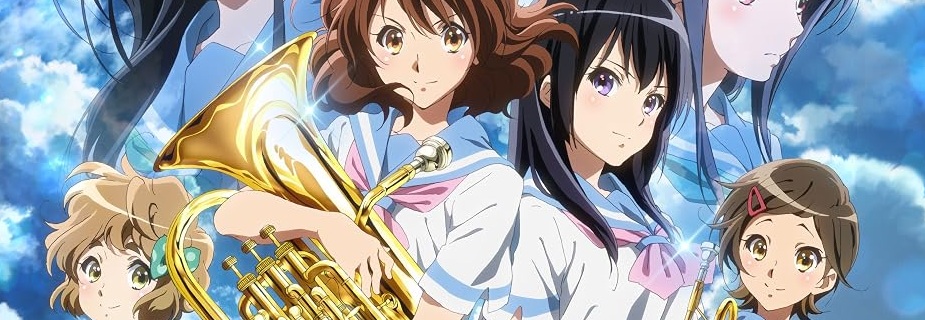
Among the season’s most acclaimed releases was Sound! Euphonium 2, produced by Kyoto Animation.
The series follows Kumiko Oumae and the Kitauji High School concert band as its members work toward improving their performance and competing at a higher level.
On the surface, it is an anime about a school music club. However, its emotional appeal comes from the relationships between the students, their ambitions, their insecurities, and the difficult decisions they face while pursuing excellence.
Musical performances are important, but the series also explores the realities of working in a competitive group. Not every student has the same level of dedication, and not everyone agrees about what success should look like.
Some characters are driven by the desire to win, while others are uncertain about their futures or struggling to communicate their feelings.
Kumiko’s perspective gives viewers a close look at these conflicts. Her experiences are not limited to learning music; she must also understand the people around her and decide what kind of person she wants to become.
Kyoto Animation’s detailed animation adds another layer to the storytelling. The movements of the musicians, the positioning of their instruments, and the subtle changes in their expressions help make the performances feel convincing.
The result is a series that combines technical precision with emotional intimacy.
Even viewers without a particular interest in concert bands can appreciate its exploration of friendship, competition, jealousy, personal growth, and the desire to improve.
A decade later, Sound! Euphonium 2 remains an important recommendation for anyone interested in realistic school dramas and character-focused anime.
- Haikyu!! Season 3 Delivered an Intense Sporting Rivalry
Sports anime also played a major role in the autumn lineup, and few titles generated as much excitement as Haikyu!! Karasuno High School vs. Shiratorizawa Academy.
The third season concentrates on Karasuno High School’s decisive match against Shiratorizawa Academy, a powerful volleyball team led by the formidable Wakatoshi Ushijima.
Rather than spreading its attention across a long tournament, the season focuses closely on this single high-stakes encounter.
That decision gives the match room to develop. Every rally, tactical adjustment, defensive play, and scoring opportunity contributes to the tension.
The players’ individual strengths matter, but the series also emphasizes teamwork and the ability to adapt under pressure. Karasuno must find ways to challenge an opponent whose physical power and experience make the match exceptionally difficult.
The short season also allows the narrative to maintain a strong sense of momentum. Instead of repeatedly introducing new opponents, it concentrates on the psychological and physical demands of one major competition.
The result is a tightly focused sports drama that demonstrates how much tension can be created through teamwork, strategy, and carefully paced action.
For sports anime fans, this remains one of the most memorable entries in Haikyu!! because it turns a single match into a complete story of determination, trust, and perseverance.
- Yuri!!! on ICE Changed the Conversation Around Sports Anime
Another major highlight of Autumn 2016 was Yuri!!! on ICE, an original anime that combined figure skating, personal drama, romance, and musical storytelling.
The series follows Japanese figure skater Yuri Katsuki, who struggles with his confidence after a disappointing competitive season. His life changes when legendary Russian skater Victor Nikiforov becomes involved in his training.
As Yuri works to improve, he must confront his fears, rediscover his motivation, and learn to perform under pressure.
The anime attracted attention for its choreography, musical presentation, and attempt to portray the physical and emotional demands of competitive figure skating.
Instead of treating each performance as a simple sequence of impressive movements, the series connects the skaters’ routines with their personalities and emotional states.
The music, choreography, and character animation work together to communicate the tension of competition and the effort required to succeed.
The relationships between the characters also became a major part of the show’s appeal. Yuri’s interactions with Victor and the other skaters explore themes of trust, personal ambition, vulnerability, and the difficulty of accepting support from others.
The series became one of the season’s most widely discussed titles and helped demonstrate how a sports anime could reach audiences through both athletic storytelling and emotional relationships.
Its place in the Autumn 2016 lineup remains particularly significant because it offered an alternative to the team-sport format popularized by series such as Haikyu!!.
- Hidden Gems and Original Anime Made the Season More Diverse
While the major franchises attracted considerable attention, Autumn 2016 also featured original productions and less conventional adaptations that gave the season its distinctive character.
These series may not all have achieved the same level of mainstream recognition, but each offered something different.
The story follows Izetta, a young witch, and Princess Fine of the small country of Eylstadt. When the country faces a powerful invading force, Izetta’s extraordinary abilities become central to its efforts to survive.
The series combines military conflict with fantasy elements, exploring the consequences of using magical power in a world dominated by modern weapons and political ambition.
Its central relationship is equally important. Fine and Izetta must navigate the tension between personal loyalty and the responsibilities placed on them by the war.
The contrast between witches and modern military technology gives the series a distinctive visual identity.
As an original anime, it also offered viewers a story without a pre-existing manga or light novel to guide their expectations.
The Great Passage, known in Japanese as Fune wo Amu, took a very different approach to storytelling.
Rather than focusing on supernatural abilities, athletic competition, or large-scale conflict, the series follows people working on the creation of a dictionary.
Its central character, Mitsuya Majime, is a quiet and socially awkward man whose interest in language makes him well suited to the demanding process of compiling definitions.
The work requires patience, precision, and an understanding of how words change meaning across different contexts.
This unusual premise becomes the foundation for a thoughtful story about communication, professional dedication, and the power of language to connect people.
The series demonstrates that even a seemingly ordinary workplace can provide material for compelling drama when its characters care deeply about what they do.
Its understated style made it a distinctive entry in the season and a particularly appealing choice for viewers looking for something reflective and grounded.
For viewers looking for visual experimentation, Flip Flappers was one of the season’s most distinctive offerings.
The original anime follows Cocona, a reserved girl whose life changes when she meets Papika, an energetic and mysterious character who draws her into extraordinary adventures.
Together, they travel through strange alternate environments known as Pure Illusion, where the rules of reality can change dramatically.
Each new setting allows the series to experiment with different visual styles, imaginative creatures, unusual environments, and surreal action sequences.
The contrast between Cocona’s cautious personality and Papika’s enthusiasm provides the emotional foundation for their adventures.
At the same time, the series gradually develops mysteries about the characters and the nature of the world they explore.
Flip Flappers stands out because it uses animation as more than a way to illustrate the story. Visual experimentation becomes part of the storytelling itself, allowing the audience to experience the characters’ uncertainty and discovery through changes in color, movement, and environment.
For anime fans interested in original productions and ambitious visual direction, it remains a worthwhile title to revisit.
- Unconventional Concepts Gave the Season Its Unique Personality
Autumn 2016 was not limited to serious dramas and technically impressive productions. Several anime also attracted attention through unusual concepts, exaggerated humor, and distinctive genre combinations.
Scorching Ping Pong Girls, also known as Shakunetsu no Takkyu Musume, follows young table-tennis players competing to improve their skills and establish themselves in the sport.
The series uses the intensity commonly associated with sports anime but focuses on table tennis, a sport that receives less attention than volleyball, football, or basketball in mainstream anime.
Its matches emphasize determination, individual technique, and the psychological pressure of competition.
The characters’ enthusiasm gives the series a lively atmosphere, while the sport’s quick exchanges create opportunities for energetic animation.
For viewers who enjoyed the competitive spirit of Haikyu!! but wanted a different sporting environment, the series provided another option.
Keijo!!! became one of the season’s most unusual sports anime because of its deliberately exaggerated premise.
The series imagines a competitive sport in which female athletes attempt to knock opponents off floating platforms using only their hips and breasts.
Although the concept is intentionally absurd, the show presents its competitions using familiar sports-anime elements: training, rivalries, special techniques, dramatic commentary, and determined athletes.
Its exaggerated action and comedic tone distinguish it from more realistic sports dramas.
The series was not designed to appeal to every viewer, but it demonstrated the range of ideas that could find a place in a crowded anime season.
Its inclusion alongside more serious titles is part of what made Autumn 2016 so varied.
Matoi the Sacred Slayer, also known as Soushin Shoujo Matoi, introduced a supernatural take on the transforming-heroine genre.
The original anime follows Matoi Sumeragi, a girl whose life changes after she becomes involved in supernatural incidents connected to mysterious beings and spiritual powers.
The series combines action, comedy, and Japanese religious imagery, giving it a different identity from conventional magical-girl stories.
Its focus on spiritual phenomena and transformation provides a distinctive premise, while its character relationships help ground the supernatural action in everyday life.
For fans interested in original anime that experiment with established genre conventions, Matoi the Sacred Slayer is another example of the variety available during the season.
- Why Autumn 2016 Still Feels Like a Legendary Anime Season
Looking back at a season ten years later naturally involves some nostalgia. However, there are several reasons Autumn 2016 continues to attract attention from anime fans.
A Remarkable Variety of Genres
The season featured sports, romance, music, fantasy, supernatural action, workplace comedy, and thoughtful drama.
This variety meant that viewers with different tastes could find something appealing, while fans who watched several series at once had access to a broad range of storytelling styles.
Strong Returning Franchises and Memorable Newcomers
Established series such as Natsume’s Book of Friends and JoJo’s Bizarre Adventure offered familiar worlds, while Yuri!!! on ICE, Flip Flappers, and Izetta: The Last Witch brought original stories and fresh creative approaches.
The combination helped balance familiarity with discovery.
Character-Driven Storytelling
Several of the season’s most memorable works placed considerable emphasis on personal development.
Sound! Euphonium 2 explored ambition and relationships within a concert band. Yuri!!! on ICE examined confidence and trust through competitive figure skating. The Great Passage found drama in the slow, careful work of creating a dictionary.
These stories demonstrate that meaningful conflict does not always require world-ending threats. Personal decisions, professional ambitions, and relationships can provide equally compelling foundations.
Animation That Supported the Story
The season also showcased different approaches to animation.
Sound! Euphonium 2 used detailed character acting and musical performances to strengthen its emotional scenes. Yuri!!! on ICE made choreography central to its presentation, while Flip Flappers embraced imaginative visual experimentation.
These differences show how animation can serve many purposes, from realistic physical performance to surreal visual storytelling.
The Appeal of Discovering Hidden Gems
Finally, the season rewarded viewers who looked beyond the biggest names.
Not every series became a major hit, but many offered distinctive premises and creative decisions that made them worth watching.
That is an important part of the season’s lasting appeal: its reputation rests not only on the most successful shows, but also on the sheer number of different experiences available.
A Season That Offered Something for Every Anime Fan
Autumn 2016 remains a memorable period in anime history because it brought together a remarkable collection of series with different ambitions, tones, and audiences.
Yuri!!! on ICE delivered an emotionally driven sports story, Haikyu!! transformed a volleyball match into an intense dramatic experience, and Sound! Euphonium 2 explored the complicated relationships behind musical ambition.
At the same time, Natsume’s Book of Friends Season 5 offered quiet supernatural storytelling, The Great Passage found drama in the creation of a dictionary, and Flip Flappers demonstrated the expressive possibilities of experimental animation.
Even unconventional titles such as Keijo!!! and Scorching Ping Pong Girls contributed to the season’s diversity.
No single anime season can objectively be declared the greatest of all time. Every generation has its own favorites, and nostalgia naturally influences how viewers remember the shows they watched when they were younger.
Nevertheless, Autumn 2016 offers a convincing example of what makes a seasonal anime lineup special: a combination of established favorites, ambitious original productions, emotionally rich dramas, and unusual concepts that give viewers something new to discover.
Ten years later, the best way to appreciate this season may be to revisit it with fresh eyes. Whether you return to a beloved classic or discover an overlooked series for the first time, Autumn 2016 still has plenty to offer anime fans.