 by
Forty years after its television debut, Saint Seiya continues to hold a special place in anime history. Masami Kurumada’s legendary manga introduced readers to a world of mythological battles, powerful warriors, and young heroes who fight to protect the goddess Athena. Its anime adaptation brought that world to television in October 1986, creating a generation of fans who still remember its dramatic battles and unforgettable characters.
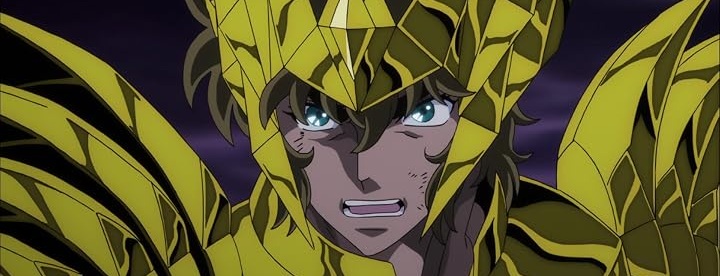
Among the series’ most memorable figures are the Gold Saints, the twelve powerful warriors who protect the Sanctuary’s Twelve Temples. Their magnificent Gold Cloths, extraordinary abilities, and distinctive personalities made them some of the most fascinating characters in the franchise. However, not every Gold Saint stood on the side of justice. Some supported the corrupt Pope, challenged Athena’s authority, and became formidable opponents for Seiya and his friends.
One character who particularly stands out is Cancer Deathmask. His cruel personality, unusual sense of justice, dark humour,r and surprisingly entertaining behaviour made him one of the most distinctive villains in the original series.
As Saint Seiya celebrates the 40th anniversary of its television anime in 2026, it is the perfect opportunity to revisit the Gold Saints whose extreme personalities left such a lasting impression on viewers. Among them, Deathmask remains a particularly fascinating example of how a villain can be both disturbing and strangely memorable.
Warning: This article contains major spoilers from the Sanctuary and Hades story arcs.
Saint Seiya Celebrates 40 Years Since Its Anime Debut
Created by Masami Kurumada, Saint Seiya began its manga serialization in 1985 in Shueisha’s Weekly Shonen Jump. The story follows Seiya and his fellow Saints, warriors who use the mysterious energy known as Cosmo to fight for Athena, the Greek goddess of wisdom and warfare.
The television anime, produced by Toei Animation, premiered on October 11, 1986, and continued until April 1, 1989. It ran for 114 episodes over approximately two and a half years, introducing the series to a much wider audience.
The anime achieved an average Japanese television audience rating of approximately 11%, an impressive result for a long-running action series. Its popularity helped establish Saint Seiya as one of the defining anime franchises of its era.
The series also became especially popular because of its combination of Greek mythology, spectacular battles, emotional character relationships, and visually distinctive armour designs. Each Saint is associated with a constellation, and the warriors’ Cloths reflect their respective celestial guardians.
The Gold Saints became particularly important during the Sanctuary Arc. Their twelve temples, arranged along the path to Athena’s Sanctuary, created a dramatic sequence of battles in which Seiya and the other Bronze Saints had to overcome increasingly powerful opponents.
For many viewers who grew up during the 1980s, the Gold Saints were more than simply powerful enemies. Their constellation-based identities encouraged children to take pride in their own zodiac signs, creating what fans often remember as a nostalgic zodiac craze.
The franchise is marking this milestone with special anniversary initiatives in 2026. These include commemorative gold cards announced by Toei Animation in October and anniversary-related collectible figure projects from Tamashii Nations.
Why the Gold Saints Became So Memorable
The Gold Saints occupy the highest rank among Athena’s regular Saints. Each of the twelve warriors protects one of the Zodiac Temples, and their Gold Cloths are considered the most powerful of the standard Cloth classes.
Unlike the Bronze Saints, who are still developing their abilities, the Gold Saints are experienced warriors capable of using Cosmo at extraordinary levels. Their attacks can reach the speed of light, making them extremely difficult opponents.
However, their appeal was not based on strength alone.
Each Gold Saint possesses a distinctive personality, philosophy,y and fighting style. Some are honourable defenders of Athena, while others are arrogant, ruthless, ss or deeply committed to their own interpretation of justice.
During the Sanctuary Arc, several Gold Saints oppose Seiya and his companions because they believe the Pope’s authority must be protected. Others gradually question the truth behind the Sanctuary’s leadership.
This mixture of loyalty, ambition, pride, and conflicting beliefs makes the Gold Saints more interesting than a simple collection of powerful villains.
Among the most controversial members is Cancer Deathmask, whose actions and personality made him one of the most unusual characters in the original story.
Cancer Deathmask: The Gold Saint Who Believed in Strength Above Justice
Cancer Deathmask is one of the most notorious Gold Saints in Saint Seiya. He protects the fourth temple, the Cancer Temple, also known as the Giant Crab Palace or Kyokyū in Japanese.
Unlike the more honourable Gold Saints, Deathmask openly enjoys fighting and killing. He believes that the distinction between good and evil can change throughout history and that the powerful ultimately determine what society considers justice.
His philosophy is particularly disturbing because he uses it to justify serving the corrupt Pope, even after becoming aware of the Pope’s evil nature.
Deathmask’s attitude is summed up by his belief that the definition of justice changes with the passage of time. In his view, someone who is considered evil in one era might eventually be regarded as a hero in another.
This way of thinking allows him to avoid questioning his own actions. Rather than following Athena’s ideals of protecting humanity, he places his faith in power and the authority of those who control the world.
That makes him fundamentally different from characters such as Mu of Aries or Aiolia of Leo, who struggle with questions of loyalty and justice in their own ways.
The Terrifying Secret Behind the Cancer Temple
One of the most disturbing details about Deathmask is the appearance of his temple.
The walls of the Cancer Temple are decorated with the faces of people he has killed. These faces are not simply ornaments. They represent the lingering expressions of his victims, whose deaths have left their spiritual presence behind.
This is also the origin of his name.
Deathmask is not his actual personal name. It is a name associated with the death masks of his victims, making it one of the most unusual identities among the Gold Saints.
The detail becomes even more unsettling because Deathmask does not appear particularly disturbed by the faces surrounding him. Instead, he treats them as evidence of his power.
His victims’ suffering is therefore transformed into a symbol of his arrogance. The temple itself becomes a physical representation of his cruel personality and his complete disregard for innocent lives.
Interestingly, his real name is never revealed in the original story. Even the name Deathmask appears on his tombstone, leaving his personal identity a mystery.
Sekishiki Meikaiha: His Signature Technique
Despite the variety of fighting styles used by the Gold Saints, Deathmask is especially associated with one signature technique: Sekishiki Meikaiha.
The name can be translated approximately as the Demon Corpse Waves of the Underworld. It is a supernatural attack that separates an opponent’s soul from the physical body and sends it towards the entrance to the underworld, known as Yomotsu Hirasaka.
This ability makes Deathmask a particularly unusual opponent. Instead of relying only on physical attacks or destructive energy blasts, he can directly target an enemy’s soul.
His technique also reflects his connection to death and the spiritual world. The imagery surrounding Cancer, the faces in his temple, and the entrance to the underworld all contribute to his dark identity.
Although Deathmask is not known for possessing a large collection of signature attacks, Sekishiki Meikaiha gives him a distinctive fighting style that separates him from many of the other Gold Saints.
It is also one of the reasons why he remains an interesting character despite his controversial reputation.
Deathmask’s Defeat Against Shiryu: One of the Most Unforgettable Battles
Deathmask’s confrontation with Dragon Shiryu is one of the defining moments of his character arc.
Shiryu is significantly younger and belongs to the Bronze Saints, who are generally considered inferior to the Gold Saints in terms of experience and power. Nevertheless, he refuses to accept Deathmask’s cruel philosophy.
During their battle, Deathmask demonstrates his willingness to use innocent people as weapons against his opponent. He even targets Shunrei, the young woman who cares deeply for Shiryu.
This reveals the difference between the two fighters. Shiryu believes that strength should be used to protect others, while Deathmask sees power as a justification for domination.
The battle becomes more than a contest of physical strength. It is a clash between two completely different ideas of justice.
Deathmask initially appears to have the advantage, but the situation changes when his Gold Cloth rejects him.
The Cancer Gold Cloth abandons its wearer because of his evil nature, leaving him without the protection he once considered a symbol of his superiority.
His defeat is especially memorable because it challenges the belief that possessing extraordinary power automatically makes someone worthy of respect.
The scene also became a source of nostalgia and humour among older fans. Deathmask’s exaggerated defeat cry, “Ajapaaaah!!”, added an unexpected comedic touch to an otherwise serious confrontation.
His defeat is one of the reasons why he became such a controversial figure among fans of the Zodiac signs. For children who identified with Cancer, seeing their constellation’s representative behave so cruelly and then suffer such an embarrassing defeat was difficult to forget.
A Surprisingly Human Side: Intelligence, Confidence and Strange Humour
Although Deathmask is unquestionably cruel, he is not simply a mindless villain.
One of the most interesting aspects of his personality is his combination of intelligence, confidence and occasional politeness.
Despite being Italian, he frequently uses Japanese proverbs and expressions during conversations. One example is the proverb about the cunning rabbit and the hunting dog, which refers to the idea that a useful hunting dog may be discarded once the hunt is over.
The expression reflects Deathmask’s cynical view of loyalty and power. He understands that those who serve powerful leaders may eventually become unnecessary once their usefulness has ended.
His behaviour towards older or respected figures can also be surprisingly formal. This contrast between his polite manner and his violent actions makes him feel more complicated than a conventional villain.
He can speak with confidence and even show respect when addressing someone of higher standing, but that does not prevent him from committing terrible acts against weaker opponents.
This contradiction is a major part of his appeal as a fictional character.
He is intelligent enough to understand the world around him, but his personal philosophy prevents him from using that intelligence to question his own cruelty.
Ryoichi Tanaka’s Voice Performance Added to Deathmask’s Personality
The original Japanese anime adaptation also benefited from the voice performance of Ryoichi Tanaka, who portrayed Deathmask.
Tanaka’s performance helped bring out the character’s arrogance, confidence,e and occasionally ridiculous sense of humour. His delivery made Deathmask sound threatening during serious scenes while also allowing his more exaggerated reactions to become memorable.
The character’s voice is particularly effective during his confrontations with Shiryu. His confidence and mocking tone make his eventual defeat even more entertaining.
Tanaka also returned to the role in the Hades Chapter anime adaptation, allowing longtime viewers to hear his familiar interpretation of the character again.
Deathmask’s voice performance is an important part of why the character remains so recognizable to fans of the original Japanese anime.
Deathmask’s Return in the Hades Arc: The Unexpected Noripi-go Humour
Deathmask’s story did not end with his defeat in the Sanctuary Arc.
He later returned during the Hades storyline, where several Gold Saints who had previously died were resurrected and forced to participate in the conflict surrounding the underworld.
His return created another opportunity for the character to display his unusual personality.
One particularly memorable aspect of his dialogue was his use of Noripi-go, a playful style of Japanese slang associated with singer and actress Noriko Sakai.
Expressions such as “Mammoth pitiful guy!” and other exaggerated phrases made Deathmask’s dialogue unexpectedly funny. These lines were especially striking because they appeared in a story arc with a much darker atmosphere.
The contrast between the serious nature of the Hades storyline and Deathmask’s unusual speech patterns gave the character another memorable layer.
Some of these expressions were subsequently corrected or altered in collected manga editions, making the original versions particularly interesting to longtime readers.
Rather than presenting Deathmask as a completely serious villain, these moments allowed his eccentric personality to remain part of the franchise’s humour.
Why Deathmask Still Stands Out Among the Gold Saints
There are many powerful and memorable Gold Saints in Saint Seiya, but Deathmask occupies a particularly unusual position.
He is not remembered because he represents the highest ideals of Athena’s warriors. In fact, his actions are often the opposite of what a Saint should represent.
Instead, he stands out because of the contradictions in his character:
- A powerful warrior with a disturbing philosophy: He possesses the strength of a Gold Saint but believes that power is more important than justice.
- A frightening temple guardian: The faces of his victims make the Cancer Temple one of the most unsettling locations in the Sanctuary.
- A distinctive fighting style: Sekishiki Meikaiha gives him a supernatural connection to the underworld.
- Unexpected intelligence and manners: His knowledge of proverbs and occasional politeness contrast with his cruelty.
- An unforgettable sense of humour: His exaggerated reactions and Noripi-go expressions make him one of the more eccentric characters in the series.
These qualities explain why Deathmask continues to attract discussion decades after his first appearance.
He is certainly not the most admirable Gold Saint, but his personality is difficult to forget.
The Legacy of Saint Seiya’s Gold Saints
The Gold Saints remain among the most recognizable elements of the Saint Seiya franchise. Their twelve constellations, elaborate armour designs and contrasting personalities helped establish the visual and narrative identity of the series.
Their popularity also extended beyond the original television anime. The franchise continued through theatrical films, the Hades OVA adaptations, spin-off productions and newer projects.
One notable example is Saint Seiya: Soul of Gold, a 2015 original net animation that places the Gold Saints at the centre of its story. The project demonstrates the continuing interest in these characters and their individual histories.
The 2026 anniversary celebrations also provide another opportunity for collectors and longtime fans to revisit the franchise. Toei Animation announced limited-edition 40th-anniversary pure-gold cards in October, while Tamashii Nations has highlighted special anniversary merchandise and collectible figures.
These projects show that the appeal of the Gold Saints extends beyond their original appearances. Their designs and personalities continue to inspire new merchandise and fan interest.
Forty years after the television anime first premiered, Saint Seiya remains memorable because of its powerful combination of mythology, action friendshiph, friendship, and unforgettable characters.
The Gold Saints played a major role in establishing the series’ identity, and their different personalities made the Sanctuary Arc one of its most iconic storylines.
Cancer Deathmask is perhaps one of the clearest examples of how a character can become memorable without being admirable. His cruelty, unusual philosophy, supernatural abilities, and unexpected comedic moments make him a fascinating figure in the franchise.
He may not be the Gold Saint that fans would choose as a symbol of justice, but his overwhelming personality ensures that he is not easily forgotten.
As the anime celebrates its 40th anniversary in 2026, revisiting characters like Deathmask reminds longtime viewers why Saint Seiya became such an important part of anime history.