 by
The animated feature film We Are Aliens is attracting growing attention in Japan and overseas, earning international film festival awards while expanding its theatrical release more than a month after its debut. Released in Japan on September 25, 2026, the film had earned ¥422,337,400 at the box office and attracted 262,855 moviegoers as of November 1, its 38th day in theatres. Its theatrical reach has also grown from an initial 72 locations to a cumulative total of 110.
Directed by Kohei Kadowaki, We Are Aliens is a coming-of-age drama about two boys whose friendship is changed by an irreversible incident during their elementary school years. Rather than presenting childhood as a collection of happy memories, the film explores loneliness, social pressure, fear, regret, and the complicated relationships that can remain with people long after they grow up.
The film has also received recognition at major international festivals, including the Cannes Film Festival’s Directors’ Fortnight, the Annecy International Animation Film Festival, the Ottawa International Animation Festival and the Sitges Film Festival. Its awards have further strengthened its reputation as one of the notable independent animated films of 2026.
But what makes We Are Aliens particularly interesting is not only its festival success or box-office performance. Its emotional storytelling and distinctive animation style invite viewers to revisit their own childhood memories. Through familiar classrooms, quiet rural streets and the awkward relationships of growing up, the film creates a world that feels personal even to people who have never visited the place depicted on screen.
We Are Aliens: A Friendship Changed by an Irreversible Event
The story of We Are Aliens takes place in a rural Japanese town during the Heisei era, a period that lasted from 1989 to 2019.
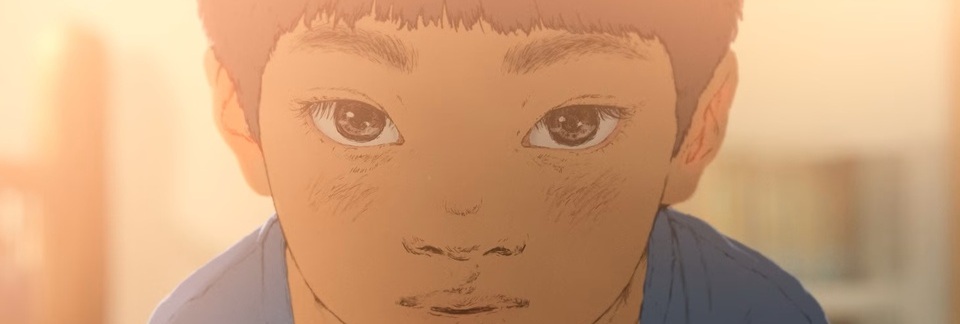
At the centre of the film are two elementary school boys: Tsubasa and Gyotaro.
Tsubasa is a shy boy who struggles with the idea of being ordinary. He often feels uncertain about himself and his place among the other children. Gyotaro, on the other hand, is regarded as a special and popular figure in their class. Despite their different personalities and positions among their classmates, the two boys become close friends.
Their friendship begins in the spring of their third year of elementary school. They spend time together playing games, sharing meaningless conversations, ns and walking home as the day slowly comes to an end.
These ordinary moments form the emotional foundation of the film. The boys do not need extraordinary adventures to enjoy each other’s company. Their friendship is built through small experiences that might appear unimportant to adults but mean everything to children.
However, their peaceful relationship begins to change when Gyotaro becomes isolated from the rest of the class.
Rumours begin to spread, classmates start looking at him differently, and the atmosphere around him gradually becomes uncomfortable. A boy who was once popular and accepted suddenly finds himself treated as an outsider.
Tsubasa wants to protect his friend, but he is also afraid. If he stands up for Gyotaro, he may become the next target of the class. Torn between his friendship and his desire to remain accepted by everyone else, Tsubasa struggles to take action.
Eventually, an irreversible incident occurs.
The film follows the consequences of this childhood experience and examines how it continues to affect the two boys as they grow older. Their story stretches across approximately 30 years, showing how a single period of childhood can leave memories and emotional wounds that remain long into adulthood.
Why Is Gyotaro Treated Like an Alien?
The word alien is central to the film’s title and its themes.
In everyday language, an alien is someone who comes from somewhere unfamiliar or does not belong to the surrounding environment. In the film, the idea becomes a metaphor for the way people treat someone who appears different from everyone else.
Gyotaro is not necessarily isolated because of one person’s clear and deliberate act of cruelty. Instead, his exclusion develops through a combination of small incidents.
A casual comment, a rumour, an uncomfortable glance or a decision not to sit beside someone may appear harmless when considered individually. However, when these actions accumulate, they can create an environment in which one person gradually loses their place within a group.
This is one of the film’s most uncomfortable but recognisable observations about childhood relationships.
Children often develop their own social hierarchies. Some classmates become popular, while others struggle to fit in. There are also unspoken rules about who can be friends with whom, what behaviour is acceptable and what might cause someone to become an outsider.
The children may not fully understand these rules, but they learn to follow them because they want to remain part of the group.
The word alien therefore represents more than someone is different. It also reflects the distance that people create when they decide that another person does not belong.
Gyotaro gradually becomes someone the other children view as separate from themselves. The film asks viewers to consider how easily such a change can happen, even when nobody appears to take responsibility for it.
Tsubasa’s Silence: The Fear of Becoming the Next Target
One of the most important aspects of We Are Aliens is the way it presents Tsubasa’s inability to protect his friend.
From an adult’s perspective, it may seem obvious that Tsubasa should stand up for Gyotaro. He knows his friend is being treated unfairly, and he wants to help him. However, he also understands that challenging the class’s behaviour could put his own position at risk.
For a child, being excluded from a classroom group can feel like losing an entire world.
School is not simply a place to study. It is where children spend most of their day, develop friendships, compare themselves with others, and learn how to behave in social situations. Their classmates and teachers form the environment that shapes much of their daily lives.
Tsubasa’s fear is therefore not necessarily a sign that he does not care about Gyotaro. It reflects the pressure of belonging to a group and the uncertainty of what might happen if he goes against it.
This makes his situation difficult to judge.
He wants to protect his friend, but he also wants to protect himself. He understands that something is wrong, yet he cannot find the courage to challenge the situation.
The film does not offer an easy answer to this conflict. Instead, it allows viewers to experience the discomfort of watching someone remain silent when they know that another person needs help.
It also encourages a more thoughtful question: how many people have remained silent in similar situations because they were afraid of becoming outsiders themselves?
A Story That Follows Childhood Memories for 30 Years
Although the central incident takes place during elementary school, We Are Aliens is not limited to a story about childhood friendship.
Its timeline extends across approximately 30 years, exploring how memories can influence people as they grow older.
Some childhood experiences disappear from our everyday thoughts. Others remain surprisingly vivid, even when decades have passed.
A particular classroom, the sound of children playing, a familiar walk home, or an ordinary conversation can bring back feelings that we thought we had forgotten.
The film explores this connection between memory and identity. It shows how the past can remain part of the present, especially when an event was never properly understood or discussed.
For Tsubasa and Gyotaro, the incident that changes their friendship becomes more than a distant memory. It leaves a lasting impression on their lives and influences how they remember their childhood.
This long timeline also gives the story a broader emotional perspective. The audience is not simply watching two boys experience a difficult situation. They are also considering what those boys might carry into adulthood.
The film’s title becomes even more meaningful in this context. Someone who was once treated as an outsider may continue to be remembered that way long after the original circumstances have changed.
How Animation Turns Nostalgia into Personal Memories
One of the most distinctive features of We Are Aliens is its visual presentation.
The film’s imagery has an atmosphere that may remind viewers of Impressionist paintings. Rather than focusing only on accurate details, the animation uses colour, light, atmosphere and composition to communicate emotions.
In a pre-release interview with Anime! Anime!, director Kohei Kadowaki explained that the project began with a desire to preserve memories of childhood through animation.
The director also revealed that approximately 20 to 30 per cent of the film draws on his own experiences. This personal connection helps explain why many everyday objects and environments feel so specific.
A worn schoolbag, the corners of classroom desks, familiar school interiors and the appearance of a quiet rural town are not simply background decorations. They help create a world that feels lived in.
For viewers who grew up in similar environments, these details can bring back memories of their own school days.
The film does not need to recreate one particular person’s childhood exactly. Instead, it uses familiar images to encourage viewers to remember their own experiences.
Live-Action Reference Footage Helps Create Natural Movement
Another interesting aspect of the film’s production is its use of live-action reference footage.
According to Kadowaki, live-action reference material was filmed for almost every shot. The movements of the children were then reflected in the animation.
This approach is especially useful when depicting young characters. Children’s movements are often unpredictable. They may run awkwardly, change direction suddenly, sit in unusual positions, or react to something without thinking.
These small details can be difficult to reproduce convincingly if characters move in overly controlled or polished ways.
By studying live-action footage, the production could capture some of the irregular movements and natural behaviour that make children feel believable.
The result is an animated world that feels grounded in reality while retaining the expressive possibilities of the medium.
Impressionist Art and Realism Influence the Film’s Visual Style
Kadowaki also discussed his childhood admiration for Impressionist painting and 17th-century realism.
These artistic influences are reflected in the film’s approach to landscapes and everyday environments.
Impressionist paintings often communicate the feeling of a particular moment through light, colour and atmosphere rather than attempting to reproduce every detail with photographic accuracy.
Similarly, We Are Aliens uses its visual style to create an emotional impression of the places where Tsubasa and Gyotaro spend their childhood.
The rural town is not presented merely as a geographical location. It becomes a place filled with memories, relationships and feelings.
The director’s involvement in several aspects of production, including art, colour, drawing and editing, also helped maintain a consistent visual tone.
This combination of artistic influences and animation techniques gives the film an identity that is different from a conventional realistic drama.
Why the Rural Heisei-Era Setting Feels So Familiar
The Heisei-era setting is another important part of the film’s appeal.
For Japanese viewers, the period may bring back memories of school life, neighbourhoods and everyday experiences from the late 20th and early 21st centuries.
However, the film’s nostalgic atmosphere is not limited to one generation or one country.
Many of the environments it depicts are familiar across different cultures: school classrooms, playgrounds, quiet streets, homes and the routes children take when walking back from school.
These places may look different depending on where someone grew up, but the feelings associated with them are often similar.
A classroom can represent friendship, competition, embarrassment and belonging. A walk home can become a memory of a particular friendship. Even a small object, such as an old schoolbag, can remind someone of a period in life that has long passed.
By focusing on these familiar details, the film creates a connection between its fictional town and the personal memories of its audience.
The result is a setting that feels specific to the characters while remaining emotionally accessible to viewers.
Nostalgia Is Not Always Happy
A major strength of We Are Aliens is that it does not treat nostalgia as something purely positive.
When people remember childhood, they often think about happy experiences: playing with friends, enjoying school holidays, discovering new things and spending time without worrying about adult responsibilities.
However, childhood also includes uncomfortable memories.
Some people remember being excluded from groups, witnessing someone else being bullied, remaining silent during an unfair situation, or changing their behaviour simply to fit in.
At the time, these experiences may have seemed ordinary. Children do not always have the emotional understanding or language needed to explain what they are feeling.
Years later, however, those same events can look very different.
A moment that once seemed insignificant may become a source of regret. A friendship that appeared unimportant may turn out to have shaped someone’s life. Something that was accepted as normal during childhood may become difficult to understand when viewed from an adult perspective.
The film explores this complicated relationship between memory and emotion.
It reminds viewers that childhood is not a perfect or uncomplicated period. It can contain happiness and warmth, but also fear, confusion, loneliness, and decisions that people continue to question as adults.
That is why the film’s nostalgia feels more meaningful than a simple collection of familiar images.
We Are Aliens Wins Recognition at International Film Festivals
Before and after its Japanese theatrical release, We Are Aliens attracted attention at several international film festivals.
The film’s festival journey began with its selection for the Directors’ Fortnight programme at the 79th Cannes Film Festival, where it was presented as a world premiere.
It was also selected for the feature film competition at the 2026 Annecy International Animation Film Festival, one of the most recognised international events dedicated to animation.
The film subsequently achieved major award recognition.
Its honours include:
- 50th Ottawa International Animation Festival (2026): Grand Prize in the Feature Animation Competition.
- 59th Sitges – Catalonian International Film Festival (2026): Best Animated Feature Film.
- 46th Hawaii International Film Festival (2026): Kau Ka Hōkū Jury Award.
These achievements are particularly significant for Kohei Kadowaki, as We Are Aliens is his first feature-length animated film as a director.
The international response also demonstrates that the film’s themes are not limited to Japanese audiences. Although its story is rooted in a particular cultural and historical setting, its exploration of childhood friendships, exclusion and memory can resonate with viewers around the world.
Why We Are Aliens Is More Than a Nostalgic Childhood Story
At first glance, We Are Aliens may appear to be a simple story about two boys who become friends during elementary school. However, its emotional focus extends far beyond childhood adventures.
The film explores the social rules that children learn without necessarily understanding them. It examines how fear can influence decisions, how silence can affect friendships,s and how an event from childhood can remain important long after the people involved have grown up.
Its visual style strengthens these themes by turning familiar places and objects into emotional reminders.
The film also avoids presenting its characters as simple heroes or villains. Instead, it focuses on the difficult feelings and pressures that influence their behaviour.
This approach gives viewers space to reflect on their own experiences. Some may remember a childhood friend they lost touch with. Others may recall a time when they wanted to help someone but were afraid to speak up. Still others may recognise the feeling of being different from the people around them.
That emotional openness is one of the reasons the film can connect with such a wide audience.
A Film That Stays with You Long After the Credits
We Are Aliens has become an important 2026 animated film through its combination of personal storytelling, distinctive visual expression and international festival recognition.
Its growing Japanese box-office performance and expanding theatrical release show that the film is finding an audience beyond its initial run. Meanwhile, its awards at Ottawa, Sitges and the Hawaii International Film Festival demonstrate its appeal on the international stage.
At its heart, however, the film is about something much more personal: the memories people carry from childhood and the relationships that continue to shape them.
Through Tsubasa and Gyotaro, director Kohei Kadowaki explores how a seemingly ordinary school environment can become the setting for an experience that changes two lives. The film reminds viewers that the past is not always something that disappears when we grow older.
Some memories remain with us because of what happened. Others remain because of what we could not say or do at the time.
That is what makes We Are Aliens more than a nostalgic animated film. It is a story about the people ,plaes,, and emotions that continue to live within us, even after decades have passed.