 by
by More than three decades after Masamune Shirow first introduced readers to Ghost in the Shell, the legendary cyberpunk franchise has entered a bold new chapter. The latest TV anime, Ghost in the Shell: THE GHOST IN THE SHELL, produced by Science SARU, is not simply another adaptation—it is a deliberate return to the spirit, style, and chaotic imagination of Shirow’s original 1989 manga.
Unlike previous adaptations that emphasized philosophical themes, sleek realism, and cinematic storytelling, the new series embraces the colorful, eccentric, and information-dense world that made the original manga a groundbreaking work of science fiction. The result is an anime that feels both nostalgic and refreshingly unconventional, challenging longtime fans while introducing a new generation to Shirow’s unique creative vision.
A Franchise That Defined Cyberpunk
Originally published in 1989, Ghost in the Shell quickly established itself as one of the most influential cyberpunk manga ever created.
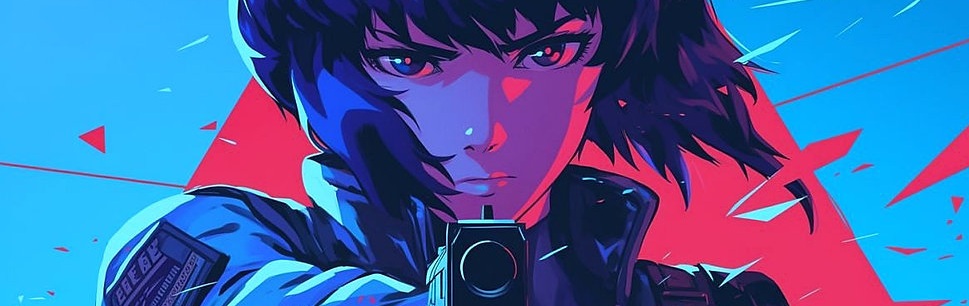
Set in a technologically advanced future where cybernetic enhancements, artificial intelligence, and digital networks are woven into everyday life, the story follows Major Motoko Kusanagi and the members of Public Security Section 9, an elite government unit investigating cybercrime, terrorism, and political conspiracies.
Over the years, the franchise has inspired numerous adaptations, each offering its own interpretation of Shirow’s work, including:
- Ghost in the Shell (1995), directed by Mamoru Oshii
- Ghost in the Shell: Stand Alone Complex (2002), directed by Kenji Kamiyama
- Ghost in the Shell 2: Innocence (2004)
- Multiple television series and OVAs
- The Hollywood live-action adaptation starring Scarlett Johansson
Together, these projects transformed Ghost in the Shell into one of Japan’s most internationally recognized anime franchises and a cornerstone of the cyberpunk genre.
Science SARU Takes a Different Direction
Rather than following the visual language established by Production I.G.’s adaptations, Science SARU intentionally returns to Masamune Shirow’s original manga.
This creative decision is immediately noticeable.
Earlier adaptations became famous for their cold, realistic aesthetics, muted color palettes, and philosophical tone. Director Mamoru Oshii’s 1995 film, in particular, focused heavily on existential questions surrounding identity, consciousness, and humanity’s relationship with technology.
The new television series moves in almost the opposite direction.
Instead of emphasizing minimalism and realism, it embraces Shirow’s energetic artwork, playful character designs, exaggerated expressions, and dense world-building.
For viewers familiar only with previous anime adaptations, the shift can initially feel surprising—even disorienting.
Returning to the Original Manga’s Personality
One of the reboot’s biggest strengths is its willingness to preserve aspects of the original manga that earlier adaptations largely softened or omitted.
In this version, Motoko Kusanagi appears younger, more expressive, and considerably more emotional than the calm, stoic Major portrayed in previous anime.
Her personality reflects Shirow’s original characterization:
- Confident
- Humorous
- Impulsive
- Occasionally crude
- Emotionally expressive
Rather than existing solely as a philosophical figure questioning the nature of consciousness, Motoko once again feels like an energetic young woman navigating an increasingly complicated technological society.
This approach creates a version of the character that is both familiar and refreshingly different.
Bright Colors in a Dark World
Perhaps the series’ most striking visual choice is its contrast between cute, almost nostalgic character designs and an often brutal narrative.
The anime depicts cybercrime, political conspiracies, terrorism, military conflicts, and violent crime, yet many scenes feature colorful artwork and playful facial expressions reminiscent of 1990s manga.
This contrast may seem unusual to viewers expecting the darker atmosphere associated with classics like Blade Runner or modern games such as Cyberpunk 2077.
However, this stylistic clash accurately reflects Masamune Shirow’s original manga, where humor, fan service, philosophical discussions, and graphic violence frequently coexist.
Rather than presenting a polished cyberpunk dystopia, the new adaptation embraces the manga’s intentionally chaotic identity.
A Product of Today’s Anime Landscape
The timing of this adaptation is particularly interesting.
In recent years, anime fans around the world have shown renewed appreciation for 1990s and early-2000s aesthetics through the growing Y2K revival.
Retro anime artwork, vintage merchandise, and classic manga-inspired character designs have become increasingly popular among younger audiences.
Styles that were once considered niche or associated exclusively with “otaku culture” are now embraced as fashionable and nostalgic.
Science SARU’s adaptation reflects this cultural shift by updating Shirow’s artwork with brighter colors while preserving its unmistakable late-1980s and early-1990s identity.
As a result, the series feels surprisingly modern despite drawing heavily from a decades-old manga.
Dense Storytelling That Challenges the Audience
Perhaps the most divisive aspect of Ghost in the Shell: THE GHOST IN THE SHELL is its storytelling approach.
Rather than simplifying the original manga for television, the series faithfully preserves Shirow’s dense narrative style.
Each episode rapidly introduces concepts involving:
- Cybersecurity
- Artificial intelligence
- Politics
- Military strategy
- Philosophy
- Advanced technology
- Human psychology
- Crime investigations
Instead of pausing to explain every concept, the anime expects viewers to actively piece together information as the story unfolds.
This creates an experience that can feel overwhelming, particularly for newcomers.
However, longtime fans of Shirow’s work may appreciate the decision to maintain the manga’s complexity rather than reducing it into a more conventional television narrative.
An Avant-Garde Adaptation Through Faithfulness
Ironically, what appears to be the most faithful adaptation of the original manga may also be the franchise’s most experimental anime.
Modern anime adaptations often streamline complicated stories, clarify lore, and reorganize events to appeal to broader audiences.
Science SARU deliberately chooses the opposite path.
By preserving the original manga’s rapid pacing, layered world-building, and abundance of unexplained details, the series creates an intentionally unconventional viewing experience.
Rather than guiding viewers through every mystery, it immerses them in a world overflowing with information and trusts them to interpret events independently.
This creative choice gives the anime an avant-garde quality rarely seen in mainstream television productions.
A New Creative Team Brings Fresh Energy
The reboot also introduces an exciting creative team.
The series marks the television directorial debut of Moko-chan, an animator known for contributing to works by acclaimed directors Masaaki Yuasa and Naoko Yamada at Science SARU.
Series composition and scripts are handled by award-winning novelist Tō EnJoe, whose background in speculative fiction complements the franchise’s intellectual themes.
Meanwhile, the music is provided by King Gnu and MILLENNIUM PARADE, led by Daiki Tsuneta, adding a contemporary musical identity that matches the anime’s experimental visual direction.
Together, the staff creates an adaptation that feels respectful of the source material while confidently establishing its own artistic identity.
Why This Reboot Matters
The new Ghost in the Shell arrives during a period when many anime studios are revisiting classic manga with greater respect for the original creators’ artistic intentions.
Rather than reinventing Shirow’s work through another philosophical reinterpretation, Science SARU attempts something arguably more daring—presenting the manga’s eccentricity almost as it originally existed.
For longtime fans, this offers an opportunity to rediscover familiar characters from a completely different perspective.
For newcomers, it provides perhaps the closest animated representation yet of Masamune Shirow’s original storytelling style.
Final Thoughts
Ghost in the Shell: THE GHOST IN THE SHELL is not trying to replace Mamoru Oshii’s iconic film or the beloved Stand Alone Complex series. Instead, it serves as a fresh interpretation that reconnects audiences with the imaginative, playful, and often overwhelming world created by Masamune Shirow more than 35 years ago.
Its vibrant visuals, unconventional storytelling, and unapologetically faithful adaptation may divide viewers, but they also make the series one of the most distinctive anime releases of 2026.
Whether it ultimately becomes another defining chapter in the franchise remains to be seen, but one thing is certain: Science SARU’s Ghost in the Shell is a bold creative experiment that invites audiences to experience one of cyberpunk’s greatest works from an entirely new perspective.