 by
by The Summer 2026 anime season has now entered its second month, giving viewers enough time to move beyond first impressions. While many series initially attracted attention with flashy visuals or intriguing premises, the strongest titles have begun revealing their deeper themes through character development and emotional storytelling.
One trend has become particularly noticeable this season: many anime focus on how people connect despite emotional barriers, personal trauma, or social differences. Rather than relying solely on romance or action, these stories explore trust, acceptance, forgiveness, and the slow process of building meaningful relationships.
Among the season’s lineup, three anime stand out for portraying these themes exceptionally well. Although each belongs to a different genre—Japanese horror comedy, family drama, and supernatural romance—they all share one central message: genuine relationships are built through empathy, understanding, and kindness.
Here are three of the best relationship-focused anime of Summer 2026.
Reiwa no Dara-san – A Unique Blend of Japanese Horror, Comedy, and Found Family
At first glance, Reiwa no Dara-san appears to be another supernatural comedy. However, beneath its humorous surface lies one of the season’s most emotionally layered stories.
The anime follows siblings Hinata and Kaoru Mitsukiya, who live in a rural town where ancient legends and supernatural folklore remain deeply rooted in everyday life. Unlike most people in the village, the two children are completely unafraid of the mysterious spirit known as Dara-san, whose true name is Madara Yakoshi.
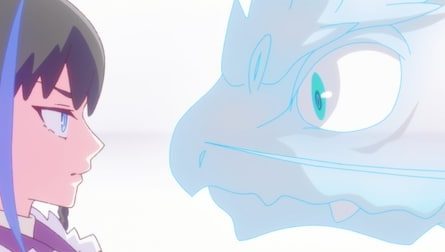
Dara’s tragic past forms the emotional core of the series. She was originally a shrine maiden who devoted her life to protecting the sacred mountain. After being betrayed by her own sister and abandoned by the villagers she tried to save, her overwhelming hatred merged with the spirit of a giant serpent, transforming her into a fearsome supernatural being seeking revenge.
Despite this terrifying origin, modern-day Dara retains much of the shrine maiden’s gentle personality. Although sealed within the mountain, she possesses surprising common sense and gradually develops an unlikely friendship with Hinata and Kaoru.
Kaoru, in particular, treats Dara without fear or prejudice. Instead of seeing a monster, she compares Dara’s snake-like appearance to fantasy creatures from smartphone games and even asks her to cosplay as one. These innocent interactions slowly break down Dara’s emotional walls and create many of the series’ funniest moments.
The supporting cast further enriches the story.
Teacher Naomichi Fudeki happily creates cosplay costumes for Dara, while neighborhood manga artist Miwa Isobe adds another layer of complexity. Although Isobe initially struggles with unhealthy feelings toward Kaoru, she consciously restrains herself and instead develops an appropriate and caring friendship, demonstrating personal growth rather than encouraging problematic behavior.
What makes Reiwa no Dara-san particularly impressive is its careful balance between comedy and horror.
The present-day scenes are filled with lighthearted humor, but the flashbacks remain genuinely disturbing, depicting betrayal, violence, revenge, and the birth of Dara as a supernatural entity. These darker moments preserve the atmosphere of traditional Japanese horror instead of turning the series into pure comedy.
The anime also respects classic horror storytelling conventions. When an occult YouTuber trespasses into the forbidden mountain searching for paranormal content, Dara refuses to save him after he becomes cursed. Moments like these remind viewers that, despite her growing affection for the siblings, she is still a dangerous supernatural being who commands fear and respect.
Rather than weakening its horror elements, the series strengthens them while simultaneously highlighting the emotional importance of Dara’s relationship with Hinata and Kaoru. Their friendship becomes meaningful precisely because it exists between a feared monster and two children who choose kindness over fear.
Why it stands out:
- Excellent balance of horror and comedy.
- Strong emotional backstory.
- Authentic Japanese folklore atmosphere.
- Memorable found-family dynamics.
- One of the most original supernatural anime of Summer 2026.
Uchi no Otouto-domo ga Sumimasen – A Gentle Family Drama About Becoming Siblings
Among this season’s relationship-focused anime, Uchi no Otouto-domo ga Sumimasen (English title: Sorry About My Little Brothers) delivers one of the warmest family stories.
The series begins when high school student Ito suddenly becomes part of the Narita household after her mother’s remarriage. Overnight, she gains four younger stepbrothers—Gen, Raku, Hiiragi, and Rui—and must learn how to become both an older sister and a new family member.
Unlike many blended-family stories that rely on constant conflict, this anime focuses on emotional realism.
Ito grew up helping her hardworking single mother after her father disappeared from their lives. As a result, she developed strong cooking, cleaning, and household skills from an early age. Determined to become a dependable older sister, she throws herself into caring for her new family.
Her efforts are awkward, imperfect, and sometimes misunderstood—but always sincere.
Each of the brothers responds differently.
- Raku and Rui quickly warm up to Ito.
- Hiiragi, who has withdrawn from society, rarely leaves his room.
- Gen, the eldest, struggles the most.
After losing his biological mother, Gen forced himself to become independent and act as the family’s emotional pillar. Because of that responsibility, he finds it difficult to rely on anyone else, especially someone who suddenly enters his life claiming the role of older sister.
Neither Ito nor Gen intentionally pushes the other away. Instead, both carry emotional scars that prevent them from expressing themselves honestly.
As the series progresses, shared meals, everyday conversations, and countless small acts of kindness gradually transform strangers into family.
One of the anime’s greatest strengths is its focus on emotional healing rather than dramatic confrontations. Every episode demonstrates how trust develops slowly through patience and mutual respect.
The story becomes even more compelling as subtle romantic feelings begin developing between Ito and Gen.
Since they are the same age and only became siblings through remarriage, their growing attraction creates emotional tension without dominating the family narrative. Neither fully understands their feelings, and both attempt to suppress them out of respect for their new family dynamic.
Originally serialized in Bessatsu Margaret, the series naturally incorporates classic shojo romance elements, including emotionally charged close interactions and carefully built romantic tension.
Rather than rushing its romance, the anime allows the family bond to develop first, making every emotional moment feel earned.
Highlights:
- Heartwarming family relationships.
- Realistic emotional growth.
- Strong female protagonist.
- Slow-burn romance.
- Excellent blend of family drama and romantic comedy.
Otome Kaijuu Caramelize – Learning to Love Yourself Before Loving Others
Another standout adaptation this season is Otome Kaijuu Caramelize, a charming supernatural romance that mixes comedy, coming-of-age themes, and emotional self-discovery.
The story centers on Kuroe Akaishi, a shy high school girl suffering from a mysterious condition that transforms her into a gigantic monster whenever her emotions become overwhelming.
To avoid exposing her secret, Kuroe isolates herself from classmates and suppresses her feelings, believing that keeping her distance is the safest way to protect everyone.
Everything changes after she meets Minami Arata, one of the school’s most popular students.
Unlike everyone else, Arata appreciates Kuroe’s honesty and straightforward personality. He also respects how naturally she accepted his own past struggles with obesity instead of judging him based on appearances.
For perhaps the first time in her life, Kuroe experiences genuine affection.
Ironically, falling in love only worsens her condition.
As her feelings for Arata grow stronger, her transformations become larger and increasingly uncontrollable. What once affected only parts of her body eventually turns her into a giant monster capable of causing chaos.
Instead of running away, Arata chooses to understand Kuroe.
Just as Kuroe once accepted his insecurities, Arata gradually learns to accept every part of her—including the frightening transformation she desperately tries to hide.
This mutual acceptance becomes the emotional heart of the story.
The anime is also supported by a colorful cast of side characters.
Yuri Manatsu, who has long admired monsters, views Kuroe as something extraordinary rather than frightening, adding another perspective on acceptance.
Meanwhile, Kono Raimu, a girl once mocked for her gorilla-like appearance, uses makeup not to hide herself completely but to become the version of herself she wants to be. Her journey parallels both Kuroe’s struggle with transformation and Arata’s experience overcoming body-image issues.
These supporting characters reinforce one of the anime’s central ideas: everyone carries insecurities, but meaningful relationships become possible when people look beyond appearances.
The series explores several universal themes, including:
- Self-acceptance.
- Body image and insecurity.
- First love.
- Emotional vulnerability.
- Identity during adolescence.
- Judging people beyond appearances.
Its combination of romantic comedy, fantasy, and emotional storytelling makes it one of the most distinctive coming-of-age anime of Summer 2026.
Final Thoughts
While Summer 2026 features plenty of action-packed adventures and fantasy epics, these three anime prove that the season’s greatest strength may be its emotionally driven storytelling.
Reiwa no Dara-san uses supernatural horror to explore friendship, forgiveness, and found family.
Uchi no Otouto-domo ga Sumimasen portrays the slow, heartfelt process of strangers becoming a real family while carefully weaving in a delicate romance.
Otome Kaijuu Caramelize reminds viewers that accepting ourselves—and allowing others to accept us—is often the first step toward genuine love.
Although each series belongs to a completely different genre, all three celebrate compassion, understanding, and human connection. Their characters stumble, misunderstand one another, and struggle with painful pasts, yet they continue reaching out instead of giving up.
For viewers looking for more than spectacle this season, these anime offer memorable emotional journeys that linger long after each episode ends. Whether you enjoy horror, family drama, or romantic fantasy, these titles demonstrate why relationship-driven storytelling continues to be one of anime’s greatest strengths.