 by
by Some anime are perfectly comfortable to watch alone, but become a completely different experience when you’re sitting next to your parents.
The problem is not always the title or promotional artwork. Sometimes an anime looks like an ordinary fantasy, school comedy, or robot series, only to suddenly introduce mature themes, provocative humor, disturbing imagery, or unexpectedly intense scenes.
That can lead to the classic situation: “Why did I choose to watch this with my parents?”
Of course, everyone has a different comfort level, and the following examples are not necessarily “bad” anime. Rather, they are memorable because their content can be very different from what a first-time viewer might expect.
Viewer discretion is advised: This article discusses mature themes, sexual content, crude humor, and disturbing imagery.
- ‘Redo of Healer’: When a Fantasy Anime Takes a Very Dark Turn
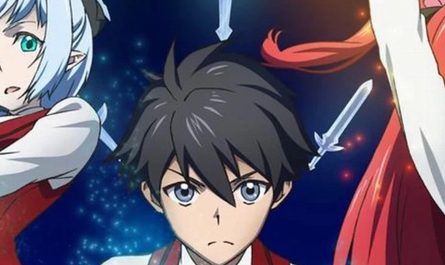
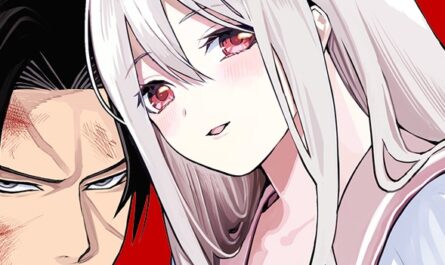
At first glance, “Redo of Healer” may look like another dark-fantasy or isekai-style anime.
The series is based on the light novel written by Rui Tsukiyo and is known for combining fantasy, revenge,ge and extremely mature material. That combination is precisely why viewers who started it without knowing anything about the series could be caught off guard.
The story follows Keyaru, a healing mage who is repeatedly exploited and abused by those around him. After discovering that his healing abilities can be used extraordinarily, he gains the opportunity to return to the past and begins pursuing revenge against those who wronged him.
That basic premise already makes the series darker than a conventional fantasy adventure. However, the anime goes considerably further.
A surprisingly mature viewing experience
“Redo of Healer” contains graphic violence, disturbing themes and explicit sexual material. Because of its content, the television broadcast and home/streaming releases were presented in different versions with varying degrees of censorship. Sources documenting the release identify three versions: a censored broadcast version, a streaming “Redo” version and a more explicit “Complete Recovery” version.
This distinction became an important part of the series’ reputation.
For someone expecting a conventional fantasy anime after seeing the title or promotional artwork, the tone can therefore come as a major surprise.
That is why this is probably the clearest example of an anime where checking the age rating and content warnings before watching is a good idea.
Why watching it with parents can become awkward.
The biggest problem is not simply that the series is violent or dark. It is the combination of revenge, mature subject matter,r and sexual content.
Watching an ordinary fantasy battle scene with your family is one thing. Watching a series suddenly move into material clearly intended for a mature audience is another.
For that reason, “Redo of Healer” is an anime that is much better suited to viewers who already know what kind of content to expect.
Bottom line: If you have never seen it before, don’t assume it is a standard isekai fantasy just because of its setting. Check the content warnings first.
- ‘Seitokai Yakuindomo’: The School Comedy That Never Stops Making Awkward Jokes
If “Redo of Healer” creates awkwardness because of its mature and dark content, “Seitokai Yakuindomo” creates a completely different kind of problem.
The series looks like a fairly ordinary school comedy.
There is a school, a student council, teenage characters, rs and plenty of everyday situations. On paper, it sounds like the kind of lighthearted anime that could easily be watched in the living room.
Then the jokes begin.
A comedy built around adult humor
“Seitokai Yakuindomo” is based on the manga by Tozen Ujiie, which began serialization in 2007 and eventually concluded in 2021. The manga’s final collected volume was released in January 2022.
The story takes place at Ousai Academy, a former girls’ school that has recently become coeducational.
The protagonist, Takatoshi Tsuda, becomes the student council vice president and quickly discovers that the members around him have very different ideas about what constitutes appropriate conversation.
Instead of relying primarily on complicated plots, the series builds its comedy around rapid-fire dialogue, misunderstandings, wordplay and deliberately crude jokes.
And that is exactly what makes it dangerous viewing material when your parents are sitting beside you.
The title doesn’t warn you enough.
One of the funniest things about “Seitokai Yakuindomo” is how innocent it can appear from the outside.
The character designs are relatively conventional. The school setting looks familiar. The story often begins with completely normal conversations.
Then a character says something that sounds innocent for approximately half a second before the joke suddenly takes a very different meaning.
That contrast is the entire appeal of the comedy.
The series frequently plays with double meanings and jokes about sexual topics without turning every scene into an explicit sequence. Instead, the humor comes from how casually the characters discuss subjects that would normally make a conversation uncomfortable.
The ‘living room test’
This is the kind of anime where the living-room test can be more stressful than the actual story.
You might be watching an ordinary school scene when a character suddenly delivers a joke that makes everyone in the room go silent.
And then you have to decide whether to laugh, pretend you didn’t hear it, or reach for the remote.
Interestingly, this is also an anime where viewers can have completely different reactions. Some people may find the humor harmless and hilarious, while others may consider the jokes too crude.
Unlike “Redo of Healer,” however, “Seitokai Yakuindomo” is fundamentally a comedy.
The awkwardness comes from its dialogue and timing rather than from graphic scenes.
Bottom line: If you want to watch it with family, be prepared for plenty of jokes that sound innocent until you understand what the characters actually mean.
- ‘Brain Powerd’: A Robot Anime With an Extremely Memorable Opening
The third example is perhaps the most unexpected.
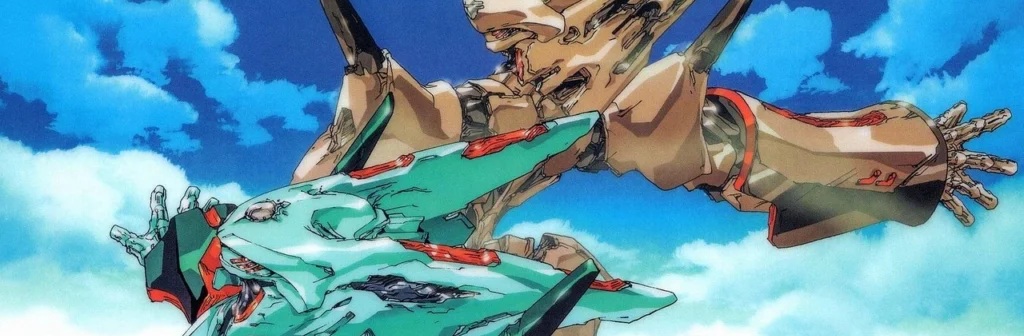
“Brain Powerd” is a 1998 original science-fiction/mecha anime directed by Yoshiyuki Tomino, the creator associated with the “Mobile Suit Gundam” franchise.
Unlike the previous two titles, this isn’t primarily an anime that viewers might avoid because of explicit comedy or mature sexual content.
Instead, its reputation in this context comes largely from its extremely memorable opening sequence.
And if you happen to play that opening while sitting next to your parents, you may find yourself wondering whether you should have skipped it.
A serious science-fiction story behind the unusual presentation
“BrainPoweredd” aired from April 8 to November 11, 1998, for a total of 26 episodes. Sunrise produced the series, with Tomino serving as director.
The story takes place on a future Earth threatened by the mysterious organic spacecraft Orphan.
The discovery of Orphan leads to the emergence of strange organic machines known as Antibodies, including the BrainPoweredd units and Grand Chers.
At the center of the story are characters such as Hime Utsumiya and Yuu Isami, who become caught up in the conflict surrounding Orphan and the forces attempting to control it.
The series combines mecha action with family conflict, environmental themes, human relationships, ps and questions about the future of Earth.
So why does it appear on a list like this?
The answer is simple: the opening.
‘IN MY DREAM’ became the real surprise
The opening theme, “IN MY DREAM,” performed by Eri Shingyoji, has become one of the most recognizable aspects of “Brain Powerd.” Sunrise’s official archive lists the song as the anime’s opening theme.
The visuals and presentation are striking enough that someone walking into the room without context might wonder what exactly you’re watching.
That contrast is what makes the experience so memorable.
You could be sitting down to watch what appears to be a serious 1990s robot anime, only for the opening to immediately create an entirely different atmosphere.
A classic Tomino production with a strange first impression
It is worth emphasizing that “BraPowerederd” is not simply a novelty.
Behind its unusual presentation is a serious science-fiction story with an elaborate setting and a cast dealing with complicated relationships.
The series was created during a period when mecha anime was experimenting with different approaches to storytelling, and Tomino’s direction gives the show a distinctive identity.
The official Sunrise archive confirms that the series has 26 episodes and credits Tomino as chief director, while also listing designers including Mutsumi Inomata and Mamoru Nagano and music by Yoko Kanno.
So if the opening makes you uncomfortable in front of your parents, don’t judge the entire series by those few minutes.
There is considerably more going on beneath the surface.
Bottom line: “Brain Powerd” is a fascinating example of an anime where the biggest surprise may come before the actual episode begins.
Why Do These Anime Feel So Awkward to Watch With Parents?
These three anime demonstrate three completely different kinds of viewing anxiety.
‘Redo of Healer’ — Mature and disturbing content
The problem is the combination of violence, revenge, and explicit sexual material. It is clearly aimed at a mature audience, and its multiple broadcast versions reflect the series’ unusually strong content.
‘Seitokai Yakuindomo’ — Unexpected crude comedy
Here, the danger is dialogue. The animation may look harmless, but the characters constantly make jokes involving adult themes and double meanings.
‘Brain Powerd’ — The unexpected opening
In this case, the awkwardness is largely about the presentation and opening sequence, rather than the same kind of explicit content found in the first two examples.
That difference is important.
An anime doesn’t have to be inherently inappropriate to become awkward when watched with family. Sometimes all it takes is a scene that is completely unexpected.
What Should You Check Before Watching an Anime With Family?
If you are planning an anime marathon with your parents, siblings,s or other family members, a little preparation can save you from an uncomfortable situation.
- Check the age rating.ng
The rating can give you a basic idea of whether an anime contains mature themes, violence, or sexual material.
- Read a spoiler-free content warning.g
You don’t need to read the entire plot. A short content guide can tell you whether an anime includes topics you would rather avoid in a family setting.
- Don’t judge an anime by its poster
A colorful poster doesn’t automatically mean a family-friendly show.
Anime can shift dramatically between comedy, drama, horror, romance,ce and mature themes.
- Be especially careful with older titles.
Older anime can have very different approaches to humor and visual presentation compared with current mainstream series.
“Brain Powerd,” for example, comes from 1998 and reflects the creative style of that era.
- When in doubt, watch the first episode alone
This is probably the safest option.
If you aren’t sure what kind of anime you’re dealing with, watch it privately first. You can then decide whether it is appropriate for a family viewing session.
Final Thoughts
There is nothing wrong with enjoying anime that contains mature themes, dark storytelling, or provocative comedy. The important thing is knowing what you are about to watch.
“Redo of Healer,” “Seitokai Yakuindomo” and “Brain Powerd” demonstrate three different ways an anime can catch an unsuspecting viewer off guard.
One is infamous for its extremely mature content. Another hides crude comedy behind an innocent-looking school setting. The third is a serious science-fiction/mecha series whose opening has become almost as memorable as the show itself.
So before starting an unfamiliar anime on the big screen in the living room, take a few seconds to check its genre, age rating, and content warnings.
Because sometimes the biggest plot twist isn’t in the anime.