 by
by The controversy surrounding the TV anime “Yani Neko” has spread beyond Hong Kong, with the series now reportedly being removed from streaming services in Taiwan over concerns about its frequent depictions of smoking and the appearance of real cigarette brands.
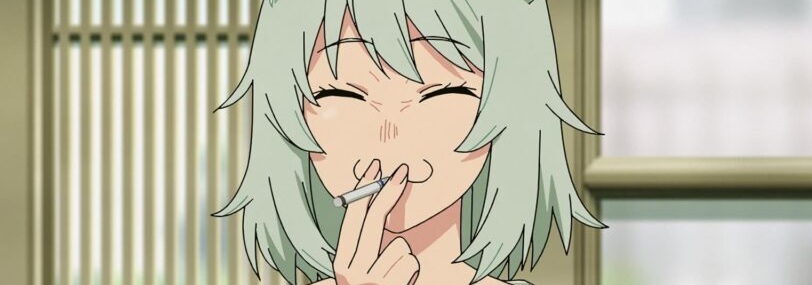
The anime, which began airing in Japan in July 2026, has attracted attention for its unusual combination of cute beastman characters, dark comedy, messy everyday life, and heavily exaggerated smoking scenes. However, those same elements have become the subject of criticism in several regions.
Following the suspension of the series in Hong Kong, Taiwanese streaming platforms also announced that they would stop distributing “Yani Neko.” The decision has prompted a strong response from some local viewers and creative-industry groups, who argue that depicting cigarettes in a fictional work should not automatically mean that the work is a tobacco advertisement.
The controversy has therefore developed into a wider discussion about tobacco regulations, creative freedom, age restrictions, and how fictional smoking scenes should be treated under local law.
Why Was “Yani Neko” Removed From Taiwan?
The issue reportedly began after an anti-smoking organization raised concerns about the anime’s repeated smoking scenes and the inclusion of recognizable cigarette brands.
The group reportedly asked relevant authorities to investigate whether the anime violated Taiwan’s Tobacco Hazards Prevention Act.
Taiwanese health authorities subsequently indicated that, if the work were determined to violate local tobacco regulations, the streaming service could potentially face a fine of up to NT$1 million.
Following the authorities’ response, Taiwanese streaming platforms, including Bahamut Animation Crazy (Anime1/Bahamut) and other services, announced that distribution of the anime would be terminated or suspended.
The decision came after the series had already faced a similar situation in Hong Kong, where its availability was also reportedly suspended following concerns about smoking-related content.
As a result, the controversy has attracted particular attention among anime fans in the Traditional Chinese-speaking market, where viewers have been debating whether the response is proportionate to the content shown in the series.
Critics Focus on the Repeated Smoking Scenes
The central concern is not simply that “Yani Neko” contains a character who smokes.
Smoking is a recurring part of the protagonist’s personality and daily routine.
The main character, Yani Neko, is a beastman who lives a highly disorganized lifestyle. Cigarettes are frequently incorporated into his everyday activities, and the anime often uses smoking as part of its comedy and characterization.
In several episodes, Yani Neko is shown smoking in inappropriate places, struggling financially because of his habits, searching for discarded cigarette butts, and generally living in an unhealthy and unhygienic environment.
Real cigarette brands have also reportedly appeared in the series.
For critics, the repeated visibility of cigarettes and recognizable branding raises concerns that younger viewers could perceive smoking as normal or entertaining.
This is particularly significant because anime can reach large audiences, including younger viewers, and tobacco regulations in many regions place strict limits on how tobacco products can be promoted or displayed.
Supporters Say the Anime Is Not Promoting Smoking
On the other hand, supporters of “Yani Neko” argue that the anime’s portrayal of smoking is far from glamorous.
Instead of presenting cigarettes as sophisticated, fashionable, or aspirational, the series frequently depicts the negative consequences of the protagonist’s lifestyle.
Yani Neko is not portrayed as a successful character because he smokes.
Quite the opposite.
His smoking habit is connected to his financial difficulties, poor living conditions, unhealthy behavior, and generally chaotic lifestyle.
He sometimes struggles to afford cigarettes, falls behind on rent, and even resorts to picking up cigarette butts.
The anime also exaggerates the unpleasant aspects of his environment. His room is portrayed as dirty and filled with cigarette smoke, reinforcing the idea that his lifestyle is far from ideal.
Because of this, some viewers have argued that the series can actually be interpreted as a form of dark comedy about addiction rather than tobacco promotion.
Some fans have even jokingly described the anime as an “anti-smoking guide,” pointing out that the protagonist’s lifestyle is so unhealthy and unpleasant that it hardly resembles an advertisement for cigarettes.
Taiwanese Creators’ Group Objects to the Suspension
The suspension has also prompted a response from the Taiwanese creative community.
The ACGN (Association for the Promotion of Creative Rights) issued a statement criticizing the decision and calling for the request to suspend distribution to be reconsidered.
The group argued that tobacco-related laws primarily regulate the advertising and promotion of tobacco products, and that the mere appearance of cigarettes or cigarette brands in a fictional work does not automatically establish that the work is a commercial advertisement.
According to this position, authorities should examine the circumstances of each case.
For example, they could consider whether there is a financial relationship between the anime and a tobacco company, whether the tobacco company paid for product placement, and whether the scene is actually intended to encourage tobacco consumption.
The group argued that these questions should be distinguished from the simple presence of cigarettes within a fictional story.
Is Showing a Cigarette the Same as Advertising It?
This has become one of the biggest questions surrounding the controversy.
From a creative perspective, cigarettes can be used as part of a character’s personality, setting, or storytelling.
A character may smoke because the creator wants to portray addiction, stress, rebellion, poverty, or a particular period or environment.
In “Yani Neko,” supporters argue that smoking is part of the protagonist’s characterization and is frequently presented alongside unpleasant consequences.
However, tobacco regulations may take a broader approach, particularly when recognizable brands are shown.
That creates a difficult balance.
A regulator may be concerned about the potential influence of branded imagery on viewers, while creators may argue that removing every recognizable product from fictional works could interfere with storytelling and artistic expression.
The “Yani Neko” dispute highlights precisely this tension.
The Anime’s Unusual Portrayal of Smoking
Another important point is the way “Yani Neko” uses smoking for comedy.
The series often takes ordinary situations and pushes them to absurd extremes.
Yani Neko’s smoking habit is therefore not treated as a realistic lifestyle alone. It is also used as a recurring source of jokes and visual comedy.
This approach has produced scenes that some viewers find hilarious, and others find uncomfortable.
For fans, the exaggerated nature of the comedy makes it clear that the anime is not seriously telling viewers to smoke.
For critics, however, repeated exposure to smoking imagery can still be a concern regardless of whether the presentation is intended as satire.
This difference in interpretation is one reason the debate has become so divided.
Age Restrictions Have Also Become Part of the Debate
The discussion has also raised questions about how anime containing smoking and other mature material should be handled when minors can access it.
The Taiwanese creators’ group reportedly acknowledged that age restrictions can be considered as one possible approach.
Supporters of the anime argue that age classification, content warnings, editing, or restrictions on access by younger viewers could potentially address concerns without completely removing the series from streaming platforms.
Critics, meanwhile, may argue that warnings alone are not sufficient when real tobacco brands are repeatedly visible.
The issue therefore goes beyond whether the anime should simply be available or unavailable.
It raises the larger question of whether streaming platforms should use tools such as age ratings, content warnings, brand blurring, or region-specific edits when local regulations differ from those in Japan.
Could “Yani Neko” Return to Taiwanese Streaming Services?
According to reports surrounding the controversy, one possible path toward resuming distribution could involve blurring or obscuring cigarette brand names and adding the warning information required under Taiwanese regulations.
If such changes are accepted by the relevant authorities, streaming platforms could potentially reconsider the suspension.
However, the precise outcome depends on the interpretation and enforcement of local tobacco laws.
At the time of the reported controversy, the situation remained a matter of discussion between regulators, platforms, and the creative community.
Therefore, viewers should distinguish between confirmed distribution decisions and proposals for how the anime might potentially return.
The Hong Kong Situation Added to the Controversy
Taiwan’s decision has received additional attention because it followed the earlier removal of “Yani Neko” from streaming services in Hong Kong.
The two incidents have made the anime a particularly prominent example of the difficulties Japanese anime can face when distributed internationally.
A work that is acceptable for broadcast in Japan may encounter different requirements in another country or region.
This is not unusual in global entertainment.
Different territories have different rules regarding violence, sexuality, tobacco, alcohol, political material, and advertising.
However, the “Yani Neko” case is notable because the controversy centers on a fictional character’s repeated smoking rather than on an explicit tobacco advertising campaign.
Fans Question Whether Authorities Watched the Entire Anime
Some Taiwanese viewers have also questioned whether the authorities or organizations raising concerns considered the anime’s full context.
Supporters point to the fact that Yani Neko’s smoking is frequently accompanied by negative consequences.
The protagonist is not portrayed as someone whose life improves because of cigarettes. Instead, smoking is intertwined with his chaotic and sometimes miserable existence.
That has led some fans to argue that removing the anime without considering its overall tone may result in an incomplete interpretation of the work.
Some viewers have even joked that the series is so effective at showing the unpleasant side of smoking that it could discourage people from trying cigarettes.
Of course, whether an audience interprets the depiction as satire, normalization, or something in between can vary considerably.
A Bigger Debate About Creative Freedom
The controversy has now moved beyond “Yani Neko” itself.
At its heart is a broader question:
How should governments regulate fictional depictions of legally restricted products without unnecessarily limiting artistic expression?
There is a clear public-health argument for controlling tobacco promotion, particularly when children and teenagers may be exposed to persuasive imagery.
At the same time, fictional storytelling often includes characters who engage in unhealthy, illegal, or morally questionable behavior.
Showing a behavior does not necessarily mean endorsing it.
The challenge for regulators is therefore determining where the line between depiction and promotion should be drawn.
The anime’s situation illustrates how complicated that line can become when recognizable commercial brands are involved.
“Yani Neko” Continues to Attract Attention
Despite the controversy, “Yani Neko” remains a highly discussed anime.
The series is based on the manga by Nyannyan Factory and is set in a world where humans and beastmen coexist.
Its story follows Yani Neko and other eccentric beastmen living in the same apartment building. The series combines cute character designs with crude humor, unhealthy habits, chaotic relationships, and unexpectedly emotional moments.
That unusual combination has become one of its defining characteristics.
The anime has attracted both enthusiastic fans and viewers who find its content too extreme.
The overseas controversy has now added another layer to its growing profile.
What Happens Next?
The next stage of the dispute will likely depend on how Taiwanese authorities and streaming platforms interpret the country’s tobacco regulations.
Several possible outcomes remain:
- The anime could remain unavailable in Taiwan if the relevant content is considered a violation.
- Cigarette brands could be blurred or removed from the Taiwanese version.
- Warning labels or age restrictions could be introduced.
- The series could return after regulatory review if it is determined that the content does not constitute tobacco advertising.
- Further discussion between creators, platforms, and regulators could lead to clearer guidelines for fictional works containing tobacco imagery.
For now, the controversy remains an important example of the challenges faced by anime creators and distributors in an increasingly global streaming market.
The removal of “Yani Neko” from Taiwanese streaming platforms has sparked a complicated debate that goes far beyond one anime.
Critics are concerned that repeated smoking scenes and recognizable cigarette brands could normalize tobacco use or violate local regulations. Supporters, however, argue that the anime portrays smoking as part of an intentionally unhealthy and exaggerated lifestyle rather than presenting it as something desirable.
The Taiwanese creative community has also raised concerns about the potential impact of the decision on creative freedom, arguing that fictional depictions should be evaluated based on context and whether there is an actual connection to tobacco advertising.
At the same time, the concerns about minors and tobacco exposure cannot simply be dismissed.
The dispute ultimately raises an important question for the modern anime industry: when a fictional work depicts an unhealthy behavior, where should the boundary between artistic expression, public-health protection, and commercial advertising be drawn?
As Japanese anime continues to reach audiences around the world, similar questions are likely to become increasingly important. The future availability of “Yani Neko” in Taiwan and other regions may depend not only on this particular case but also on how regulators and streaming services approach tobacco-related imagery in fictional entertainment more broadly.