 by
by Why did My Neighbor Totoro become one of Japan’s most beloved anime films? From its unusual early concepts and carefully chosen voice cast to its nostalgic rural landscapes, the film’s enduring appeal comes from details that are easy to overlook.
Studio Ghibli’s My Neighbor Totoro is often described as one of the defining films of Japanese animation. Released in 1988, the movie initially stood apart from the large-scale fantasy adventures that audiences might have expected from Hayao Miyazaki.
There is no traditional villain, no massive final battle, and no complicated fantasy mythology that needs to be explained to the audience. Instead, the film follows sisters Satsuki and Mei Kusakabe as they move to the countryside with their father while their mother recovers in hospital.
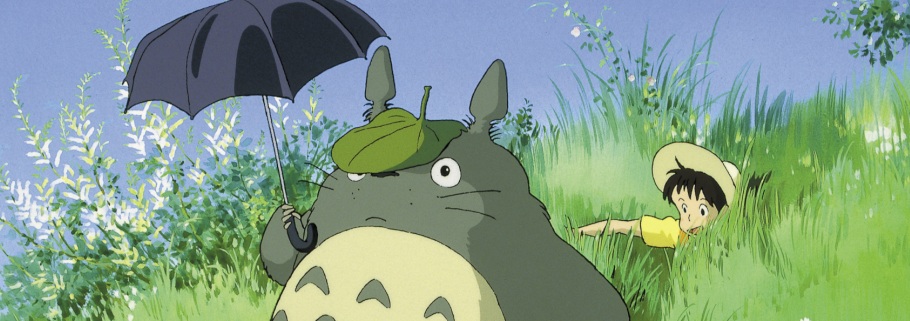
Their encounters with the mysterious forest spirits, particularly the enormous creature known as Totoro, gradually transform an ordinary childhood summer into something magical.
More than three decades later, the film remains popular in Japan and around the world. Its characters have become instantly recognizable, Totoro has become an unofficial symbol of Studio Ghibli, and the film continues to attract new generations of viewers.
But the road to that iconic version of My Neighbor Totoro was not necessarily straightforward.
Several early ideas and approaches were considered before the film reached its final form. Looking back at its production also reveals why the movie’s seemingly simple story, distinctive voices and realistic rural setting became such a powerful combination.
My Neighbor Totoro Was Different From Typical Anime Adventures
One of the first things that makes My Neighbor Totoro unusual is its lack of conventional action.
Before the film’s release, Studio Ghibli had already become associated with ambitious animated adventures such as Nausicaä of the Valley of the Wind and Castle in the Sky.
Those movies featured larger conflicts, dangerous enemies, dramatic journeys, and expansive fantasy worlds.
My Neighbor Totoro took a much quieter approach.
The central conflict is largely emotional rather than physical. Satsuki and Mei are trying to adjust to a new home while worrying about their hospitalized mother. Their father, Tatsuo, attempts to make the transition enjoyable, while the children explore the unfamiliar countryside.
The supernatural elements are woven into this everyday life rather than replacing it.
That decision became one of the film’s greatest strengths.
Totoro does not need a long explanation. The audience is simply allowed to experience the character from the perspective of children who accept the mysterious creature as part of their world.
Shigesato Itoi’s Simple, Unpolished Voice Became Part of the Film’s Charm
Another fascinating aspect of My Neighbor Totoro is its voice cast.
Satsuki is voiced by Noriko Hidaka, while Mei is voiced by Chika Sakamoto. Their performances capture the different personalities of the two sisters particularly well.
Satsuki is older and more responsible, often attempting to behave like a mature member of the family. Mei, meanwhile, is much younger and more impulsive, expressing her emotions openly and approaching the world with pure curiosity.
Their voices help make the sisters feel like real children rather than overly polished anime characters.
However, one of the most memorable casting choices was Shigesato Itoi, who voices their father, Tatsuo Kusakabe.
Itoi was not primarily known as a professional actor. He was already an influential copywriter and writer, but voice acting was outside his usual field.
The role was reportedly originally intended for actor Issei Ogata, but Itoi became involved after being recommended for the part.
His performance is noticeably different from the highly polished work of professional voice actors.
Yet that is precisely what makes it effective.
Tatsuo is an ordinary father and university researcher rather than a larger-than-life anime hero. Itoi’s natural, conversational delivery gives him a relaxed quality that fits the character.
Instead of sounding like a conventional animated character, Tatsuo often sounds like an actual father speaking to his children.
That understated quality contributes significantly to the film’s realism.
Itoi’s Connection to Studio Ghibli Continued Beyond Totoro
My Neighbor Totoro also became an important milestone in Itoi’s career as a voice performer.
He later became widely known through Hobonichi, including the popular Hobonichi Techo brand and the website Hobo Nikkan Itoi Shinbun.
His association with Studio Ghibli also continued through copywriting work connected to the studio and its films.
This makes his involvement in Totoro particularly interesting: the casting decision was not simply about finding another famous actor.
It helped give Tatsuo a very ordinary, believable voice that suited the film’s deliberately naturalistic atmosphere.
The Film’s Other Memorable Voices
Another important performance comes from Tanie Kitabayashi, who voices Kanta’s grandmother.
Kitabayashi was an accomplished actress and was particularly beloved for her portrayal of older characters.
Her voice gives Kanta’s grandmother a distinctive personality. She does not feel like a generic “old woman” character; instead, her speech patterns and intonation make her feel like someone who genuinely belongs to the rural community.
Meanwhile, Sumi Shimamoto voices Satsuki and Mei’s mother.
Shimamoto was already famous among anime audiences for voicing Nausicaä in Nausicaä of the Valley of the Wind.
Her warm and gentle performance creates an important emotional counterpoint to the children’s energetic voices.
Even though the mother spends much of the story away from home because of her illness, her presence remains important throughout the film.
The World of Totoro Is Seen Through Children’s Eyes
Perhaps the greatest strength of My Neighbor Totoro is its visual storytelling.
The film does not simply show a rural landscape.
It shows the countryside as Satsuki and Mei experience it.
This distinction is extremely important.
For adults, a large tree may simply be a large tree.
For a child, the same tree can look enormous, ancient and almost magical.
This is particularly clear in the early scenes after the family moves into their new home.
The huge camphor tree behind the house dominates the landscape. Its scale immediately establishes a sense of mystery and wonder.
The tree is not introduced through an elaborate explanation.
Instead, its size and presence tell the audience that this is a place where something extraordinary may exist.
Ordinary Details Make the Fantasy Feel Real
Miyazaki’s film is filled with small everyday details.
The family explores the new house. The children run through fields. They discover dust-like creatures. They ride bicycles and walk along rural roads.
There are no lengthy explanations about how this world works.
The supernatural and ordinary simply exist side by side.
This approach makes Totoro’s appearance feel more believable.
The audience first encounters strange creatures almost casually, just as children might discover something mysterious while exploring an unfamiliar house.
The film therefore does not ask viewers to understand the fantasy.
It asks them to feel it.
The Telegram Scene Changes the Film’s Atmosphere
One of the most striking changes in tone comes when the family receives troubling news from the hospital.
Until this point, much of the film has been filled with sunlight, exploration,n and childhood excitement.
Then the atmosphere changes.
The emotional uncertainty surrounding the mother’s health begins to weigh more heavily on Satsuki and Mei.
The visual composition reflects this shift.
Longer shots and greater physical distance between the characters emphasize their loneliness.
Rather than relying on dramatic music or exaggerated expressions, the film allows silence, background sounds, ds and composition to communicate the children’s anxiety.
This is one reason My Neighbor Totoro can feel emotionally powerful despite having relatively little conventional action.
The Sound of Summer Is Almost a Character
Sound plays a major role in creating the film’s atmosphere.
The constant chirping of cicadas immediately evokes a hot Japanese summer.
For viewers familiar with rural Japan, the sound can be intensely nostalgic.
For international audiences, it helps establish the setting even if they have never experienced a Japanese summer themselves.
The film also uses quieter moments effectively.
The sound of footsteps, insects, wind, and everyday household activity helps create the feeling that the characters are actually living in this environment.
Instead of constantly filling the soundtrack with dramatic music, the film allows the environment to breathe.
That realism makes the fantasy feel more convincing.
Kazuo Oga’s Background Art Helped Define the Film
The rural setting would not have been nearly as memorable without the work of Kazuo Oga, the film’s art director.
Oga drew inspiration from the landscapes of Akita Prefecture, where he grew up, to help create the rural atmosphere.
The result is a countryside that feels both realistic and nostalgic.
The houses, forests, fields, and roads are carefully designed, but they are not presented as an idealized fantasy landscape.
There is dirt.
There are old buildings.
There are dark corners.
There are overgrown areas and uneven paths.
These imperfections make the world believable.
The Kusakabe family’s house is particularly memorable because it feels like a real old Japanese home rather than a generic anime setting.
The Forest Is Both Beautiful and Mysterious
The forest surrounding Totoro’s home is another major achievement.
For Mei and Satsuki, the forest is simultaneously exciting and intimidating.
The deeper they go, the less familiar the environment becomes.
The enormous trees and darkness create the feeling that the forest belongs to something much older than the human world.
Totoro’s presence therefore feels natural.
He does not appear as an alien creature invading the children’s world.
He feels like a guardian or resident of a part of nature that humans only occasionally encounter.
This is one of the reasons Totoro remains such an iconic character.
His appeal does not depend on a complicated backstory.
His mystery is part of his charm.
Kazuo Oga Became an Important Ghibli Background Artist
Oga’s contribution to My Neighbor Totoro also marked an important point in his career.
He later worked on the background art of other major Studio Ghibli productions, including Only Yesterday, Pom Poko, and Princess Mononoke.
His approach helped establish a recognizable Ghibli tradition of creating fantasy worlds that are grounded in believable natural environments.
Even when the story becomes supernatural, the grass still looks like grass, the trees look like real trees,s and the houses feel lived in.
That visual philosophy became one of the studio’s defining strengths.
Why Did My Neighbor Totoro Become a “National Anime”?
The phrase “national anime” is sometimes used in Japan for works that become deeply embedded in popular culture.
My Neighbor Totoro fits that description remarkably well.
Its appeal extends beyond anime fans.
Children enjoy Mei’s energetic personality and Totoro’s adorable appearance.
Adults can appreciate the nostalgic depiction of rural Japan and the story’s themes of family and childhood.
Older viewers may connect with the film’s depiction of a Japan that has changed significantly over the decades.
International audiences, meanwhile, can appreciate the universal emotions of siblings discovering a new world and worrying about their family.
The story is simple enough for children to understand, but its visual and emotional details give adults plenty to interpret.
The “Rejected Settings” Help Explain the Final Film’s Strength
Some early concepts and discarded ideas surrounding My Neighbor Totoro demonstrate how much the final movie evolved during development.
The film’s production involved changes to its character structure, story direction and presentation before arriving at the version audiences know today.
One particularly important consideration was the relationship between the sisters and the way their ages and personalities would function within the story.
The final decision to make Satsuki and Mei sisters of different ages was crucial.
Their relationship creates a natural emotional contrast.
Satsuki is old enough to understand that something may be wrong with their mother, while Mei is young enough to interpret the world more literally.
That difference drives much of the emotional tension.
It also allows the audience to experience the same environment from two different perspectives.
Totoro Was Never Just About a Cute Mascot
Today, Totoro is one of the most recognizable characters associated with Japanese animation.
However, reducing the film to “a cute movie about a giant forest creature” misses much of what makes it special.
Totoro represents mystery, nature, re and childhood imagination.
He does not solve every problem.
He does not defeat an enemy.
He does not explain the universe.
Instead, he exists as part of the children’s experience.
That is why his famous bus-stop scene remains so memorable.
The image of Satsuki and Mei waiting in the rain, followed by Totoro silently appearing beside them, is powerful precisely because the film does not over-explain the moment.
It simply allows the audience to experience it.
A Film That Still Feels Fresh Decades Later
More than 35 years after its release, My Neighbor Totoro continues to feel surprisingly modern.
Part of that is because the film does not rely heavily on technology or contemporary trends.
Its central themes—family, childhood, imagination, fear, and nature—are timeless.
The movie also trusts its audience.
It does not explain every mystery.
It does not tell viewers exactly what Totoro represents.
Instead, it leaves room for individual interpretation.
That openness may be one of the main reasons the film continues to resonate with new generations.
Final Thoughts
My Neighbor Totoro became a beloved Studio Ghibli classic not because of a complicated plot, but because of how carefully it portrays ordinary life.
The naturalistic voice performances, especially Shigesato Itoi’s understated portrayal of Tatsuo, give the characters a sense of authenticity. The work of Kazuo Oga turns the Japanese countryside into a vivid character of its own, while Hayao Miyazaki’s direction allows childhood imagination and everyday reality to exist side by side.
From the enormous camphor tree and cicada-filled summer air to the quiet tension surrounding the children’s mother, almost every detail contributes to the film’s atmosphere.
That is ultimately why My Neighbor Totoro has endured.
It is not simply a fantasy about a mysterious creature.
It is a story about seeing the world through children’s eyes—and remembering how enormous, mysterious, and magical ordinary life once felt.