 by
The legendary Seigaku match finally returns as Fuji and Ryoma face off again in the U-17 World Cup selection tournament.
The autumn 2026 anime season is bringing an unforgettable moment to longtime The Prince of Tennis fans. The New Prince of Tennis U-17 WORLD CUP: Final Member Selection Match is currently airing, and its upcoming episode is drawing particular attention for a highly anticipated showdown between two fan-favorite characters: Fuji Shusuke and Echizen Ryoma.
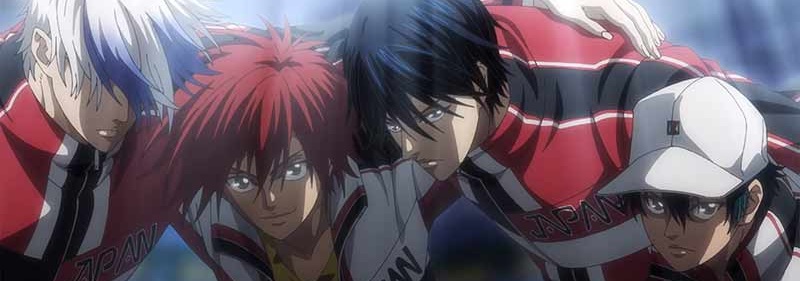
The TV anime began airing on September 30, 2026, on TV Tokyo and other Japanese television channels. This new installment focuses on the intense competition within Japan’s U-17 national team, as players fight to secure the remaining positions in the lineup for the World Cup final against Spain.
Among the many matches taking place during the selection tournament, the battle between Fuji and Ryoma stands out because of its emotional history. Their rivalry goes all the way back to the original The Prince of Tennis anime, and fans have been waiting years to see their interrupted match finally receive a proper conclusion.
For longtime viewers, this matchup is more than just another tennis battle. It is a chance to revisit a memorable moment from the early days of the series while seeing how much both players have changed since their days at Seigaku.
Warning: The following article contains spoilers and discussion of character development, tennis techniques, and events from the original anime and manga.
Episode 8: ‘Aiming Only for Victory’ The Final Selection Matches Begin
The final member selection tournament is entering a critical stage. With Japan preparing for the U-17 World Cup final against Spain, the national team must determine which players will represent the country on the court.
The selection matches are divided into five categories: three singles matches and two doubles matches. Every player must demonstrate their abilities, tactical understanding, and determination if they hope to earn a place in the final lineup.
Episode 8, titled “Aiming Only for Victory,” brings the third round of matches across the courts, with several important rivalries reaching their next stage.
In Doubles Two (D2), Kintaro challenges Shiraishi, who reminds him to take doubles seriously and understand the responsibilities of playing as a team. The match is expected to test Kintaro’s enthusiasm and raw talent against the experience and discipline of his opponent.
Meanwhile, Doubles One (D1) sees Ochi and Mouri take on the mysterious Masked Men H and J. Their match adds another layer of uncertainty to the selection tournament, as the players must overcome unfamiliar opponents while proving that they deserve a place in the final.
Singles One (S1) features Duke against Tokugawa. Duke carries the expectations and wishes entrusted to him by Byodoin, making this match especially important for the Japanese team.
Singles Three (S3) brings Atobe and Irie together for a rivalry that has been building since their time at the training camp. Both players have their own pride, strategies, and reasons for wanting to win, making their confrontation another major highlight of the episode.
However, the most anticipated match is Singles Two (S2), where Ryoma faces Fuji in a battle that fans have wanted to see completed for years.
Fuji Shusuke vs. Echizen Ryoma: A Rivalry 24 Years in the Making
The biggest attraction of this episode is the long-awaited rematch between Fuji Shusuke and Echizen Ryoma.
Their first memorable anime confrontation dates back to Episode 40 of the original The Prince of Tennis, titled “Duel in the Rain,” which aired in 2002.
At the time, the two players faced each other during a practice match before the Tokyo Metropolitan Tournament. Fuji was leading 4–3 when heavy rain forced the match to stop following an order from Coach Sumire Ryuzaki.
The match ended without a proper winner.
Fuji calmly accepted the interruption, telling Ryoma that their match was simply on hold. Ryoma, however, was clearly frustrated. He had been unable to finish the battle on his own terms, leaving their rivalry unresolved.
For fans who watched the original series during its early broadcast, that scene became a memorable moment. Fuji was already known as Seigaku’s talented and mysterious player, while Ryoma was the ambitious newcomer determined to challenge anyone standing in his way.
Their interrupted match represented more than a simple practice game. It showed the difference between Fuji’s calm confidence and Ryoma’s competitive determination.
Now, approximately 24 years after that episode first aired, the rivalry is returning in the U-17 World Cup Final Member Selection Match.
The setting has changed dramatically. The two are no longer simply teammates competing during a school practice session. They are now experienced players fighting for a place in an international tournament final.
This time, there is much more at stake—and neither player can afford to hold back.
Fuji Shusuke’s Growth: From a Natural Genius to a Player With His Own Purpose
Fuji has always been regarded as one of the most talented players in The Prince of Tennis. His calm personality, sharp instincts, and unusual techniques earned him the nickname “Genius Fuji.”
However, his character development is much more complicated than simply being naturally gifted.
For much of his earlier journey, Fuji’s tennis was connected to his relationship with Kunimitsu Tezuka, Seigaku’s captain and one of the strongest players in the series. Tezuka’s discipline, determination, and overwhelming ability became a standard against which Fuji often measured himself.
Fuji admired Tezuka, but that admiration also created a personal challenge. He had to discover whether he was truly playing tennis for himself or simply trying to reach the level of someone he respected.
His experiences gradually changed his perspective.
Facing stronger opponents, witnessing the development of his teammates, and seeing Tezuka’s journey helped Fuji understand that talent alone was not enough. He needed to develop his own ambition and decide what kind of player he wanted to become.
The U-17 training camp became an important turning point. Fuji began confronting opponents who could challenge his abilities in ways that he had not experienced before. Instead of relying entirely on his natural talent, he started pushing himself toward a higher level of tennis.
His match against Ryoma therefore carries emotional significance. Ryoma represents a player who has continued to grow through competition, challenges, and an endless desire to improve.
For Fuji, this match is an opportunity to prove that he has developed beyond the player he once was.
The Awakening of Fuji’s Tennis
Fuji’s development becomes particularly interesting when he begins confronting opponents who possess extraordinary abilities.
His tennis has traditionally relied on carefully controlled counterattacks, deceptive shots, and the ability to read his opponent’s movements. Rather than overwhelming opponents through raw power, Fuji often uses their own attacks against them.
His famous Triple Counters are among the most recognizable techniques in the series:
- Swallow Return – A counter that sends a powerful shot back with a difficult trajectory.
- Bear Drop – A deceptive counter that challenges the opponent’s ability to react and return the ball.
- White Whale – A counter designed to create an unusual trajectory and force the opponent into a difficult position.
As Fuji progresses, his techniques become increasingly complex. He develops additional counters and begins exploring new possibilities within his style of tennis.
His later techniques include Mayfly Wrap, Hecatoncheires Gatekeeper, and Star Fireworks, further demonstrating how much his game has evolved.
These techniques are not simply flashy attacks. They reflect Fuji’s ability to observe, adapt, and use the opponent’s weaknesses against them.
Against a player like Ryoma, however, Fuji cannot rely on the same strategies indefinitely. Ryoma is highly adaptable and capable of finding ways to counter unusual techniques after experiencing them firsthand.
This makes the match particularly exciting: both players have the ability to change their strategies in the middle of a rally.
Ryoma Echizen: The Challenger Who Never Stops Improving
Ryoma Echizen has always been defined by his competitive spirit.
From the beginning of The Prince of Tennis, he has challenged opponents regardless of their reputation. His confidence, sharp instincts, and determination to win have made him one of the most recognizable characters in sports anime.
Although Ryoma initially appears arrogant and uninterested in anything other than winning, his character gradually develops through his relationships with teammates, rivals, and stronger opponents.
His journey is not simply about becoming the best tennis player. It is also about discovering what tennis means to him and learning how to push beyond his own limitations.
The U-17 World Cup arc places Ryoma among some of the strongest players in the world. His experience against international opponents has changed the way he approaches matches.
Instead of relying only on his familiar techniques, he must constantly adapt, experiment, and develop new ways to overcome opponents.
His confrontation with Fuji is therefore an important test.
Fuji is not merely a former teammate. He is someone Ryoma has admired, challenged, and wanted to defeat. Their rivalry combines familiarity with uncertainty, because both players have grown considerably since their earlier encounters.
Ryoma’s Techniques and His Ability to Adapt
One of Ryoma’s greatest strengths is his ability to learn from what happens during a match.
His Super Drive B is one of his well-known techniques, combining speed, spin, and precision to create difficult shots for his opponents.
Against Fuji, Ryoma must deal with the unpredictable movement and spin of Fuji’s counterattacks. Simply returning the ball may not be enough. He must understand the trajectory, timing, and effects of each shot before finding a way to neutralize it.
This is what makes Ryoma such a dangerous opponent.
Even when he appears to be losing control of a match, he can suddenly discover a new strategy or use an existing technique in a different way. His ability to adjust during a rally allows him to remain competitive against players who initially seem far stronger.
The matchup against Fuji is expected to highlight this quality, as both players attempt to outthink and outmaneuver one another.
The Significance of Tezuka’s Influence
Fuji’s relationship with Kunimitsu Tezuka remains an important part of his character development.
Tezuka has always represented discipline, responsibility, and an extraordinary commitment to tennis. As Seigaku’s captain, he placed the team’s goals above his personal ambitions and inspired his teammates to improve.
Fuji’s admiration for Tezuka was partly rooted in his understanding of Tezuka’s strength. However, as Fuji grew, he began to realize that he could not simply follow another player’s path.
He needed to develop his own identity.
This shift is one of the most meaningful aspects of Fuji’s development. His awakening is not simply about gaining stronger techniques. It is about finding the motivation to compete for himself and embracing tennis as something he genuinely loves.
The match against Ryoma represents an opportunity for Fuji to demonstrate that transformation.
Rather than measuring himself against Tezuka, Fuji can now face Ryoma as an individual player with his own goals, abilities, and determination.
The Emotional Importance of the Rain
The rain is an important visual and emotional symbol in the history of Fuji and Ryoma’s rivalry.
Their first match was interrupted because of the weather. The rain prevented the two players from finishing their game, leaving the outcome unresolved.
In the upcoming rematch, the weather once again becomes part of the story.
As the match approaches its climax, rain begins falling across the court, recalling the circumstances of their earlier confrontation.
The atmosphere immediately becomes more nostalgic for viewers who remember the original episode.
Ryoma asks whether Fuji intends to run away again, echoing their earlier confrontation. Fuji responds that they can still play in the light rain.
Ryoma then switches his racket to his right hand and prepares to use a twist serve, recreating another memorable element of their previous encounter.
The scene connects the past and present in a way that feels meaningful rather than simply nostalgic.
The players are no longer the same boys who competed at Seigaku. Their skills have evolved, their experiences have expanded, and their ambitions have become much larger.
Yet the emotional foundation of their rivalry remains unchanged.
A Battle of Techniques, Psychology, and Determination
The Fuji vs. Ryoma match is expected to deliver more than an exchange of powerful shots.
Both players possess techniques that can change the direction of a match, but their greatest strength may be their ability to read their opponents.
Fuji relies on observation, deception, and carefully timed counterattacks. Ryoma uses instinct, speed, adaptability, and an aggressive approach to challenge his opponents.
This creates a fascinating contrast in their playing styles.
Fuji attempts to control the rally by forcing his opponent into difficult situations. Ryoma tries to find openings, adjust his timing, and turn those situations into opportunities.
As the match develops, their techniques become increasingly difficult to counter. Each successful attack forces the other player to reconsider their strategy.
The visual presentation of these techniques will also be an important part of the anime adaptation. The Prince of Tennis has always used dramatic animation and imaginative visual effects to make tennis matches feel larger than life.
Fuji’s techniques, particularly those connected to his Closed Eye style and his unusual counters, offer plenty of opportunities for creative animation.
Ryoma’s ability to return difficult shots and develop new strategies should make the rallies equally exciting.
Why This Match Is Important for Longtime Fans
For longtime The Prince of Tennis fans, the Fuji vs. Ryoma rematch carries a special emotional weight.
The original series introduced these characters during their school years, when their abilities and rivalries were still developing. Over the years, viewers have watched them grow through tournaments, training camps, international matches, and increasingly difficult challenges.
A match that was interrupted in 2002 has now become part of a much larger story.
The appeal of revisiting this rivalry is not simply that the characters are popular. It is that their relationship has changed while retaining its original emotional foundation.
Ryoma is still determined to win. Fuji is still calm and difficult to read. However, both have experienced challenges that have pushed them far beyond their earlier abilities.
Their rematch provides an opportunity to see how those changes affect their relationship on the court.
It also gives the anime a chance to revisit an important moment from its history while moving the story forward.
A Match Worth Waiting For
The upcoming Fuji Shusuke vs. Echizen Ryoma showdown is one of the most exciting matchups for fans of The New Prince of Tennis U-17 WORLD CUP: Final Member Selection Match.
The match combines nostalgia, character development, technical battles, and the excitement of the final member selection tournament.
Fuji’s journey toward discovering his own style of tennis makes this confrontation particularly meaningful. Ryoma, meanwhile, remains a challenger who refuses to stop improving, even when facing opponents who seem impossible to defeat.
Their rivalry began during their days at Seigaku, but the circumstances surrounding their new match are completely different. They are now competing for a place in the World Cup final, with the future of Japan’s team hanging in the balance.
The return of the rain, the familiar dialogue, and the evolution of their techniques all contribute to the emotional impact of this confrontation.
For Fuji fans, especially those who have followed his character since the original anime, this is a moment worth watching.
After so many years, the unfinished match is finally returning—and the question is no longer simply who is more talented.
It is who has grown the most, who can adapt under pressure, and who will emerge victorious when two former rivals finally give everything they have.