 by
by Warning: This article contains major spoilers for Episode 10 of THE GHOST IN THE SHELL.
The 2026 anime adaptation of Masamune Shirow’s Ghost in the Shell has reached its conclusion, and the final episode has once again left viewers with exactly the kind of questions the franchise is famous for.
Episode 10, titled “BRAIN DRAIN ⅲ + GHOST COAST + EPILOGUE,” aired in Japan on September 8, 2026, bringing the 10-episode Science SARU series to an end. The official website released the episode synopsis, scene cuts, and episode visuals ahead of the broadcast, while Prime Video began its fastest streaming release later that night.
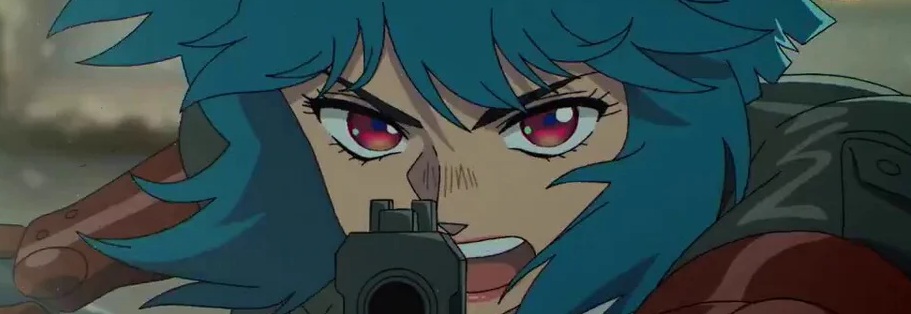
The finale begins with Motoko Kusanagi losing her prosthetic body after being targeted by a sniper and continues with Batou helping her escape in an unusual state: Motoko is reduced to little more than her cyberbrain.
From there, the episode moves away from conventional cyberpunk action and dives into one of the central philosophical questions of Ghost in the Shell: What exactly makes a person an individual when memories, bodies, consciousness, ss and information can all be manipulated?
And yes, there was also plenty of internet discussion about Motoko’s unusual appearance during her conversation with the Puppet Master.
But beneath the jokes and confusion, the finale is a serious adaptation of some of the most complicated ideas in Shirow’s original manga.
Episode 10 Begins With a Shocking Sniper Attack
Episode 9 ended with Motoko attempting to escape after abducting facial sculptor Chev Muduma.
The opening of Episode 10 immediately continues that situation.
A flock of waterfowl suddenly takes flight. At almost the same moment, a police sniper team fires.
The sequence creates a tense opening before the regular opening animation begins.
Motoko is hit, and her prosthetic body is destroyed.
For viewers who were expecting a conventional action sequence, the scene is deliberately shocking.
“The Major has been shot!”
That was essentially the reaction across the internet.
But experienced Ghost in the Shell viewers know that destroying Motoko’s artificial body does not necessarily mean killing Motoko herself.
The series has repeatedly established that Motoko’s identity is not tied to one physical shell.
Her body is replaceable.
Her cyberbrain is the more important component.
The official Episode 10 synopsis confirms the basic premise of the finale: Kusanagi loses her prosthetic body to gunfire, escapes with Batou as a disembodied brain, and eventually encounters the supposedly destroyed Puppet Master while in lockdown mode.
Motoko Survives But Only as a Cyberbrain
After the attack, Motoko’s original prosthetic body is gone.
Batou helps her escape, and the visual is one of the strangest images in the entire series: Motoko exists without a conventional body.
For newcomers, this may seem confusing.
However, this is one of the easiest concepts to understand if we separate Motoko into three basic components:
- The body: the artificial shell used to interact with the physical world.
- The cyberbrain: the technological system containing the person’s consciousness and memories.
- The ghost: the more philosophical concept of individual consciousness or identity.
In Ghost in the Shell, these elements do not always have to exist in one physical package.
That is why Motoko can lose her body without necessarily losing herself.
The finale takes this idea to an extreme by temporarily stripping Motoko down to almost nothing physical.
It is disturbing, but it also makes an important point:
If Motoko can still think, communicate, and make decisions without her body, then where exactly does “Motoko Kusanagi” exist?
That question is at the heart of the franchise.
Batou Searches for a New Body
Batou takes Motoko to a safe location where she can obtain another prosthetic body.
The situation becomes unexpectedly chaotic when a group of scrap-metal recyclers arrives at the abandoned facility.
The group consists of numerous heavily modified individuals looking for anything they can salvage.
Batou immediately recognizes that the situation could work to Motoko’s advantage.
Rather than simply fighting everyone, he decides to use the chaos to find a usable body for Motoko.
This part of the episode retains something particularly important about the 2026 adaptation: its ability to mix serious cyberpunk philosophy with strange humor.
One moment the story is dealing with questions about consciousness and identity.
The next, Batou is dealing with a group of eccentric cyborg scavengers.
That tonal combination is one of the reasons many manga readers have praised Science SARU’s approach to the original material.
The Puppet Master Returns
While Motoko enters a closed mode to conserve energy, something unexpected happens.
A voice reaches her consciousness.
Motoko immediately becomes suspicious.
How can someone communicate with her when she has deliberately shut down outside communication?
Then she realizes who—or what—the voice resembles.
The Puppet Master.
For newcomers, the Puppet Master is one of the most important concepts in Ghost in the Shell.
The entity is an artificial intelligence that emerged from the world’s vast information networks.
The Puppet Master’s existence challenges the distinction between:
- Human and machine
- Life and information
- Individual and network
- Memory and identity
- Natural intelligence and artificial intelligence
That is why the Puppet Master’s conversation with Motoko becomes much more complicated than a normal dialogue between two characters.
They are essentially discussing what it means to exist.
The Conversation That Left Viewers Completely Confused
Once the Puppet Master begins explaining its request, the finale enters its most philosophical section.
The conversation moves from living organisms to networks, information, stability, duplication, and evolution.
Motoko is asked how a particular network could avoid catastrophe while maintaining a stable equilibrium.
Her response introduces the idea of duplication and diversity.
For viewers unfamiliar with the manga, this can feel like the story suddenly changed genres.
One moment, Motoko is escaping a sniper.
The next, two cybernetic consciousnesses are discussing systems theory and the nature of existence.
That is very much Ghost in the Shell.
The original manga is famous for its extremely dense dialogue, technical explanations,s and philosophical discussions. The official franchise material also emphasizes how information-heavy Shirow’s work is, including extensive notes and explanations surrounding technologies such as cyberbrains.
So when viewers online reacted with comments equivalent to “I don’t understand this anymore”, they were not alone.
Even the finale’s director, Takahiro Kaneko, acknowledged that the final episode is difficult to understand even in the original manga. He explained that director Moko-chan’s storyboards also incorporated quite a few original visual elements and encouraged viewers to experience the journey all the way to the end.
What Does the Puppet Master Actually Want?
Eventually, the Puppet Master’s complicated explanation leads to its real request.
It wants to merge with Motoko.
The reason is connected to diversity and fluctuation.
The Puppet Master does not simply want to destroy Motoko or control her.
Instead, it wants to combine with her consciousness and create something beyond the limitations of a single individual.
This is one of the most important ideas in the entire Ghost in the Shell franchise.
If two independent consciousnesses merge, what is created?
Is the result:
- Motoko?
- The Puppet Master?
- A completely new consciousness?
- Both of them at once?
- Or something that can no longer be described using ordinary ideas of identity?
That is why the scene is more important than a simple “fusion.”
The story is asking whether individuality itself is permanent.
Motoko’s Answer Is Surprisingly Casual
After listening to the Puppet Master’s lengthy explanation, Motoko eventually agrees.
Her response is characteristically blunt.
Rather than delivering an emotional speech about destiny or humanity, she essentially accepts the proposal because she believes something unusual is happening and decides to take the risk.
Readers of the original manga also noticed a particularly interesting detail in the wording.
The Japanese version uses a special furigana reading for the word corresponding to the Puppet Master’s “offer,” giving it the sense of a “proposal.”
That led manga readers to recognize the scene immediately and celebrate the arrival of what they jokingly described as the Puppet Master’s “proposal.”
It is another example of how the 2026 anime has tried to preserve details from Shirow’s manga that previous adaptations handled differently.
And Then There Is Motoko’s Naked Cyberbody
Naturally, the philosophical conversation was not the only thing viewers discussed.
Motoko appears without clothing during the abstract conversation, which produced a large number of humorous reactions online.
Some viewers joked that the conversation was so difficult that they needed something else to focus on.
Others joked that the character design was making it difficult to concentrate on the philosophical dialogue.
These reactions are especially understandable because Shirow Masamune’s original artwork has always placed considerable emphasis on Motoko’s physical design.
However, the scene also has a deeper function.
In this abstract space, Motoko’s physical identity is stripped away.
She is not wearing her usual Section 9 clothing.
She is not carrying a weapon.
She is not surrounded by the familiar visual language of a police officer or operative.
Instead, she appears almost as a representation of a consciousness without social identity.
That makes the nudity part of the scene’s broader visual idea, even though viewers naturally found plenty of humor in it.
Why the “Naked Motoko” Scene Is More Important Than It Looks
The scene can be understood as a visual representation of one of the series’ oldest questions:
If the body can be replaced, modified, ed or discarded, what remains of the person?
Motoko’s body is artificial.
Her memories can potentially be altered.
Her consciousness can communicate through networks.
And now she is discussing merging with another form of intelligence.
At this point, the concept of “human” becomes increasingly difficult to define.
That is precisely where Ghost in the Shell has always found its philosophical strength.
The 2026 anime’s presentation may be playful and occasionally absurd, but underneath it is asking the same fundamental question that has defined the franchise for decades.
The Ending Connects Back to the Classic Ghost in the Shell
After Motoko’s encounter with the Puppet Master, the episode eventually reaches its epilogue.
One of the most notable elements is Motoko’s new physical form.
The finale eventually brings the story toward the famous idea that the network is vast.
This creates an intentional connection with the famous ending of Mamoru Oshii’s 1995 Ghost in the Shell film.
That does not mean the 2026 series is simply recreating Oshii’s movie.
In fact, one of the most interesting aspects of the new anime is that it has deliberately taken a different route.
The new series is based directly on Masamune Shirow’s original manga, while previous major anime adaptations often interpreted the material through the individual styles of directors such as Mamoru Oshii and Kenji Kamiyama.
The 2026 series therefore feels closer to the manga’s mixture of:
- Cyberpunk action
- Technical explanations
- Comedy
- Sexualized character design
- Police-procedural elements
- Philosophical discussions
- Chaotic visual details
That distinction was one of the major topics among viewers after the finale.
Fans Praise Science SARU’s Approach to the Original Manga
Following the finale, viewers expressed a mixture of sadness, confusion, and appreciation.
Some fans said they were simply sad that the series had ended.
Others praised the production for introducing the original manga to viewers who may only have known the 1995 movie or the Stand Alone Complex anime.
Several reactions emphasized that the new series felt closer to Shirow’s original work than some previous adaptations.
That is an important point for beginners.
There is no single “correct” Ghost in the Shell experience.
The franchise has been interpreted through multiple forms and creative teams, and each version emphasizes different aspects of the source material.
The 1995 film is atmospheric and philosophical.
Stand Alone Complex leans more heavily into investigative science fiction and serialized crime stories.
The 2026 Science SARU series is more closely connected to the eccentricity, density, and visual humor of Shirow’s manga.
That diversity is arguably one of the franchise’s greatest strengths.
Why the Finale Was So Difficult to Understand
If you watched Episode 10 and thought, “I don’t understand half of what they are talking about,” there is a simple explanation.
The finale is adapting ideas that were already extremely complicated in the source manga.
The conversation isn’t primarily about solving a conventional mystery.
Instead, it deals with concepts such as:
Consciousness
What makes someone a person?
Identity
If your body changes completely, are you still yourself?
Memory
If memories can be copied or modified, can they still prove who you are?
Information
Can information itself become a form of life?
Artificial intelligence
If an AI develops its own desires and sense of identity, does it deserve to be treated as a living being?
Evolution
Does becoming something new require an individual to give up part of their original identity?
These are difficult questions even without cyberbrains and networked consciousness.
That is why Ghost in the Shell has remained influential for so long.
A Familiar Name Appears in the Finale’s Credits
Another detail that caught longtime fans’ attention was the participation of veteran animator and director Hiroyuki Kitakubo.
Kitakubo has a particularly strong connection to Ghost in the Shell history.
He directed the animated sequences for the 1997 PlayStation Ghost in the Shell game, which featured animation much closer to Shirow’s original manga style than Oshii’s film. Production I.G. lists Kitakubo as the animation-part director and storyboard/screenplay contributor for the game.
The Japan Media Arts Festival also notes his role in the 1997 game and describes the work as a notable fusion of cel and digital animation.
That historical connection makes his reported participation in the finale particularly meaningful for longtime fans.
It also reinforces the idea that the 2026 series was created with an awareness of the franchise’s long history across different media.
A Special Family Connection: Hikaru Tanaka Joins the Finale
Another emotional moment came from the casting of Hikaru Tanaka, who appears as one of the scrap-metal recycling workers.
Tanaka is the eldest son of the late Atsuko Tanaka, the legendary voice actress who played Motoko Kusanagi in Mamoru Oshii’s Ghost in the Shell and became one of the most closely associated voices with the character.
After the episode aired, Hikaru Tanaka shared a heartfelt message about encountering Ghost in the Shell through his own work.
He wrote that Motoko had gone far away again, but that whenever someone accesses Ghost in the Shell, Kusanagi Motoko is always there.
The message was especially emotional for longtime fans because it connected two generations of performers associated with the same character and franchise.
For many viewers, his participation was more than a simple cameo.
It felt like a symbolic connection between the history of Ghost in the Shell and its newest incarnation.
Director Takahiro Kaneko Asked Fans to Watch Until the Very End
Final-episode director Takahiro Kaneko also discussed the difficulty of adapting the ending.
He noted that the conclusion is already difficult even in the original manga, while the anime’s storyboards under Moko-chan incorporated additional original visual elements.
Kaneko also praised the large animation team, which included both young creators and veterans who have been connected to Ghost in the Shell for a long time.
His comments help explain why the final episode feels visually different from a straightforward action anime.
Rather than simply reproducing every panel, the staff used animation, sound, and abstract imagery to create their own interpretation of the manga’s most difficult concepts.
No Traditional End Card But Something Strange Appeared
Viewers also noticed that the final episode did not conclude with a conventional end card.
Instead, mysterious system messages associated with Poseidon Industrial, a company appearing within the world of the series, appeared after the episode.
The messages referenced a “Fusion Intelligence Monitoring Protocol.”
That immediately triggered speculation among fans.
Does the protocol simply reflect the events of the finale?
Is it an in-universe system?
Could it hint at something beyond the events of the television series?
At present, viewers should treat those theories as speculation rather than confirmed sequel information.
The official series has not announced a second season or a continuation of the story.
What Happens to Motoko After the Fusion?
The ending deliberately avoids providing a simple explanation.
That is important.
Ghost in the Shell has never been particularly interested in giving viewers an easy answer to the question of identity.
The Puppet Master’s request and Motoko’s decision suggest that something new has emerged from their encounter.
But the exact nature of that new existence is intentionally left open to interpretation.
Rather than saying:
“This is exactly what Motoko has become.”
The story essentially asks:
“What do you think she has become?”
That is why the final line about the vastness of the network carries so much weight.
The network is not simply a place where information is stored.
It represents an enormous space in which identities, memories, consciousness, and information can interact.
The 2026 Anime Was More Than Another Ghost in the Shell Remake
One of the biggest achievements of THE GHOST IN THE SHELL is that it does not simply attempt to replace earlier adaptations.
Instead, Science SARU has created another interpretation of Shirow’s work.
The official introduction describes the franchise as a landmark cyberpunk work that began with Shirow’s 1989 manga and subsequently expanded into anime, live-action film, and video games. It also emphasizes the cultural impact of the series and the new anime’s goal of bringing the property into a new era.
For beginners, this is perhaps the best way to approach the franchise:
Think of every major adaptation as another “ghost” of the same original idea.
The characters may look different.
The tone may change.
The philosophical emphasis may shift.
But the central questions remain remarkably consistent.
Blu-ray Release Announced for December 2026
Although the television anime has finished, Ghost in the Shell is not disappearing immediately.
The official website has confirmed the release of THE GHOST IN THE SHELL Blu-ray BOX (Limited Special Edition) for December 23, 2026.
The set contains all 10 episodes and will include a bonus disc featuring behind-the-scenes footage, creditless opening and ending sequences, promotional videos,s and other material.
The package will also include a special booklet and an official storyboard booklet, along with newly drawn jacket artwork. The listed Japanese retail price is ¥38,500 including tax.
For fans interested in the production side of the series, the storyboard booklet and making-of material could be particularly valuable because the finale contains several unusual visual sequences.
What About a Season 2?
As of September 10, 2026, there is no official announcement of a second season.
The first season consists of 10 episodes, with Episode 10 serving as the finale.
That said, the ending deliberately leaves some ideas open, and the mysterious protocol messages have naturally encouraged fan speculation.
For now, however, any claim that Season 2 has been confirmed should be treated cautiously.
The official announcements currently focus on the completion of the television series and the December Blu-ray release.
Where to Watch Ghost in the Shell: THE GHOST IN THE SHELL
The series premiered in Japan on July 7, 2026, in the Tuesday 11 p.m. time slot on the Kansai TV/Fuji TV network.
Episode 10 aired on September 8.
Prime Video offered the fastest streaming release in Japan, with other streaming platforms following afterward. The official website confirmed the Episode 10 Prime Video release and subsequent distribution on other services.
For international viewers, availability depends on region and platform, so viewers should check their local Prime Video or licensed streaming listings rather than assuming that every service carries the series worldwide.
Final Thoughts: “The Internet Is Vast”
Episode 10 is not an easy finale.
It is strange, philosophical, occasionally hilarious, visually unconventional, al and deliberately confusing.
But that may be exactly why it works.
Science SARU’s THE GHOST IN THE SHELL has spent 10 episodes building a world where the boundaries between humans, machines and information are increasingly difficult to define.
The finale takes that concept to its logical extreme.
Motoko loses her body.
She communicates without a conventional physical form.
She encounters the Puppet Master.
She is offered the possibility of merging with another intelligence.
And finally, she moves toward a new existence within a network that is far larger than any individual human being.
For some viewers, the finale was emotionally moving.
For others, it was completely incomprehensible.
Some viewers focused on the philosophical discussion, while others joked about Motoko’s unusual appearance.
But underneath all those reactions is the same reason Ghost in the Shell has survived for more than three decades:
It asks questions that do not have easy answers.
The 2026 anime may be finished, but Motoko Kusanagi’s journey through the “ocean of information” feels far from simple.