 by
by How do you reinvent one of Osamu Tezuka’s most iconic heroines for a modern audience without losing the spirit of the original?
That was one of the central challenges facing director Yuki Igarashi when he began work on THE RIBBON HERO, a new anime film inspired by Tezuka’s legendary manga Princess Knight.
The film premiered worldwide exclusively on Netflix on August 8, 2026, introducing a new interpretation of Princess Sapphire to audiences around the world.
While the original Princess Knight is one of the foundational works of Japanese manga and anime, THE RIBBON HERO does not attempt to simply reproduce the classic story. Instead, it takes the core idea of Sapphire and builds a new fantasy action adventure around it.
For Igarashi, that meant asking an important question: What does Princess Sapphire mean to audiences today?
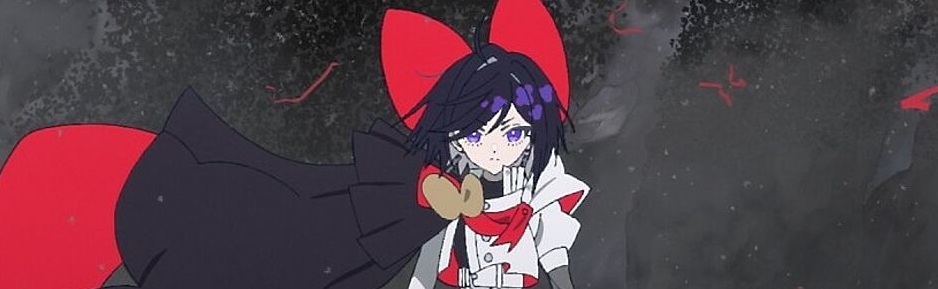
The answer became a new version of the character—one who carries the spirit of Tezuka’s heroine but exists within a more contemporary world, with a different visual identity, a new story structure and a stronger emphasis on action and entertainment.
In an interview about the project, Igarashi discussed his relationship with Tezuka’s work, the challenge of adapting Princess Knight for the present day, and the thinking behind the birth of the Reiwa-era Sapphire.
A New Hero Inspired by Princess Knight
THE RIBBON HERO describes itself as the story of a hero who ties a ribbon and chooses to defy fate.
At its foundation is the idea of Princess Sapphire, the heroine created by Osamu Tezuka.
The new film takes inspiration from that character but changes many aspects of her story.
Sapphire is the princess of Silverland, a kingdom that is destroyed by a mysterious calamity known as Nergal.
After losing her homeland, Sapphire arrives in Goldland, where she encounters ordinary people and experiences their kindness.
For the first time after the destruction of Silverland, she finds a sense of peace.
However, that peaceful life cannot last forever.
Nergal eventually returns, forcing Sapphire to confront the disaster once again.
Rather than remaining trapped by the tragedy of her past, Sapphire wipes away her tears, takes up her sword, and decides to fight.
This basic premise preserves one of the most important characteristics of the original heroine: Sapphire is someone who refuses to surrender to the role that fate has assigned to her.
Why Princess Knight Was Difficult to Recreate for a Modern Audience
The original Princess Knight occupies a unique position in manga history.
Created by Osamu Tezuka, the series became one of the pioneering works associated with the idea of a female hero who actively fights against powerful enemies.
Sapphire’s identity is also central to the original story.
She is a woman who is forced to live under circumstances in which gender and social expectations determine what she is allowed to become.
She nevertheless takes on the role of a knight and fights to protect her kingdom.
For audiences familiar with modern anime, some of these ideas may seem familiar.
However, when Princess Knight was created, the concept was groundbreaking.
The challenge for a modern adaptation is therefore not simply to reproduce those ideas.
It is to determine which elements remain powerful today and which elements need to be reinterpreted.
For Igarashi, this question became an important part of the production process.
Igarashi Was Already a Fan of Osamu Tezuka
Interestingly, Igarashi was already familiar with Tezuka’s work before joining the project.
However, he admits that Princess Knight itself felt somewhat distant to him.
Rather than claiming that he had been deeply familiar with every aspect of the original manga, Igarashi explains that he only properly read the original after receiving the proposal to work on the new project.
That experience became important because it allowed him to approach the source material from the perspective of someone who respected Tezuka but was not necessarily emotionally tied to every detail of the original.
This gave him a different perspective.
Instead of asking, “How can we reproduce Princess Knight exactly?”
the production could ask:
“What can we take from Princess Knight and transform into something that works for today’s audience?”
That distinction ultimately became one of the defining ideas behind THE RIBBON HERO.
“Princess Knight” Was a Distant Entity for Igarashi
Igarashi describes Princess Knight as a work that initially felt like a “distant entity” to him.
That does not mean he did not respect the manga.
Rather, the original belonged to an earlier era of manga and animation, with a style and storytelling approach different from what contemporary audiences are accustomed to.
After receiving the project proposal, Igarashi went back and read the source material properly.
He then discovered that the new production was not asking him to create a straightforward adaptation.
Instead, the team wanted to boldly change the original work and move it in a new direction.
The proposed approach emphasized:
- Action
- Entertainment
- A brighter tone
- More lively storytelling
- A contemporary visual identity
That changed Igarashi’s perspective.
He felt that if the production was willing to reinterpret the original so boldly, he could approach the project in his own way.
From Classic Manga to Modern Action Fantasy
One of the biggest changes in THE RIBBON HERO is the emphasis on action.
The original Princess Knight is famous for its fantasy, romance, identity themes, and dramatic storytelling.
The new film retains the idea of Sapphire as a heroic figure, but presents her journey through a more modern action-oriented framework.
This gives Sapphire a different kind of energy.
She is not simply a princess waiting for someone else to save her.
She is a character who makes decisions, faces danger,r and actively fights against the forces threatening the people around her.
That change is particularly important for a contemporary audience.
Modern action anime has accustomed viewers to heroines who can stand at the center of the story as powerful protagonists.
THE RIBBON HERO therefore takes an idea that was revolutionary decades ago and gives it a new cinematic language.
What Makes the Reiwa-Era Sapphire Different?
The phrase “Reiwa-era Sapphire” is useful for understanding what the film is trying to achieve.
The Reiwa era began in Japan in 2019, meaning that today’s younger audiences have grown up with a very different anime landscape from the one that existed when Princess Knight first appeared.
Today’s viewers are familiar with female protagonists who:
- Lead action stories
- Make difficult decisions
- Fight alongside male heroes
- Have complicated emotional motivations
- Challenge traditional expectations
- Define themselves independently
The new Sapphire needs to communicate with that audience.
At the same time, she cannot simply become another generic action heroine.
The challenge is to retain the qualities that make Sapphire Sapphire.
Her determination, compassion, and refusal to accept an imposed destiny remain at the heart of the character.
The Ribbon as a Symbol of Defiance
The ribbon in THE RIBBON HERO is more than an attractive visual element.
It represents Sapphire’s decision to confront her destiny.
The film’s central idea can be summarized through the act of tying the ribbon.
Sapphire has already lost her homeland.
She has experienced despair.
She has discovered kindness in Goldland.
Then the threat returns.
At that moment, she has a choice.
She can allow her past to define her, or she can decide what she wants to become.
The ribbon therefore becomes a symbol of that choice.
It represents the moment when Sapphire moves from simply surviving her circumstances to actively confronting them.
A Story Built Around Loss and Hope
Although THE RIBBON HERO is designed as an action-oriented fantasy, the emotional foundation of the story comes from Sapphire’s experience of loss.
Silverland is destroyed.
Sapphire loses the place she called home.
She is forced into an unfamiliar environment.
Then, in Goldland, she discovers something she did not expect: kindness.
That kindness becomes important because it gives Sapphire a reason to care about the new world.
Goldland is not simply a temporary location in the story.
It becomes a place that gives Sapphire another opportunity to build relationships and find a sense of belonging.
When Nergal returns, Sapphire is therefore no longer fighting only for herself.
She has people and a place she wants to protect.
Why Goldland Matters to Sapphire’s Journey
The contrast between Silverland and Goldland is one of the story’s important elements.
Silverland represents Sapphire’s past.
It is the kingdom she lost and the place connected to her identity as a princess.
Goldland represents a possible future.
It is where Sapphire encounters people who treat her with kindness and allow her to experience a different way of living.
That contrast gives emotional weight to the later conflict.
When the threat returns, Sapphire is no longer simply trying to reclaim something she lost.
She is also trying to protect something new.
That makes her motivation more personal and more immediate.
Nergal Becomes the Force That Pushes Sapphire Forward
The mysterious calamity Nergal is responsible for is the destruction of Silverland.
After Sapphire reaches Goldland, Nergal eventually appears again.
The return of the calamity forces Sapphire to confront the trauma of her past.
Instead of allowing that trauma to overwhelm her, however, Sapphire turns it into motivation.
This is where the film’s idea of defying fate becomes particularly important.
Sapphire cannot undo what happened to Silverland.
But she can decide what she does next.
That distinction gives the story an emotional message that is easy for modern viewers to understand:
You cannot always choose what happens to you, but you can choose how you respond.
Yuki Igarashi’s Career Before THE RIBBON HERO
Before directing THE RIBBON HERO, Yuki Igarashi had already gained attention for his highly distinctive animation work.
He directed Episode 3 of Keep Your Hands Off Eizouken!, an episode that received significant praise, including appreciation from the original creator Sumito Oowara.
He also personally handled the animation for the ending sequence of the first season of Jujutsu Kaisen.
That sequence helped establish his reputation among anime fans as an animator with a strong personal style.
Igarashi later directed “Lop and Ochō,” his contribution to Star Wars: Visions.
The project allowed him to work on a much larger international franchise while experimenting with his own animation sensibilities.
THE RIBBON HERO represents another major step in his career because it is his first feature-length anime as director.
From Short-Form Animation to a Feature Film
Directing a feature-length anime is a significantly different challenge from creating individual animation sequences.
A short sequence can focus intensely on one visual idea.
A feature film, however, has to maintain its visual and emotional identity for more than an hour.
The director must consider:
- Character development
- Story structure
- Action choreography
- Emotional pacing
- Background environments
- Music
- Sound
- Editing
- Visual continuity
For Igarashi, THE RIBBON HERO therefore represents an opportunity to expand the animation techniques that audiences have seen in his earlier work into a complete cinematic experience.
A Bold Reinterpretation Rather Than a Simple Remake
One of the most important things for viewers to understand is that THE RIBBON HERO should not be approached as a scene-by-scene remake of the original Princess Knight.
It is better understood as a new work inspired by Tezuka’s classic.
The characters, setting, story structure, and visual presentation have been changed.
This gives the creative team room to create something that can stand on its own.
For longtime Tezuka fans, that approach may be surprising.
But it also creates an interesting question:
How much can you change while still preserving the spirit of the original?
That question appears to be at the heart of Igarashi’s approach.
The Spirit of Tezuka Remains at the Core
Even though the film makes substantial changes, it still carries several ideas associated with Tezuka’s original heroine.
Sapphire remains a character who refuses to be defined solely by the circumstances surrounding her.
She is a princess, but she is also a fighter.
She experiences vulnerability, but she continues moving forward.
She loses her home, but she finds the courage to build relationships elsewhere.
And when the threat returns, she chooses action rather than surrender.
These characteristics allow the new film to preserve the emotional spirit of Princess Knight even while changing the surrounding story.
Why Updating Princess Knight Matters
Classic works can sometimes become difficult for new audiences to approach.
A manga or anime created decades ago may use storytelling conventions that modern viewers are unfamiliar with.
A contemporary adaptation can act as a bridge.
It introduces the core ideas of the original while presenting them in a form that today’s viewers can immediately understand.
That is especially important for Princess Knight because the original work is historically significant.
Many modern anime fans may recognize the influence of Tezuka without ever having read the original manga.
THE RIBBON HERO therefore has the potential to introduce a new generation to Sapphire while also encouraging longtime fans to revisit the source material.
THE RIBBON HERO and the Evolution of the Female Hero
One of the most interesting aspects of the project is its relationship with the history of female protagonists in Japanese manga and anime.
Sapphire appeared at a time when the idea of a female character taking the central role in an action-oriented fantasy story was still unusual.
Today, strong female protagonists are common across anime.
However, that does not make Sapphire’s historical importance smaller.
Instead, it allows modern viewers to see how the character helped establish ideas that later became more common.
THE RIBBON HERO effectively takes that historical foundation and asks what Sapphire might look like if she were created for today’s anime audience.
The Film’s Global Netflix Release
THE RIBBON HERO premiered worldwide exclusively on Netflix on August 8, 2026.
The global streaming release is particularly significant for a project connected to one of Japan’s most influential manga creators.
Instead of relying on separate international theatrical schedules, the film can reach viewers in multiple countries through the same streaming platform.
That makes the new Sapphire accessible to both longtime Tezuka fans and viewers who may be discovering Princess Knight for the first time.
A New Generation Can Discover Sapphire
For newcomers, no detailed knowledge of the original Princess Knight is necessary to understand the basic premise.
The film introduces Sapphire as a princess who loses her homeland, discovers a new home in Goldland,d and eventually decides to fight when the threat that destroyed her previous life returns.
That straightforward emotional journey gives beginners an accessible entry point.
At the same time, viewers familiar with Tezuka’s work can look for how the new film transforms the original concepts.
This balance between familiarity and reinvention is one of the project’s biggest strengths.
What Makes Igarashi’s Approach Interesting
Igarashi’s comments suggest that he did not approach the project to preserve every element unchanged.
Instead, he accepted the idea that the film needed to become something new.
The production’s decision to emphasize action, entertainment, brightness, and lively storytelling gave him the creative space to reinterpret Sapphire.
That approach is particularly interesting because remakes of famous works often face a difficult choice.
If they change too little, the new version may feel unnecessary.
If they change too much, longtime fans may question whether the new project still represents the original.
THE RIBBON HERO attempts to find a middle ground.
It changes the story and presentation while retaining the fundamental idea of Sapphire as someone who refuses to accept a predetermined fate.
A Modern Princess With an Old Soul
The result is a Sapphire who can be understood by modern audiences while remaining connected to Tezuka’s original creation.
She is surrounded by a contemporary action-fantasy world, but her emotional journey is timeless.
She loses something precious.
She finds unexpected kindness.
She builds new relationships.
She faces the return of the threat that destroyed her previous life.
And finally, she chooses to fight.
Those are simple ideas, but they are powerful precisely because audiences of different generations can understand them.
Final Thoughts
THE RIBBON HERO represents a fascinating attempt to bring Osamu Tezuka’s Princess Knight into the Reiwa era.
Rather than simply recreating the classic story, director Yuki Igarashi and his team have chosen to create a new interpretation built around action, entertainment, emotional drama and a brighter, more energetic atmosphere.
For Igarashi, the project began with a degree of distance from Princess Knight. Although he was already a fan of Tezuka’s work, he regarded the original manga as something somewhat removed from his own generation.
It was only after receiving the project proposal that he properly read the original.
The decision to boldly change the source material ultimately gave him a way into the project.
Instead of trying to imitate the past, he could ask what Princess Sapphire could become today.
That question led to the creation of the Reiwa-era Sapphire: a heroine who carries the spirit of Tezuka’s pioneering character while existing in a completely new fantasy world.
Her journey through the destruction of Silverland, her arrival in Goldland, her friendship with its people,e and her decision to confront Nergal give the film an emotional foundation that goes beyond its action sequences.
At the center of everything is a simple but powerful idea:
Sapphire refuses to let fate decide who she will become.
That is what connects THE RIBBON HERO to Princess Knight across generations.
The original manga helped redefine what a female hero could be in Japanese popular culture.
The new film takes that legacy and asks the same question from a modern perspective.
What does it mean to be a hero today?
For audiences discovering Sapphire for the first time, THE RIBBON HERO provides a new starting point.
For longtime Tezuka fans, it offers an opportunity to see a familiar character transformed through a completely different creative lens.
And for fans of Yuki Igarashi’s animation work, the film marks an important new chapter in the career of a director who has already attracted attention for his distinctive approach to animation.
With its worldwide Netflix release on August 8, 2026, THE RIBBON HERO is now available to audiences around the world.
Whether viewers arrive because of Osamu Tezuka, Princess Knight, modern fantasy anime,e or Yuki Igarashi’s previous work, the film ultimately asks them to look at Sapphire not as a character trapped by her history, but as a heroine capable of choosing her own future.
THE RIBBON HERO — Quick Facts
Title: THE RIBBON HERO
Based on: Osamu Tezuka’s Princess Knight
Director: Yuki Igarashi
Animation Production: OUTLINE
Global Release: August 8, 2026
Streaming: Netflix worldwide
Genre: Fantasy, Action, Adventure
Main Character: Princess Sapphire
Main Cast
- Saya — Sapphire
- Seiran Kobayashi — Pine
- Koki Uchiyama — Velvet
- Mayumi Shintani — Zirco
Key Creative Staff
- Original creator: Osamu Tezuka
- Director: Yuki Igarashi
- Character Design: Kei Mochizuki
- Character Design Collaboration: Mai Yoneyama
- Animation Character Design: Issei Arakaki
- Art Director: Cédric Herole
- Animation Production: OUTLINE