 by
by A national organization representing people with intellectual disabilities, their families, and supporters has expressed concerns about the upcoming anime adaptation of ** Mii-chan and Yamada-san **.
On August 19, 2026, the National Federation of Associations for the Development of People with Intellectual Disabilities published an opinion statement regarding the planned anime adaptation of the manga.
The organization made clear that it does not oppose the anime adaptation itself. Instead, it raised concerns about how the series may portray intellectual disabilities and whether certain elements surrounding the manga, its creators and publisher could contribute to prejudice or misunderstanding.
The federation also called for more information from the production committee, particularly regarding the stated purpose of adapting the manga into an anime, the involvement of experts and the measures being considered for the work’s viewing-age rating.
One of its central concerns is the possibility that the anime could be easily accessible to minors without sufficient context or safeguards.
What Did the Advocacy Group Say About the Anime?
The National Federation of Associations for the Development of People with Intellectual Disabilities is a nationwide organization made up of people with intellectual disabilities, their families and supporters.
According to the statement, the federation includes organizations from all 47 prefectures and designated cities and represents approximately 100,000 members nationwide.
Its activities include promoting greater understanding of intellectual disabilities, advocating for the rights of people with disabilities, making policy recommendations, and supporting people with intellectual disabilities and their families.
In its newly published opinion paper concerning Mii-chan and Yamada-san, the federation emphasized that its position comes from its role as an organization focused on protecting the rights of people with disabilities.
The group said it had carefully examined information surrounding the planned adaptation before publishing its concerns.
Importantly, the federation did not call for the anime to be canceled. Instead, it stated that freedom of expression is an important right and that it would not automatically oppose turning the manga into an anime.
Its concerns center on how the story and its characters may be interpreted by viewers, particularly when viewed alongside statements and actions that the organization says it has confirmed.
Why Is Mii-chan’s Character at the Center of the Debate?
One of the main points raised by the federation concerns the character Mii-chan.
Within the manga, Mii-chan is not explicitly diagnosed with an intellectual disability. The organization therefore acknowledged that she cannot simply be described as an explicitly disabled character based solely on the story.
However, the federation argues that aspects of Mii-chan’s characterization strongly suggest characteristics that could be associated with mild intellectual disability or borderline intellectual functioning.
The statement also refers to comments attributed to manga creator Nene Azuki, who reportedly said that Mii-chan was modeled after a woman believed to have had a mild intellectual disability and who possessed a disability certificate.
Because of this connection, the organization believes that the way Mii-chan is presented could influence how some viewers understand or stereotype people with intellectual disabilities.
This distinction is important. The federation’s concern is not simply that a fictional character has certain characteristics. Rather, it is questioning the potential social impact of presenting those characteristics in an entertainment work, particularly when the character becomes widely recognized through an anime adaptation.
What Is Mii-chan and Yamada-san About?
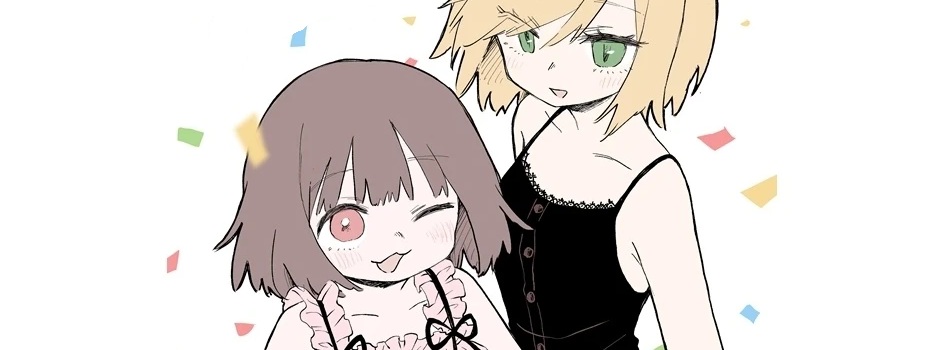
Mii-chan and Yamada-san is a manga set in Shinjuku’s Kabukicho district in 2012.
The story follows two central characters: Yamada, a hostess working at a cabaret club, and Mii-chan, a newcomer who struggles with various aspects of everyday life.
Mii-chan is portrayed as enthusiastic and energetic, but she has difficulty reading kanji and understanding social situations. These characteristics sometimes cause other people to make fun of her or treat her as someone who is incapable of handling things on her own.
Yamada gradually becomes interested in Mii-chan’s earnest personality and the effort she puts into her daily life.
Although the manga has a cute and approachable visual style, its story deals with much darker subjects, including loneliness, vulnerability, relationships,s and the difficult realities surrounding people living on the margins of society.
The manga has developed a significant following, particularly online, and an anime adaptation was announced for 2027.
That upcoming adaptation is what has prompted the latest discussion about how the story should be presented to a wider audience.
Concerns About the Creator’s Previous Statements and Works
The federation’s statement goes beyond the characterization of Mii-chan itself.
It also discusses statements and creative works that it attributes to the manga’s creator.
According to the organization, it found previous works and public statements that it believes raise concerns about the portrayal of people with disabilities and other vulnerable groups.
The statement specifically refers to a previous work involving a character with a stutter who is mocked by a store employee because of difficulty ordering something.
It also points to another work in which cognitive or intellectual decline is described in terms associated with becoming “Mii-chan,” as well as material concerning special-support education classes that the federation considers negative.
The organization says these examples are relevant because they may influence how it evaluates the potential impact of the new anime.
At the same time, these are claims and interpretations presented in the federation’s opinion statement, rather than findings that have been independently established by a court or regulatory authority.
That distinction is important when discussing a controversy involving creative expression and disability representation.
Concerns About Statements Attributed to a Publisher Editor
The federation also raised concerns about comments it says were made previously by an editor associated with Kodansha, the publisher of Mii-chan and Yamada-san.
According to the opinion statement, the editor appeared in a previously released video and made comments about enjoying stories involving other people’s misfortune and suffering.
The advocacy organization argues that such remarks could create the impression that the difficulties experienced by characters like Mii-chan are being treated primarily as entertainment.
The federation says it is particularly concerned because Mii-chan strongly evokes characteristics that viewers may associate with intellectual disabilities.
Its argument is essentially that the people involved in producing and promoting the work should take particular care when dealing with themes that can overlap with real-world disability and discrimination.
The Use of “Mii-chan” as a Derogatory Term
Another unusual issue raised in the statement concerns the use of “Mii-chan” as a derogatory expression in some real-world contexts.
The federation says its own research found multiple examples in which the term has reportedly been used to mock or insult women with intellectual disabilities or developmental characteristics.
The organization explicitly acknowledges that it has not confirmed that the anime or manga production team intentionally encouraged this usage.
Nevertheless, it considers the situation relevant because a successful anime adaptation could dramatically increase public awareness of the name and character.
This is one reason the federation has connected the issue to its concerns about the anime’s eventual rating and accessibility for younger viewers.
What Does the Federation Want From the Production Committee?
Rather than simply demanding that the anime not be produced, the federation has asked the production committee to provide more detailed explanations about several points.
- Why Should the Manga Be Adapted Into an Anime?
The production committee previously stated that there was “significance in expressing it as animation.”
The federation wants to know more specifically what that significance means.
In particular, it wants the production committee to explain how that goal fits with the concerns surrounding the portrayal of Mii-chan and disability-related themes.
- Who Are the Experts Advising the Production?
The production committee has also indicated that it will seek expert advice to avoid promoting prejudice or misunderstanding.
The federation welcomes the idea of expert involvement but says the announcement does not provide enough information.
It is asking for details such as:
What kind of experts are involved?
What fields do they specialize in?
What aspects of the production will they advise on?
What recommendations have been made?
The federation says personal names do not necessarily need to be disclosed, but it would like viewers to understand the nature of the expert consultation.
The Debate Over the Anime’s Rating
Another major issue is the planned age rating and warnings for the anime.
The production committee has indicated that appropriate ratings and warnings will be considered.
The federation says it wants a rating that reflects the potentially sensitive subject matter and does not create an environment in which minors can easily access the work without appropriate consideration.
This does not necessarily mean that the organization is demanding that the anime be completely unavailable to younger audiences.
Rather, it is asking the production team to carefully consider how the work is classified and presented.
The issue could become particularly important if the anime is distributed through streaming platforms, where age restrictions and parental controls may differ from traditional television broadcasting.
Freedom of Expression vs. Responsible Representation
One of the most notable aspects of the federation’s statement is that it explicitly recognizes the importance of freedom of expression.
The organization does not appear to be arguing that difficult subjects should never be depicted in fiction.
Instead, its position is that creators and publishers should consider the possible real-world consequences when fictional characters strongly resemble people who experience discrimination in society.
This creates a broader discussion that extends beyond Mii-chan and Yamada-san.
Anime and manga frequently explore difficult subjects such as disability, poverty, trauma, abuse,se and social isolation. These stories can help audiences understand experiences that they may never encounter themselves.
However, representation can also become problematic if a vulnerable group is repeatedly portrayed through stereotypes or if their difficulties are presented primarily as a source of humor or entertainment.
The debate surrounding Mii-chan and Yamada-san therefore raises an important question: How can creators tell difficult stories while avoiding the reinforcement of harmful stereotypes?
What Happens Next?
The anime adaptation of Mii-chan and Yamada-san is currently scheduled for 2027, meaning there is still time for the production committee to respond to the concerns raised by the federation.
The statement has already generated discussion about disability representation, creative freedom, age ratings and the responsibilities of anime producers.
For now, there has been no indication that the anime adaptation itself has been canceled.
The most important developments to watch will be whether the production committee provides further details about its expert consultation, explains the intended purpose of the anime adaptation, and announces specific measures concerning content warnings and age ratings.
As the anime approaches its 2027 release, the conversation surrounding Mii-chan and Yamada-san is likely to continue.
Final Thoughts
The controversy surrounding Mii-chan and Yamada-san is more complicated than a simple argument over whether an anime should or should not be made.
The advocacy group’s statement does not reject the adaptation outright. Instead, it asks the production side to take concerns about disability representation seriously and to explain how it intends to prevent prejudice or misunderstanding.
For anime fans, the discussion is also a reminder that fictional stories can have an impact beyond entertainment—particularly when they deal with real-world social issues.
How the production committee responds, and how the final anime handles Mii-chan’s character, may ultimately determine whether the series becomes an example of thoughtful representation or a source of further controversy.